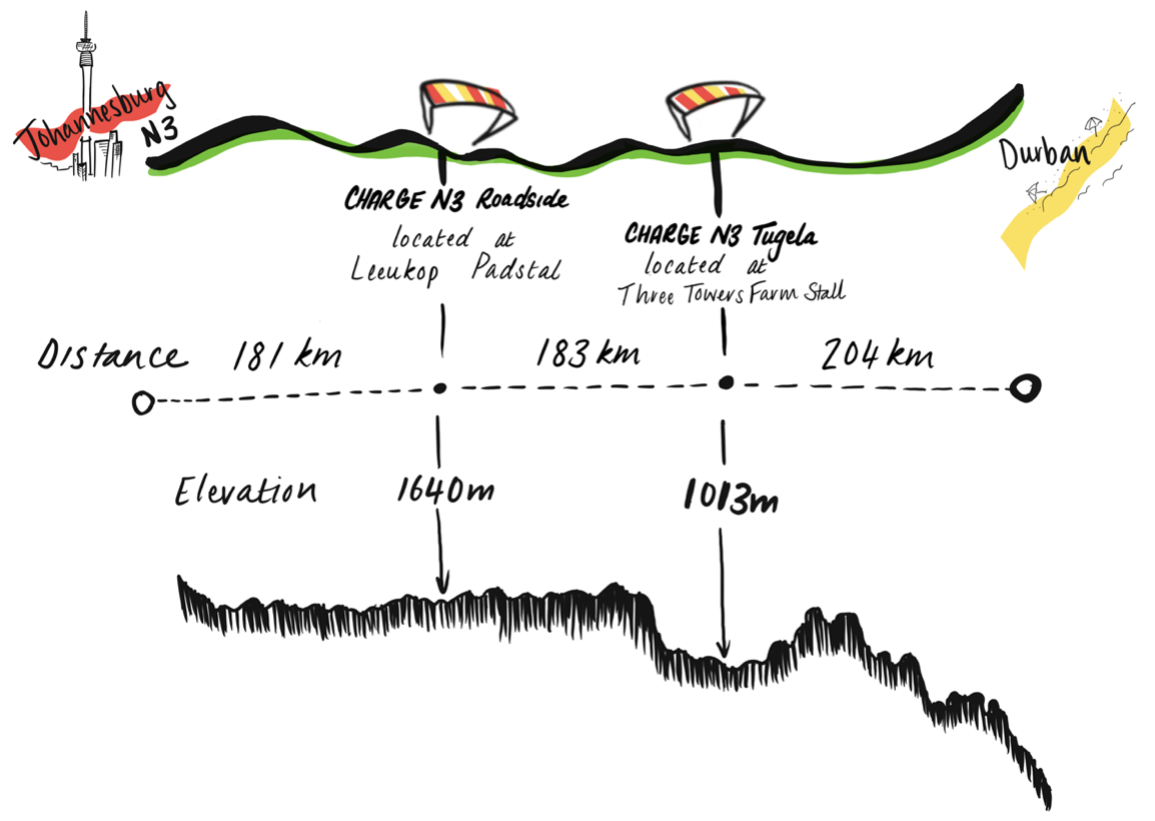
South Africa’s busiest trucking route, the N3, is edging closer to being genuinely electric-ready. Zero Carbon Charge (CHARGE) has confirmed that construction of its next two off-grid electric truck charging stations – CHARGE N3 Roadside and CHARGE N3 Tugela – remains on schedule for completion before June 2026. Together, the sites will establish reliable EV charging coverage between Johannesburg and Durban, a corridor that carries a substantial share of the country’s long-haul freight and intercity passenger traffic.
The milestone follows a R100-million investment by the Development Bank of Southern Africa (DBSA), with the N3 rollout set as a prerequisite for funding. For the electric mobility ecosystem, the implication is significant – long-distance EV travel on the N3 moves from theoretical to operational, underpinned by infrastructure designed to function independently of the national grid.
From pilot projects to national freight relevance
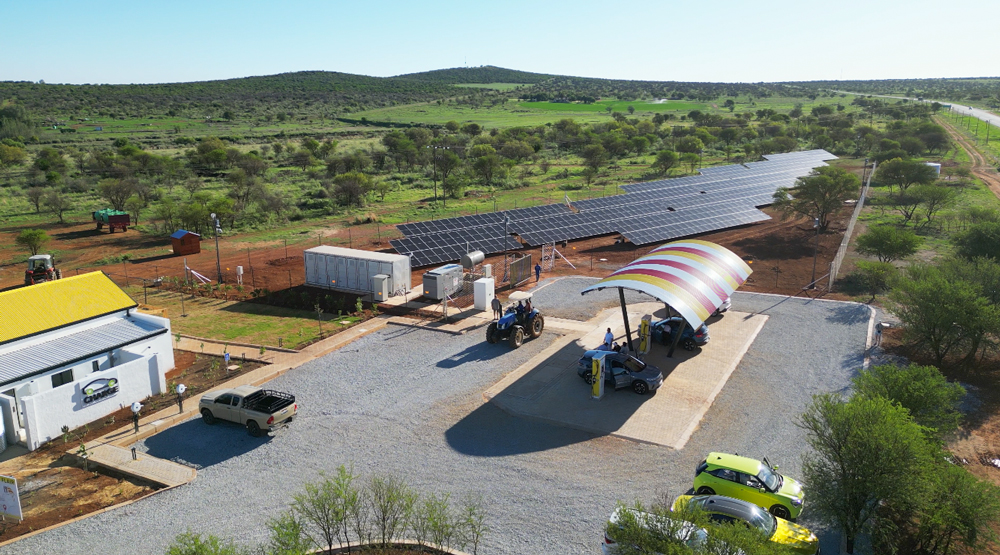
CHARGE’s model is notable not only for its location strategy but for its technical configuration. The stations are entirely off grid, powered by solar generation and on-site battery storage, with no reliance on Eskom supply. According to CHARGE, this allows ultra-fast charging without compromising uptime or reliability – a critical requirement for commercial operators running to tight delivery schedules.
Co-founder Joubert Roux framed the development in broader market terms. “This milestone sends an unmistakable signal: EV infrastructure in South Africa is moving – and moving fast. With the N3 now unlocking for electric travel, the next priority is the N1, extending reliable, off-grid, ultra-fast charging along the country’s most critical long-distance routes.”
For fleets, OEMs and dealers, the strategic shift is hard to ignore. The long-standing objection that battery-electric vehicles are unsuitable for intercity operation weakens considerably once dependable highway charging is in place. The conversation increasingly shifts from technical feasibility to cost models, duty cycles and total cost of ownership.
Truck-ready charging moves from theory to practice
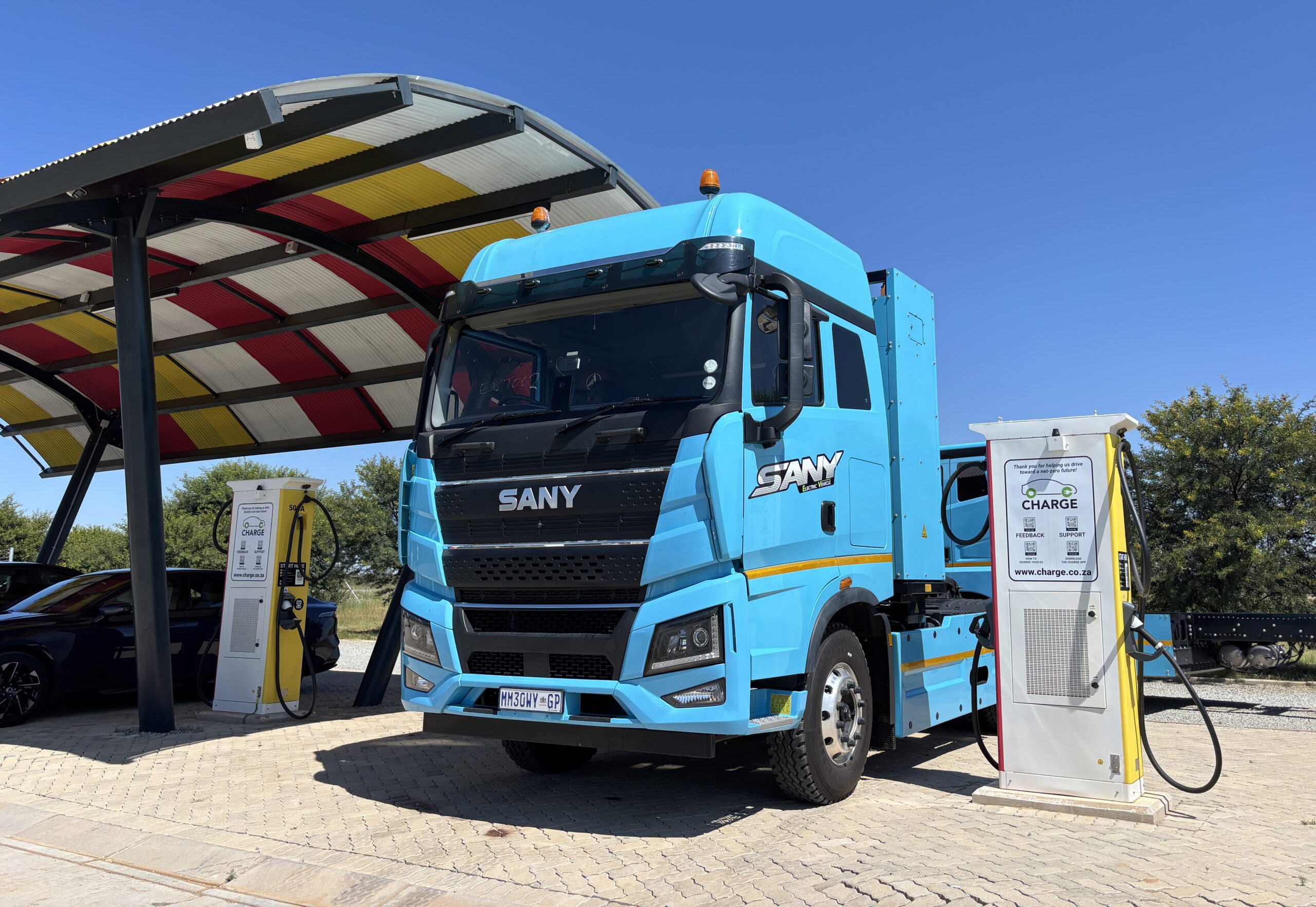
Importantly for the freight sector, CHARGE is positioning its sites as truck-capable from the outset. In January 2026, the company demonstrated simultaneous charging of two electric trucks supplied by SANY Trucks alongside four passenger EVs at its Wolmaransstad station. The exercise was designed to show that off-grid systems can support mixed traffic – heavy-duty and light vehicles – without prioritising one at the expense of the other.
This capability will be closely watched by fleet operators assessing early electric deployments on regional and long-haul routes. Charging concurrency, dwell time and power availability remain decisive factors for commercial adoption.
More than a stop – a roadside destination
CHARGE is also differentiating its sites through what it describes as a next-generation farmstall concept. Each location features covered facilities, food and retail offerings, high-quality ablutions, free Wi-Fi and a strong emphasis on hospitality. The visual signature – a bright yellow roof – is intended to make the sites immediately recognisable from the highway.
Roux places the experience at the centre of the brand. “Each charging station is not only focused on charging – it’s all about our guests enjoying the experience and feeling welcome. We no longer refer to consumers; we refer to guests. All South Africans – whether you drive an EV or are still thinking about migrating – are welcome at any CHARGE station, and to be part of the family.”
Site locations confirmed
The two N3 developments are located at established interchanges to maximise accessibility for both freight and passenger traffic:
– CHARGE N3 Roadside – N3 at the Reitz Roadside Interchange (Exit 107, west side)
– CHARGE N3 Tugela – N3 at the Colenso–Winterton Interchange (Exit 207, west side)
Editor’s comment: For commercial truck operators, the significance of the CHARGE N3 rollout obviously lies less in lifestyle positioning and more in what it represents for road freight electrification. Off-grid, truck-capable highway charging removes one of the structural barriers to deploying electric vehicles on South Africa’s primary logistics arteries.
While e-truck pricing, their residual values and energy costs will continue to influence adoption rates, infrastructure of this scale signals that electric long-haul trucking is no longer a distant prospect. The N3 may well become the proving ground for whether battery-electric logistics can move from pilot phase into everyday commercial reality.
Click on photographs to enlarge