What are pictures of rail locomotives doing on a FleetWatch platform? Good question so here’s the answer. While FleetWatch is a trucking magazine, we also keep our eyes on what is going on in the overall logistics area – both the good and the bad news that could affect the trucking sector. We do this because it is true to say any country which has in place a multimodal transport system where road, rail, sea and air transport work together, is a country which will thrive.
It is also true to say that South Africa lost its way on this path during the nine wasted years during former President Jacob Zuma’s tenure when the despicable Gupta clan was allowed free rein to rape the country. While their grubby hands were digging into every available till, our railway system was destroyed and the wheels of the economy was left to the trucks.
While one must rightfully salute the road transporters for taking on this extra burden, it is not an ideal situation as South Africa needs a functioning and efficient rail system to progress. Certainly, trucks will always remain essential for first- and last-mile delivery but expanding rail capacity is critical for moving high-volume freight more efficiently, reducing logistics costs and improving the resilience of supply chains.
It is thus that FleetWatch supports the moves being made for rail reform which, although it will take time, is gaining momentum as evidenced by the fact that independent rail operator, Traxtion, has welcomed the arrival of the first shipment of locomotives under a R3.4-billion investment programme that supports government’s drive to expand private sector participation in freight rail and strengthen the country’s multimodal logistics network.
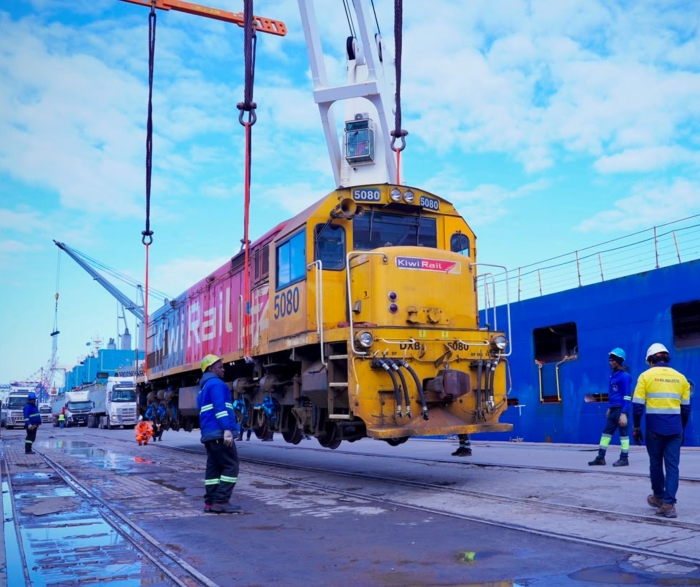
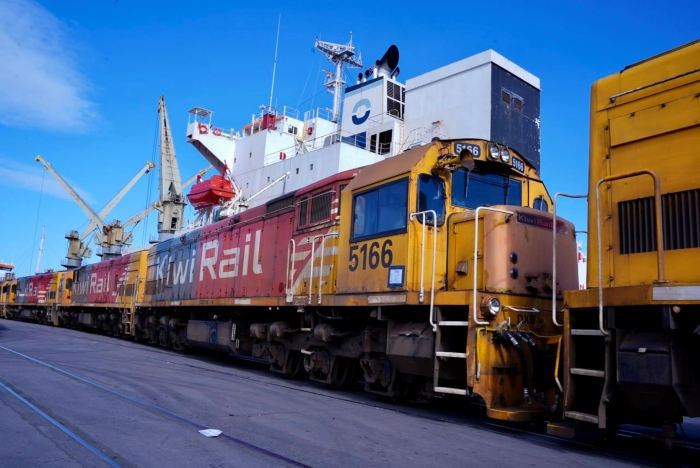
The first eight Wabtec C28 locomotives recently arrived at the Port of Durban from New Zealand, marking the first shipment under Traxtion’s R1.8-billion rolling stock investment programme and an important milestone in expanding freight rail capacity across Southern Africa. Following their arrival in Durban, the locomotives will be transported to Traxtion Rail Services Hub in Pretoria, where refurbishment and upgrades are scheduled to commence in September 2026 before entering commercial service.
The arrival marks the first of four planned shipments that will see 46 locomotives introduced over the next two years. The programme also includes the planned acquisition of 920 wagons for a further R1.6-billion, bringing Traxtion’s total planned investment to R3.4-billion. The company announced in May the successful close of a R1.5-billion equity subscription underwritten by Harith, Stanlib and Standard Bank.
“The future of freight depends on collaboration between government and the private sector, backed by the kind of long-term investment needed to build capacity and unlock economic opportunity,” says James Holley, chief executive officer of Traxtion. “Every investment of this nature creates a multiplier effect that extends beyond rail, supporting jobs, strengthening supply chains and enabling economic growth.”
Investment supports national logistics system
The arrival of the first shipment comes as South Africa’s freight rail reform programme moves from policy to implementation, with government seeking greater private sector participation to restore rail capacity and improve the efficiency of the national logistics system.
Transport Minister Barbara Creecy has indicated that freight rail reform has progressed beyond planning and policy formulation to implementation, with reforms aimed at enabling third-party access to the freight rail network and creating a more competitive operating environment.
The forthcoming Version 4 Rail Network Statement is expected to provide greater transparency and certainty around access to the national rail network, giving operators increased confidence to commit long-term capital to rolling stock and infrastructure.
“The transformation of South Africa’s rail sector will require sustained investment, with a collaborative approach and keeping innovation at the heart of any new development. While policy reform provides the framework for greater private sector participation, infrastructure investment is what enables that vision to become an operational reality,” adds Holley.
“For reform to succeed, policy must be matched by investment. The cost of trains means that businesses need to raise significant amounts of equity and debt. Equity investors into the sector need certainty which encourages long-term commitments, and the next version of the Network Statement is expected to be an important step towards creating that certainty.
“Once equity has been raised, debt capital markets open up. When equity and debt capital markets have the confidence to invest, the benefits extend well beyond individual operators to manufacturers, engineering businesses, suppliers and the communities that depend on a stronger economy.”
Expanding multimodal freight capacity
A stronger rail network complements the road freight sector by allowing each mode to play to its strengths. Rail is well suited to moving bulk commodities, agricultural products, manufactured goods and containers over long distances, while trucking provides the flexibility needed for collection, distribution and time-sensitive deliveries.
Government has set an ambition of increasing annual freight rail volumes to approximately 250 million tons from the current level of around 160 million tons through closer collaboration between the public and private sectors. Traxtion’s rolling stock investment is expected to add capacity equivalent to approximately 4.5 million tons, demonstrating the role private investment can play in achieving that objective.
The 46-locomotive programme will also support South African industry through refurbishment work undertaken locally, delivering 78% local procurement, 60% local content and creating 665 permanent skilled jobs. The locomotives will also be upgraded with the latest generation 3 300 hp Wabtec engines, improving efficiency while reducing emissions.
“Expanding rolling stock capacity is a critical step towards moving more freight by rail and creating a balanced multimodal logistics system where road and rail complement one another to improve supply chain performance, strengthen economic competitiveness and support long-term growth,” concludes Holley.
Editor’s comment: While road freight remains the backbone of South Africa’s logistics sector, sustainable economic growth depends on an integrated transport network. Greater rail capacity will not replace trucking – it will make the entire freight system more efficient by allowing trucks to focus on the first and last mile while rail carries more long-haul freight. Investments such as Traxtion’s therefore benefit the entire logistics value chain, from transport operators and manufacturers to exporters and consumers. In the meantime, it’s a continued and big salute to truck transporters for stepping into the breach while rail tries to reform. Up trucking?
Click on photographs to enlarge