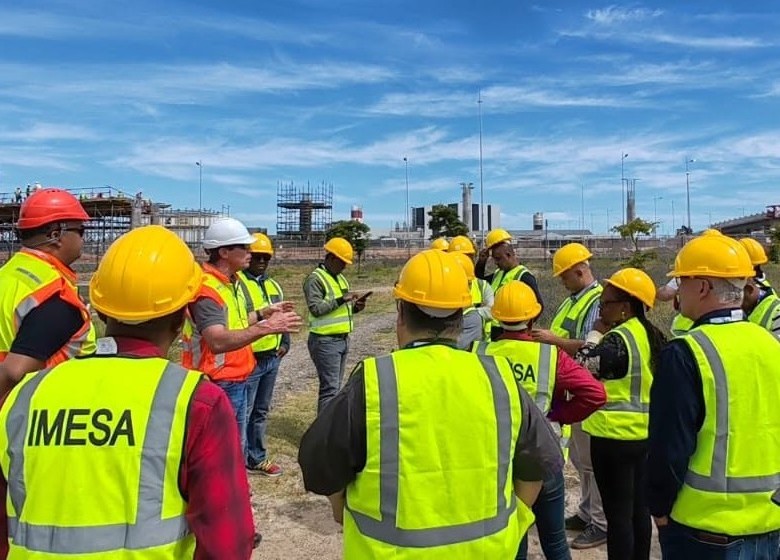
As South Africa marks Transport Month, the Institute of Municipal Engineering of Southern Africa (IMESA) is highlighting the connection between municipal engineering and transport efficiency.
The organisation notes that while this month’s focus is usually on vehicles, freight and road safety, there is a complex municipal engineering ecosystem behind every functioning urban transport network. Municipal engineers design, build and maintain the infrastructure that determines how smoothly cities move and how urban economies grow.
They design and maintain roads; ensure that traffic flow is optimised, with intersections that perform efficiently; and they provide for pedestrians’ mobility and access. They must understand where congestion develops and consider how new development will place pressure on existing networks.
With sustainability and climate resilience increasingly topping the agenda, municipal engineers are balancing rapid urbanisation with environmental impact, planning and designing for extreme weather events and flooding, to protect roads and transit systems.
IMESA says that municipal engineers sit at a critically important intersection between technical expertise, public service and economic development. Their decisions affect the road outside a factory, the intersection outside a shopping centre, the bus lane used by thousands of commuters, the drainage system protecting a business district and the conditions attached to a new development. They have to reconcile competing demands for limited space and resources while designing for safety, accessibility, resilience and future growth.
That is why South Africa needs to keep growing, developing, empowering and supporting the municipal engineering profession, IMESA states. “As South Africa grapples with failing infrastructure and growing service delivery challenges, it is vital that we build the technical capacity of skills-constrained municipalities.”
COGTA regulations stipulate a ratio of three technical service delivery staff members (engineers, planners, artisans, etc) for every one support staff member (HR, Finance, SCM, audit etc). IMESA asserts that there is not a single municipality in the country that meets this requirement. Some of the better run municipalities sit at a one-to-one ratio at present. Rectifying this imbalance and working towards the COGTA defined ratio will help turn the tide in service delivery.
The organisation also notes that many ongoing failures in transport and public infrastructure are because engineers are excluded from procurement and planning decisions and calls for this to change across South African municipalities.
Behind a city that moves is an engineering profession that makes movement possible, is IMESA’s message this Transport Month.
Click on photograph to enlarge