With every new technological step in driverless trucking, the industry is reminded that emerging economies like South Africa require level-headed, evidence-based adoption strategies. Safety, road conditions, skills pipelines and regulatory readiness remain central concerns throughout Africa, posing significant obstacles to autonomous vehicle tech rollout.
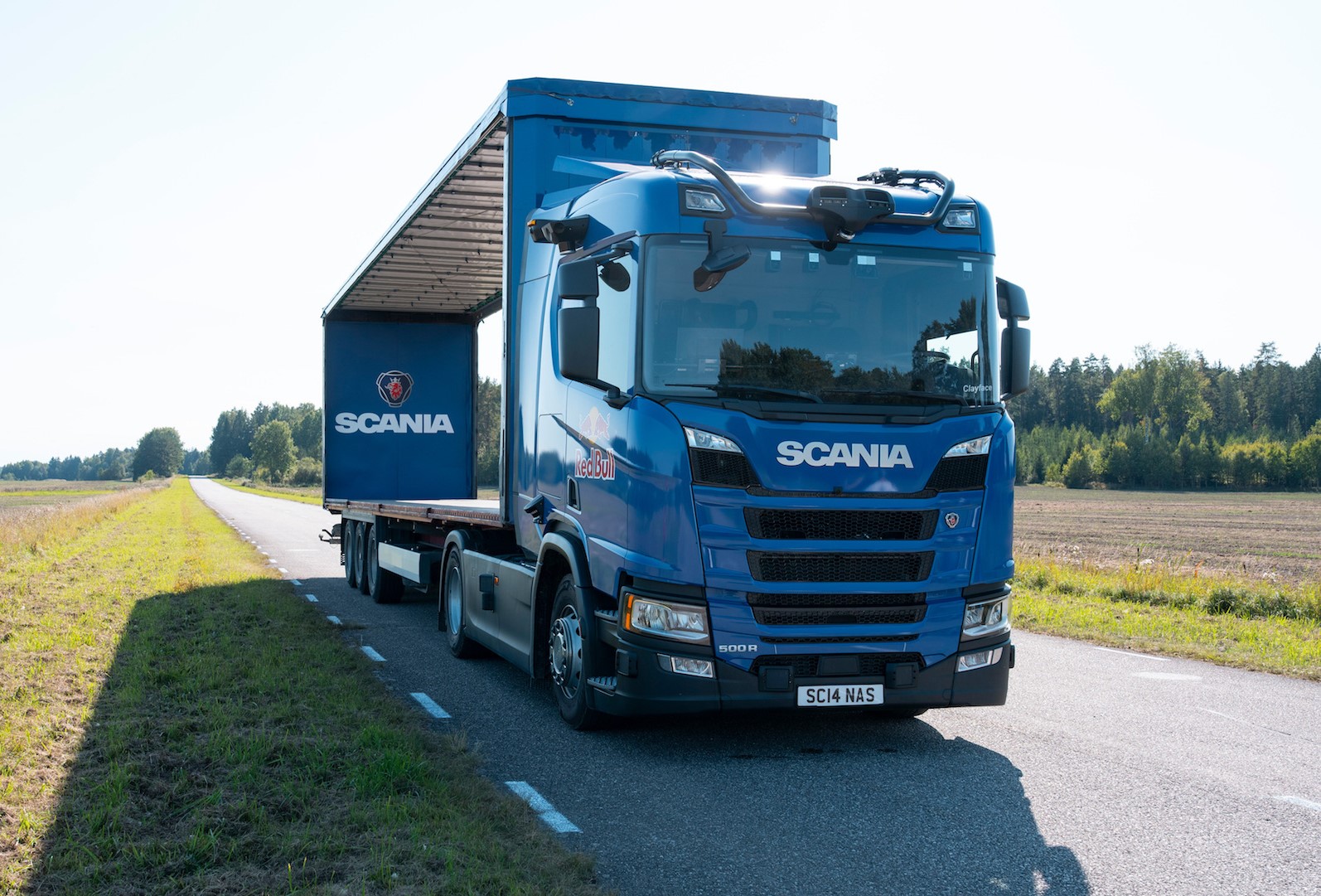
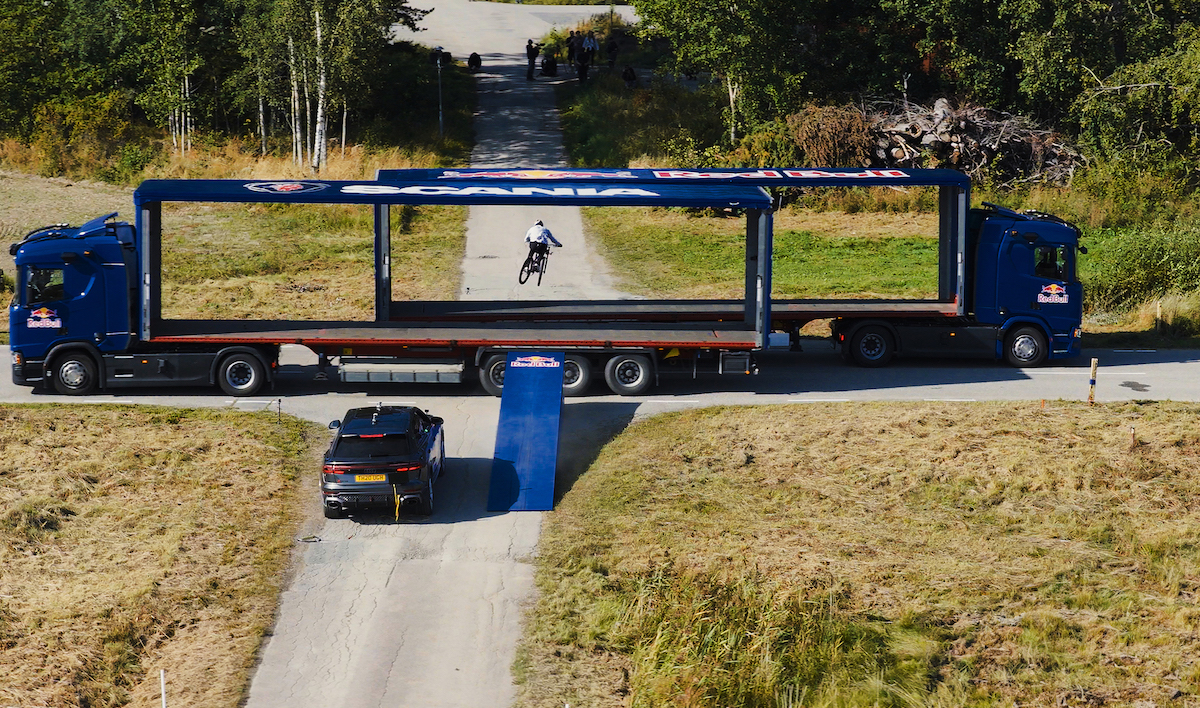
Despite these challenges, evident too in much of the world, Scania has staged a high-profile demonstration of its driverless technology – a breathtaking stunt pairing two self-driving trucks with a pro mountain biker – to showcase what its autonomous truck platform can do.
A controlled test, not a road scenario
Scania worked with Red Bull and PlusAI to choreograph a stunt in which two autonomous trucks drove toward each other in perfect sync, creating a sub-second window for professional mountain biker Matt Jones to jump between them.
Months of software tuning, controlled practice runs and layered safety systems sat behind the spectacle. Scania describes the exercise as proof of engineering discipline and precision rather than a preview of real-world deployment.
Scania has been running autonomous mining trucks commercially and says the next phase is hub-to-hub freight on major highways. Trials are already underway on selected European routes with safety drivers on board, in partnership with Silicon Valley firm PlusAI.
Beyond pilot phase to production with AI
The stated aims are familiar: improved efficiency, lower operating costs, reduced environmental impact and relief for fleets facing chronic driver shortages.
The company is positioning autonomy as a long-term contributor to sustainable transport systems. It argues that pairing its in-house software with PlusAI’s platform will yield factory-built autonomous trucks capable of scaling beyond pilot projects.
Peter Hafmar, Head of Autonomous Solutions at Scania, states: “Transport is a cornerstone of our daily lives and with that comes enormous responsibility to get goods to the right person or company in the most safe and efficient way. This challenge was a glimpse of what’s possible when breakthrough autonomous technology delivers precision and safety you can count on.”
Editor’s comment: Scania’s test shows autonomy’s potential under controlled conditions, yet transporting freight on the N3 in peak season is another matter entirely. The industry will watch closely as global pilot projects mature but proper regulation, sober expectations and rigorous local testing will determine when self-driving technology becomes a meaningful tool for Africa’s logistics networks. It’s a long way away.
Click on photographs to enlarge