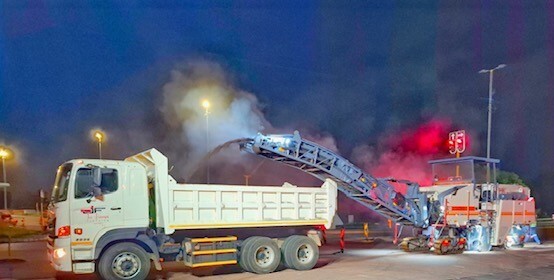
South Africa’s freight economy runs by and large on roads but unfortunately, road maintenance these days is often merely cosmetic. Well-maintained trucking routes are an economic productivity imperative, translating directly into safer operating conditions, reduced trip times, lower vehicle operating costs and more predictable logistics performance. As such, Bakwena Platinum Corridor Concessionaire is advancing a R276-million rehabilitation programme along the N1, one of the country’s most important north/south freight arteries.
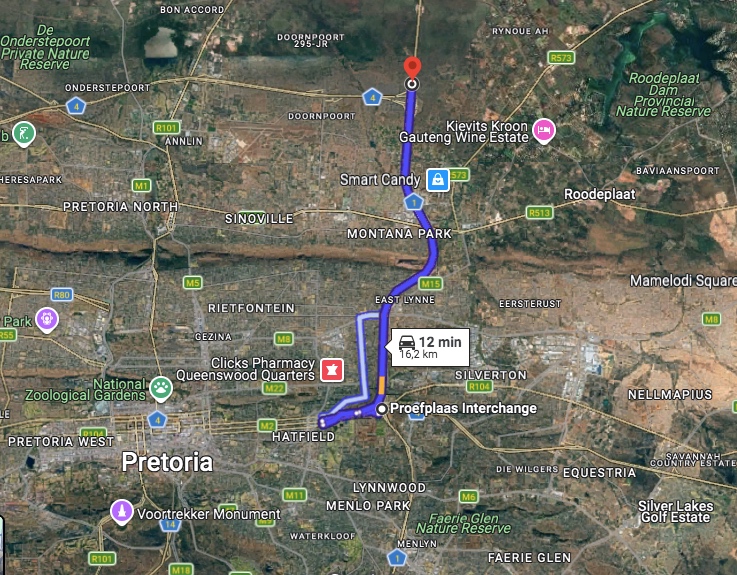
The rehabilitation between the Proefplaas Interchange and the Pumulani Main Line Toll Plaza (in Gauteng, north-east of Pretoria) targets a 16km section of road that carries sustained commuter and heavy vehicle volumes every day. For fleet operators, this corridor is not optional. Its condition directly affects efficiency, safety margins and delivery reliability.
Scope, standards and construction discipline
The project, awarded to Roadmac Surfacing, started in August 2025 and is scheduled for completion by November 2026 under a 15-month contract. It forms part of Bakwena’s broader N1N4 rehabilitation programme, aimed at restoring structural integrity and extending pavement life in line with international engineering standards.
“This rehabilitation programme is designed to restore the structural strength of the N1, improve driving conditions and extending the lifespan of the road in line with international engineering standards,” Bakwena says.
Work includes rehabilitation of the slow lanes in both northbound and southbound carriageways, upgrades at the Stormvoël and Zambezi Interchanges, sections of the Proefplaas Interchange and an asphalt overlay across the full road surface.
Road signage is being replaced and concrete-lined drainage systems repaired to improve water management and long-term durability.
Construction is taking place during both day and night shifts. Lane closures are required in both directions, but Bakwena says strict traffic management measures are in place to minimise disruption and maintain safe travel for all road users.
Road users are encouraged to stay informed via the @bakwenan1n4 X channel, where real-time updates on traffic accommodation and lane closures are shared.
Freight efficiency and regional impact
Beyond immediate safety improvements, the rehabilitation delivers longer-term economic value. Improved road surfaces reduce vehicle wear, lower fuel consumption and stabilise travel times – all critical variables in freight cost modelling and fleet planning.
Bakwena also highlights local employment and supplier participation as part of the project’s broader socio-economic contribution.
“Beyond improved safety, the project supports freight efficiency, regional trade and local economic participation,” Bakwena concludes.
Editor’s comment: Plainly speaking, “a truck is only as good as the road it’s driving on” is a hard truth – and road agency negligence isn’t the only culprit behind the poor state of our roadways. Often, road maintenance is framed by users as a disruption rather than an enabler, leading to errant driver behaviour.
Projects like Bakwena’s N1 rehabilitation remind the industry that maintenance is the quiet work that keeps freight moving – safely, efficiently and at scale. For fleet operators, fewer potholes mean fewer breakdowns, tighter schedules and sharper cost control. In a transport economy under constant pressure, well-maintained roads remain one of the most effective productivity interventions available.
Click on photographs to enlarge