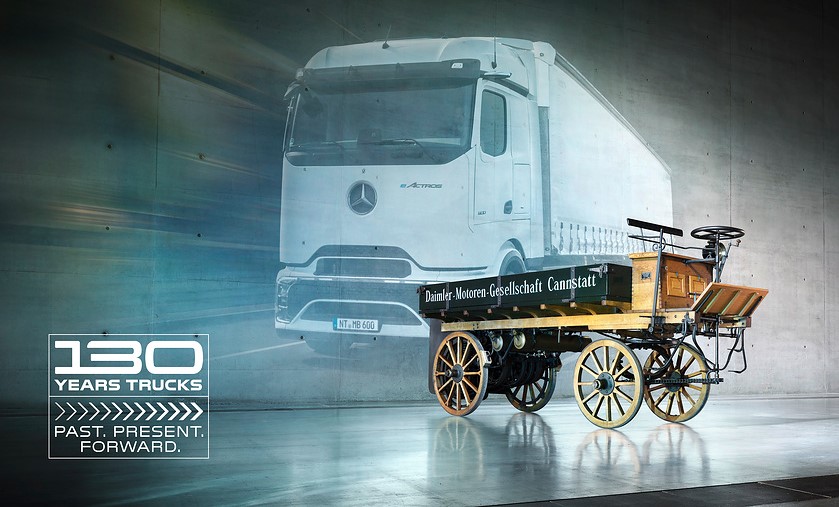
From the invention of the world’s first motorised truck in 1896 to today’s battery-electric long-haul flagship, Mercedes-Benz Trucks used its 130-year milestone to frame a broader narrative about progress. Presented at Retro Classics Stuttgart in Germany, the anniversary display connected a heritage of pioneering truck engineering with modern-day truck technologies focused on road safety, vehicle efficiency and driver wellbeing – a timeline of trucking innovation increasingly centred on the people who operate, manage and share the road with heavy vehicles.
Across the 700m² Mercedes-Benz Trucks stand, static displays were complemented by live presentations, technical walk-throughs and scheduled engine start-ups that brought both early and modern vehicles to life.
A tyre-changing station and remote-controlled model trucks added interactive elements, ensuring that some 70 000 visitors to the four-day show were offered not only historical context, but also practical insights and hands-on engagement.
1896 – the starting point
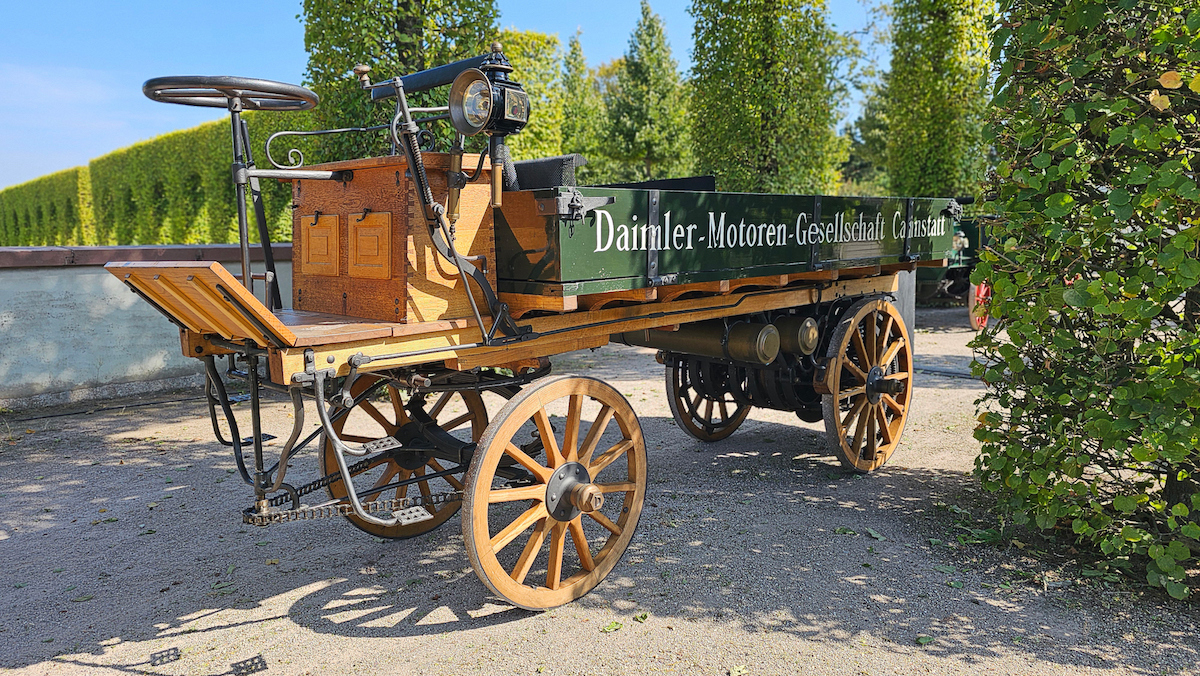
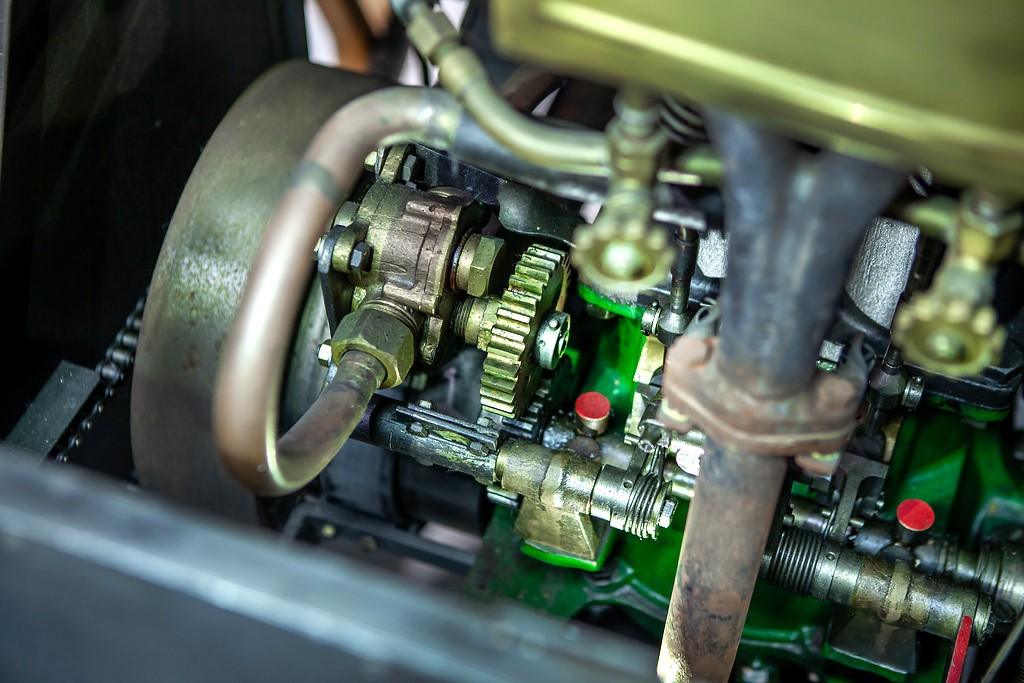
At the center of the historical section stood a reconstruction of the world’s first motorised truck, originally unveiled in 1896 by Gottlieb Daimler. Its two-cylinder “Phoenix” engine produced four horsepower from 1.06 litres. Drive was transmitted to the rear axle via belt and steering was chain operated.
The driver sat on an elevated bench, in the style of a carriage. Despite its simplicity, the truck incorporated a planetary hub reduction axle – a principle still used in heavy-duty vehicles today.
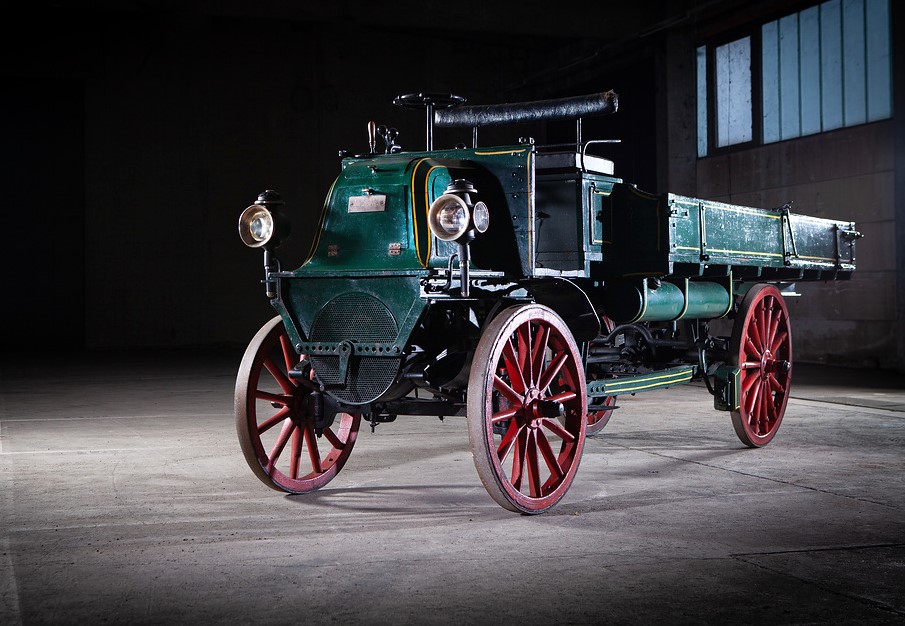
By 1898, the design had evolved, moving the engine beneath the driver and then forward of the front axle to increase payload and performance. Early exports to England and France and presentation at the 1900 Paris World Exhibition confirmed the vehicle’s international relevance.
1996 – electronics enter the mainstream
A century later, the launch of the Mercedes-Benz Actros marked another turning point. The first-generation Actros introduced CAN bus systems, electronically controlled brakes and integrated driver assistance functions.
The MegaSpace cab set new benchmarks for driver comfort, efficiency and safety. In 2006, Active Brake Assist extended the vehicle’s safety capabilities, reinforcing the role of electronics in accident prevention.
By 2026, the Actros range – including diesel and electric derivatives – represented three decades of continuous refinement, illustrating the evolution from a purely mechanical machine to a connected, software-driven vehicle platform.
2026 – electrification and advanced assistance
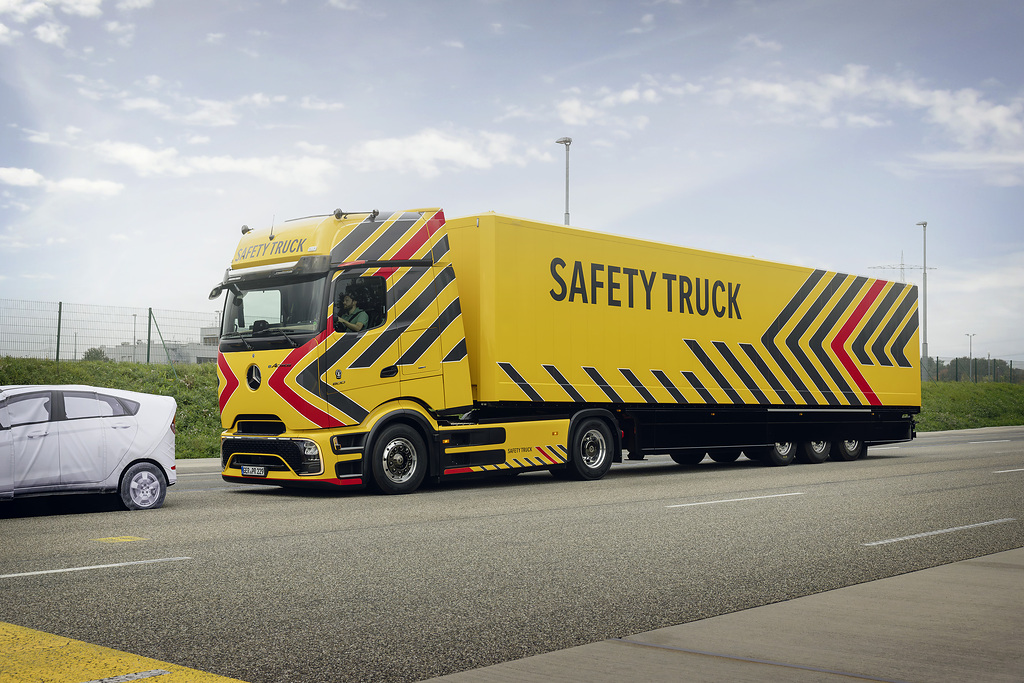
The Mercedes-Benz eActros 600 Safety Truck showcased the latest developments in electrification and active safety. Equipped with a 270-degree sensor fusion system, Active Brake Assist 6 and Active Sideguard Assist 2, the battery-electric flagship demonstrated how predictive electronics now underpin accident prevention strategies.
Several of the systems on display already exceed forthcoming European regulatory standards. When displayed alongside the 1896 reconstruction, the technological progression was immediately evident.
Broader brand heritage
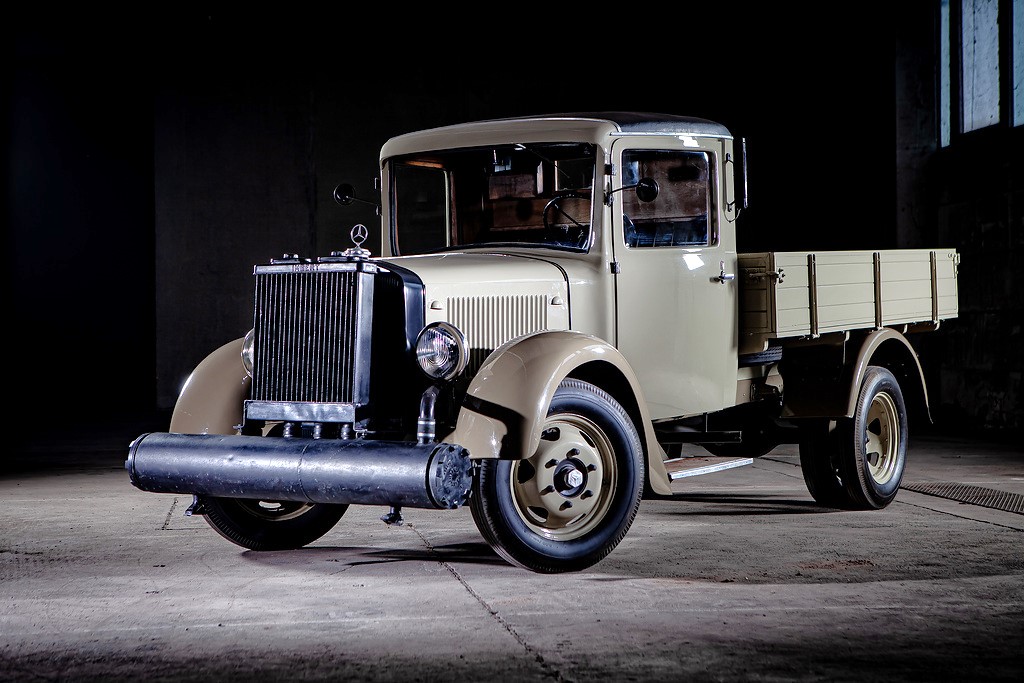
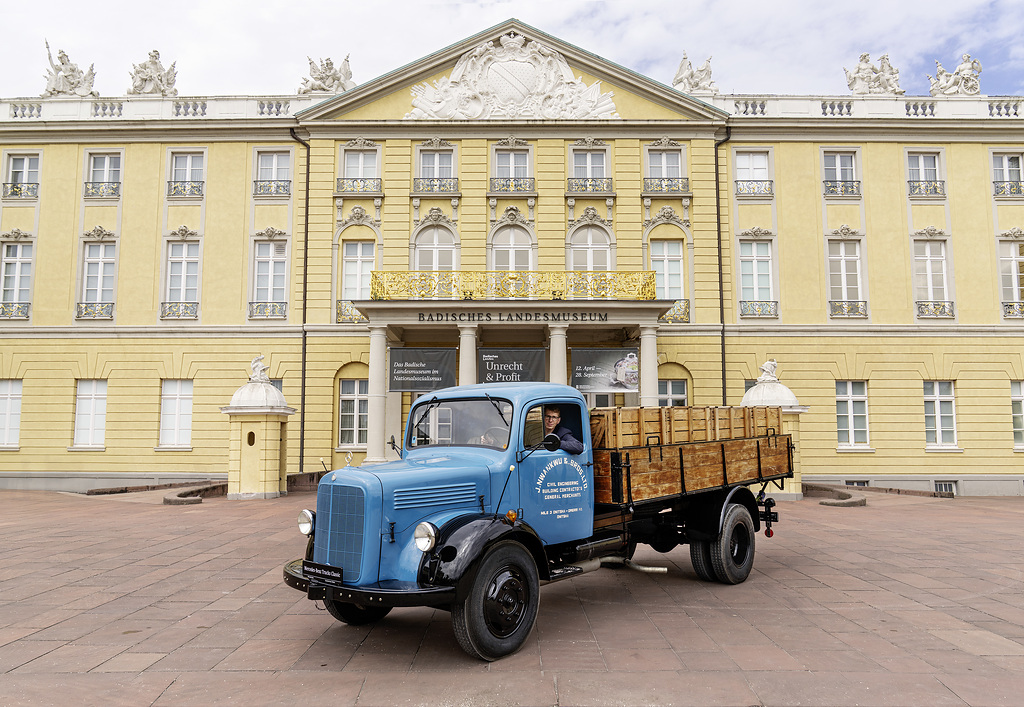
In addition to the world’s first truck, the Mercedes-Benz Trucks Classic stand showcased a series of historical milestones. Highlights included the 1899 Daimler cardan shaft truck, currently being restored to running condition at the Technik Museum Speyer as part of the “Legends on Wheels” exhibition.
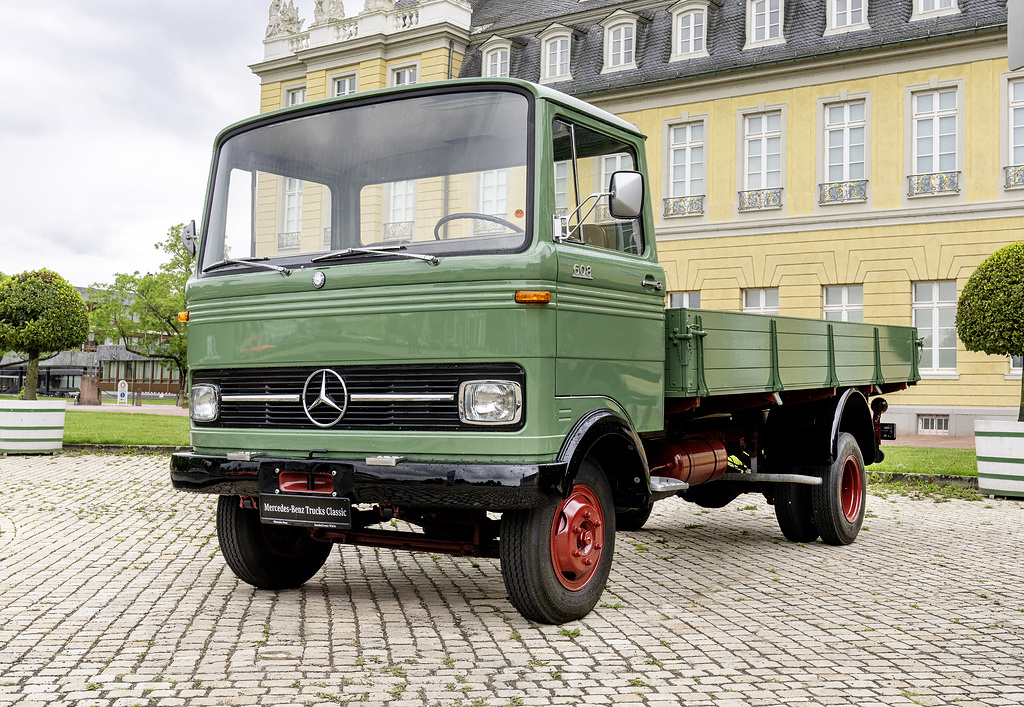
A 1937 Mercedes-Benz L 1500 with wood gas generator illustrated an alternative propulsion technology that remained in use in Germany until the 1950s. Post-war transport was represented by the L 4500 and LP 608 from 1965, alongside the L 1113 from 1966, all symbols of the era’s economic upswing.
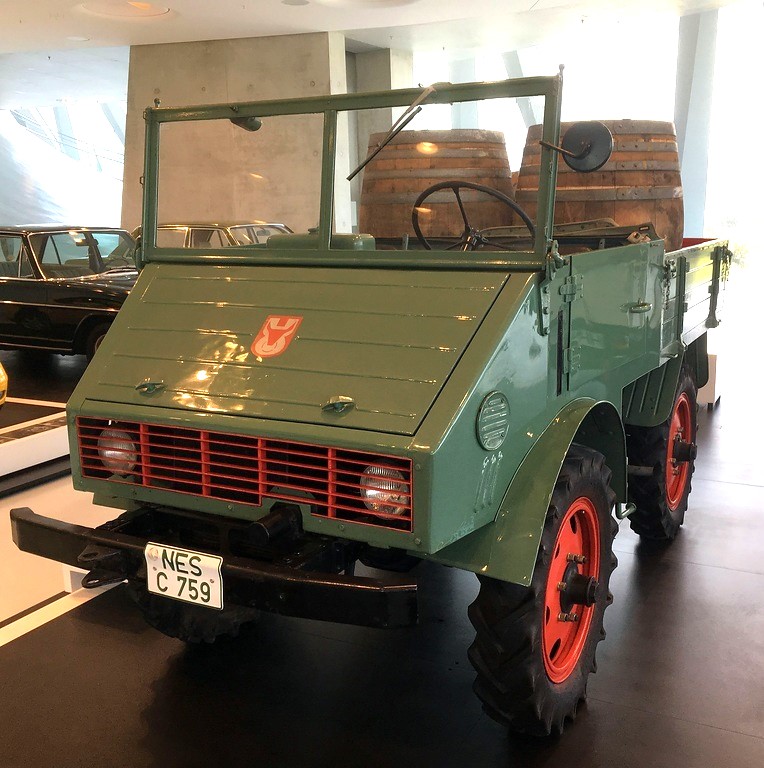
The stand also celebrated 80 years of the Unimog with both a 1946 early model and a 1978 U 416, while three decades of the Actros were marked by a first-generation 1843 LS from 2000.
Bus heritage was represented by a 1954 Setra S 8 from the Neu-Ulm old-timer collection, highlighting the brand’s pioneering integral construction.
For motorsport enthusiasts, the historic Mercedes-Benz Atego Race Truck from 2000 provided a glimpse into competitive truck racing, while the latest technology was represented by the eActros 600 Safety Truck.
Pioneering spirit and innovative future
According to Jean Marc Diss, Head of Global Sales & Marketing Mercedes-Benz Trucks: “130 years of trucks stands for 130 years of pioneering spirit and innovation. We can be proud of how far we have come and at the same time, this anniversary motivates us to continue our journey.
“Tradition and future are inseparably linked at Mercedes-Benz Trucks, just like our clear focus on the needs of our customers and on first class service. This includes thinking forward and continuously developing transport solutions that benefit our customers.
Editor’s comment: Mercedes-Benz Trucks’ “130 Years Trucks” display in Stuttgart showed that progress in commercial vehicle engineering is always incremental, each new stage being built on the past. The 130-year milestone was presented not as a conclusion but as an on-going process, shaped by efficiency requirements, safety standards and the transition toward sustainable transport. And that’s exactly where we should be heading! Congratulations from all at FleetWatch on keeping the wheels turning over the past 130 years. Now for the next 130…Yeah!
Click on photographs to enlarge