In South Africa’s commercial trucking sector, where cash flows are continually tightening and market volatility is a constant risk, the role of informed financial backing has never been more critical. Bernard Vilakazi, Sector Specialist for Transport and Logistics at Absa Business Banking, operates at a vital junction – where the sustainability of fleet operators is hinged not just on contracts secured but on how those contracts are funded and structured.
In this opinion piece, Absa brings a front-row view of the pressures shaping the transport economy, from constrained cash flows and rising input costs to the shifting dynamics of infrastructure investment. Vilakazi’s perspective is grounded in this dual reality: a sector carrying the weight of the economy and a financial system that must evolve to support it more intelligently. And with that introduction, it’s over to Mr. Vilakazi…
For the 2026 fiscal year, the South African government has placed transport at the center of its recovery strategy. In his recent Budget Speech, Finance Minister Enoch Godongwana announced a raft of public-sector infrastructure spending set to exceed R1-trillion, much of it directed at transport and logistics, which he described as the “foundation upon which long-term economic growth, improved service delivery and job creation are built”.
Recent data indicates that over the past year, Transnet sustained improved operational performance, driven by increased rail volumes and progress in fleet renewal. In addition, according to the 2026 Budget Review, over the next three years Transnet plans to invest R76.6-billion to improve the efficiency and reliability of the logistics value chain, with the intention of enabling greater private-sector participation across key freight corridors, including iron ore, manganese, coal, chrome and containerised cargo.
At the same time, the South African National Roads Agency will continue investing in both toll and non-toll roads, maintaining approximately 27 000 kilometres of the national road network and resurfacing around 2 000 kilometres annually to strengthen long-term network resilience and mobility.
This level of investment is both welcome and necessary and it signals that transport and logistics are rightly being recognised as central to economic development. But infrastructure alone will not resolve the pressures facing businesses on the ground, where the operating environment has become more demanding and less forgiving.
Road still carries the load
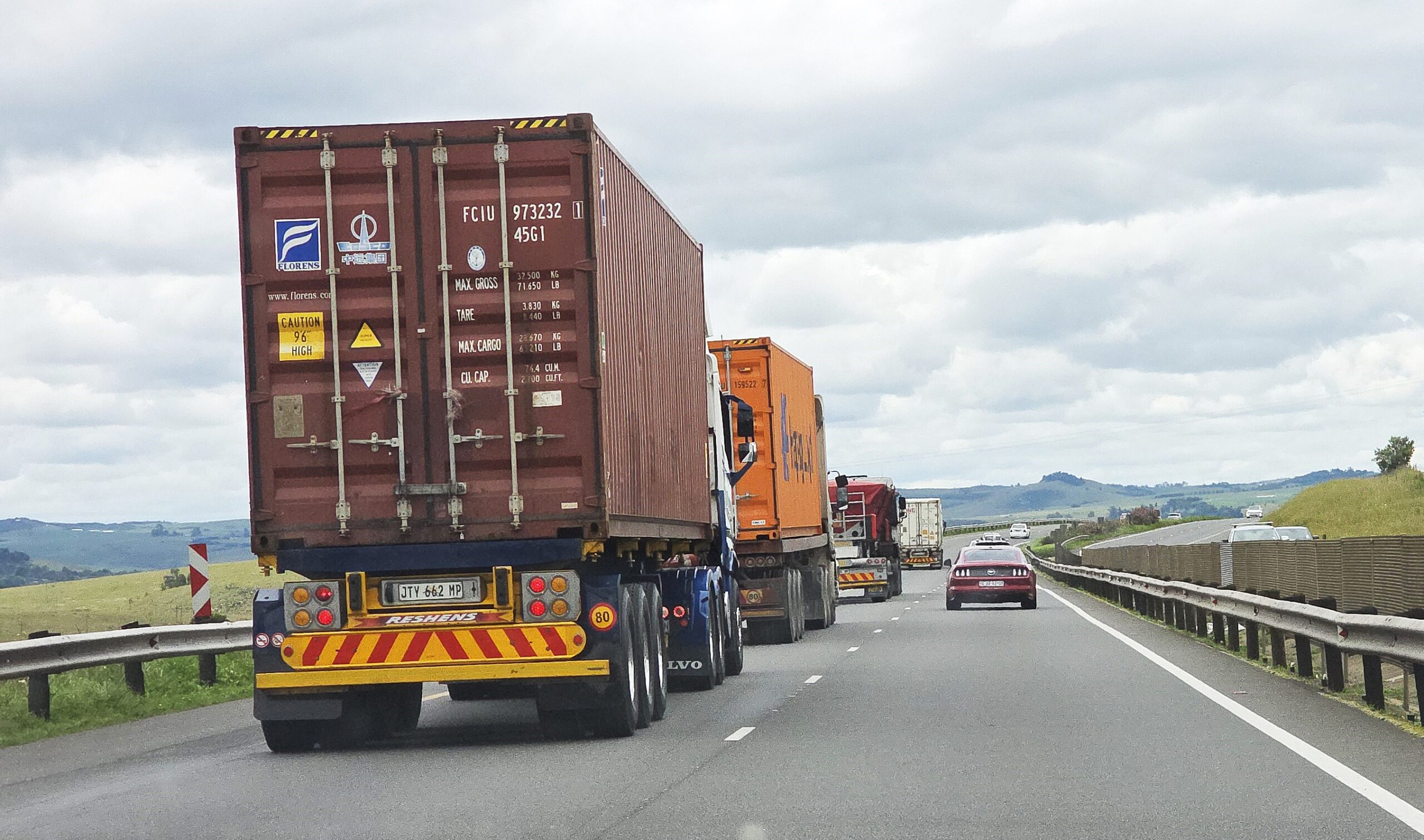
That matters because, despite its shortcomings, road is the dominant mode of transport in South Africa. According to recent findings from Stats SA, in the third quarter of 2025 road accounted for 85.5% of total freight volumes, compared with 14.5% moved by rail. Even for passenger transport, road carries 74.0% of the total, compared with rail’s 26.0% share.
Rail investment is important and long overdue but even under optimistic reform timelines, road transport will continue to carry the bulk of South Africa’s freight and passenger movement for years to come, which means the country’s growth ambitions will rest heavily on the resilience of road transport and warehousing businesses. But that resilience cannot be taken for granted.
A sector under sustained pressure
According to the Ctrack Transport and Freight Index, the road freight sector had another difficult year in 2025, following a 7.7% decline in payload in 2024 and a further 0.4% contraction in the first ten months of 2025. The storage and handling sub-sector also declined by 2.3% in 2025, marking a fourth consecutive year of contraction.
Inventory levels have trended lower, partly due to subdued domestic demand as well as structural shifts driven by improved efficiencies and technology in warehousing and inventory management.
There is a perception that the sector is being weighed down by congestion, logistics bottlenecks and infrastructure constraints – and that is not wrong. But in many cases, when transport and logistics businesses fail, it is not only macro conditions that determine the outcome.
More often, the pressure shows up in working capital and cash flow management and many of these challenges could be mitigated through earlier and more deliberate conversations about how the working capital cycle is structured.
The working capital blind spot
Take a simple example: securing finance for a new truck. It is often seen as the starting point for launching or expanding a transport business. But if payment terms run to 60 days and there is no provision to cover fuel, variable costs and fixed expenses over that period, the business begins operating under strain from day one.
Without a clear understanding of that working capital cycle, even a well-run operation can become vulnerable and failure is too easily attributed to congestion or broader inefficiencies rather than to the way the cash flow was structured.
This is where financiers can misjudge the sector, viewing it as inherently high risk rather than recognising the opportunity that exists when risk is properly understood and structured. With the right industry insight and disciplined financial structuring, transport and logistics can be financed in a way that strengthens long-term sustainability.
Getting this right requires a more informed and nuanced assessment of risk, one that recognises how factors such as route economics, border delays, fuel volatility and contract structures influence cash flow in real time.
With better use of data, telematics and digital platforms, it is possible to assess performance with greater precision and structure tailored financial solutions that align more closely with how businesses actually operate.
Towards an integrated transport future
Most importantly, attention needs to turn to how road transport and logistics fit into the more integrated national transport system that is coming. It has never really been about road versus rail; it is about how road and rail work together, alongside ports and air.
Road will most likely always handle the first and last mile and warehousing and storage will still play an important role. The task is to support the businesses carrying the bulk of the workload today while also preparing them to transition into that more connected future, particularly if South Africa is serious about improving competitiveness and driving sustainable growth.
Editor’s comment: Vilakazi’s analysis is salient and timely, considering the amped-up risks and constraints currently facing commercial transporters in the wake of the escalating war in the Middle East. Essentially, cash flow and risk structuring do ultimately determine whether fleet operators survive during times of crisis or cease to exist. South Africa can invest trillions in logistics infrastructure development, but if financiers and fleet operators are not aligned on how truck fleets actually function on the road, in the workshop and in the boardroom, our national logistics chain will continue to strain its most over-burdened link.
Click on photographs to enlarge