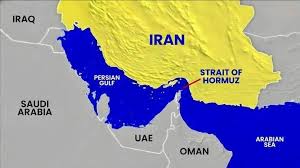
As geopolitical tensions redraw the map of global trade, the concentration of supply chains around a handful of strategic hubs is coming under increasing pressure. The current conflict involving Iran and consequent choking of the Strait of Hormuz have exposed how dependent multinational networks remain on centres such as Dubai to service Africa and Asia. What once delivered efficiency and speed is now introducing risk, with disruptions forcing costly rerouting, extended lead times and greater reliance on alternative modes, including long-haul trucking.
For fleet operators and logistics planners, the implications are immediate. Models built on Just-in-Time manufacturing principles are proving vulnerable in a world where global power nodes are shifting and supply continuity can no longer be taken for granted.
In the following Opinion Piece, Andre Scholle, VP and Head of Region India, Turkey, MEA and CIS at ZF Aftermarket, sets out why decentralisation is now an urgent strategic imperative rather than a long-term consideration. Read on…
When regional hubs go dark
By Andre Scholle, ZF Aftermarket
The conflict in the Middle East has severely disrupted the global supply chain, placing both people and the free flow of products and parts at risk. However, this is not simply a regional issue.
The fallout has put a spotlight on the fragility of modern global supply chains, with the sector’s focus on efficiency creating dependency on a small number of highly concentrated hubs.
Following a period of relative stability in global markets and significant local investment in infrastructure and creating a conducive business environment, Dubai emerged as a vital central multi-modal re-export hub for European manufacturers and parts distributors that want to connect to the high-growth markets in Africa and Asia.
Hub concentration creates a single point of failure
The supply chain shock from the COVID pandemic also prompted companies to adopt Just-in-Time (JIT) manufacturing to minimise inventory storage costs, a method that works optimally when logistic chains are reliable and uninterrupted.
This focus on efficiency meant companies channeled vast amounts of trade through a few concentrated, highly efficient hubs, but this concentration created a single point of failure.
The Iran conflict and the subsequent effective closure of the Strait of Hormuz have transformed this strategic gateway into a high-risk zone for people and logistics services that impact customers, while also introducing macroeconomic risks amid rising oil and gas prices and supply shocks to base materials, which all feed into cost structures.
The unfolding crisis in the Middle East has exposed the structural vulnerability that business-to-business leaders have quietly ignored for years, an over-reliance on single regional hubs, such as Dubai, as the nexus for serving entire continental markets.
Customers in East Africa and Asia, traditionally served through Dubai, suddenly needed alternative routing overnight, forcing companies to adapt by rerouting cargo around the Cape of Good Hope or shifting to premium air-freight solutions or costlier overland transport modes, like trucking.
Scenario planning and people-first strategies take priority
While this seems like a logistics problem on the surface, it’s a strategic design flaw in global supply chain resilience and redundancy that has business leaders rethinking their Middle East supply chain dependency.
While companies operating global distribution networks still view the Middle East as strategically important, no business strategy should override the obligation to keep staff safe. Companies must prioritise solutions that protect their people before finding alternative paths for products. This may entail moving established regional offices – either temporarily or permanently, depending on how the crisis unfolds – to ensure the safety of staff.
The necessity to remain agile and make decisions against the backdrop of a dynamic and rapidly evolving situation highlights the strategic importance of scenario planning.
Scenario planning is not about predicting outcomes, but about pre-authorising decisions before emotion and urgency take over.
Risk management strategies require that regional heads work through multiple scenarios with local teams, mapping out what the trajectory of different potential developments means for operations. Each possible scenario requires a defined decision tree that maps out the specific steps and actions needed to ensure teams can “fly by sight”.
In this instance, if the scenario continues to worsen and the world faces a protracted regional war, companies will need to rejig regional supply chains away from their reliance on Dubai to continue fulfilling customer demand and safeguard the business.
Making informed decisions about how to respond requires a balanced view of the dynamics at play. A critical error that business leaders can make is focusing on Western media for information on the path and trajectory of the conflict in the Middle East.
Allowing biased or single-source reporting to drive strategic business decisions can lead to myopic assumptions. Leaders operating in complex regions can’t afford to be passengers of Western media narratives when making operational calls. They need information discipline. In complex situations like these, ground-level intelligence matters more than headlines to construct resilient strategies.
Decentralised networks key to long-term supply chain resilience
While the global logistics chains that connect via Dubai and the Middle East have not broken down just yet, now is the time to look for alternative strategies that can meet customer demand and best serve the long-term needs of the business.
Whatever happens, the conflict in the Middle East and its impact on global supply chains have reaffirmed the value of a decentralised model and the importance of diversity in locations, with customer proximity creating more resilient logistics networks.
This is not the first crisis of its kind – and is unlikely to be the last. The businesses that emerge from these situations are those that consider every scenario and have a plan in place to pivot the business in the necessary direction, to not only survive but also thrive by finding opportunities in the market dislocation.
Adaptability, flexibility and the ability to ramp up the business on demand offer businesses with a global footprint the competitive advantage they need when the regional hubs they have come to rely on go dark.
Editor’s comment: The Iran conflict has exposed a clear risk in over-reliance on a single Middle East hub. For South African and regional truck fleet operators, it is a timely ‘wakker skrik’: the SADC region is increasingly well positioned to serve as a decentralised gateway for African and global supply chains.
With growing infrastructure, port capacity and logistics expertise, Southern Africa can offer alternative routing, reduce dependency on distant hubs and enhance supply chain resilience. Andre Scholle’s emphasis on decentralisation and regional planning highlights a practical path for businesses to safeguard continuity while tapping into the continent’s rising strategic potential.
Click on photographs to enlarge