Often viewed as an operational hurdle, ESG (environmental, social and governance) has become a strategic business imperative for South Africa’s logistics, transport and supply chain sectors, with industry leaders calling for practical action that delivers measurable outcomes rather than simply satisfying reporting requirements.
That was the central message emerging from the recent Chartered Institute of Logistics and Transport South Africa’s (CILTSA) ESG Conference, where business leaders, financiers, academics and policymakers agreed that the future competitiveness of the sector will depend on leadership, skills development and meaningful investment in the communities that support supply chains.
ESG requires leadership
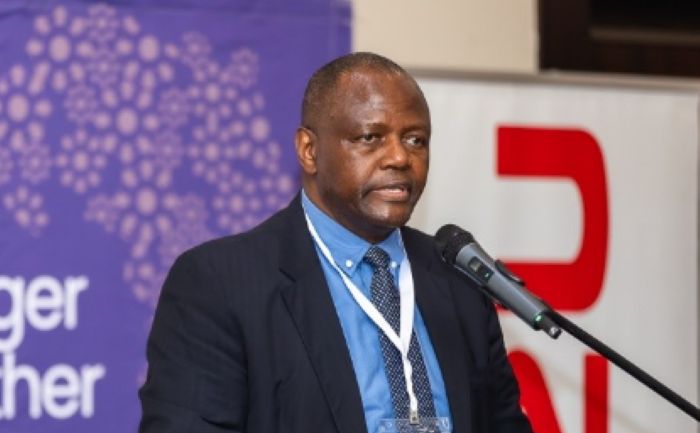
Delivering the keynote address, Dr Andile Sangqu, chairperson of Transnet SOC Limited, said ESG could no longer be viewed as a compliance exercise. Instead, he urged organisations to embed accountability throughout their operations and recognise that resilient supply chains depend on thriving communities.
“A supply chain that takes value from a community without reinvesting in it is putting its own future at risk. We cannot build a strong logistics network on top of struggling communities,” he stressed.
Dr Sangqu also identified South Africa’s logistics skills shortage as one of the sector’s greatest strategic risks, calling for investment in capability across every level of the industry: “The skills gap in our sector is central. If we do not close it before 2030, we will end up with excellent strategies and no real capacity to deliver them.”
He noted that South Africa already possesses significant expertise within universities, TVET (Technical and Vocational Education and Training) colleges, industry bodies, development finance institutions and experienced logistics professionals, but that these resources must be better connected to industry needs.
CILTSA president Elvin Harris said the keynote reinforced that ESG begins with leadership: “Dr Sangqu reminded us that ESG is a leadership responsibility. The quality of conversation and calibre of people in the room shows how seriously South Africa’s logistics community is taking that responsibility.”
Practical solutions
The conference moved beyond theory through a series of panel discussions examining the financial, operational and human capital challenges facing organisations implementing ESG strategies.
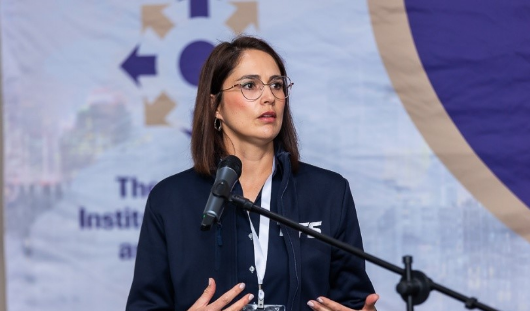
A funding panel, facilitated by DP World’s Lauren Rota, examined how green finance can become more accessible to logistics operators, particularly SMEs facing tight margins and increasingly complex reporting requirements.
Panelists Bernard Vilakazi (Absa), Sashen Singh (Nedbank Limited), Neo Molomo (Industrial Development Corporation), Shaheed Alli (Development Bank of Southern Africa) and Jonathan McDonald (South African Freight and Logistics Association) agreed that sustainable finance should become part of mainstream funding models, while development finance institutions should continue supporting businesses undertaking early-stage sustainability transitions.
A talent panel, moderated by Liesl de Wet of the Road Freight Association’s Green Transport Working Group, argued that ESG capability should become embedded throughout organisational culture rather than remaining the responsibility of a small group of specialists.
Associate Professor Rose Luke (University of Johannesburg), Chantal Kading (People Shop), Maphefo Anno-Frempong (Transport Education and Training Authority), Aimee Girdwood (Stories Evolved) and Sandile Khoza (eThekwini Maritime Cluster) explored practical approaches to developing future skills.
Anno-Frempong emphasised stronger collaboration between industry and TVET colleges aligned with regional economic activity, while Girdwood highlighted visible leadership commitment as the foundation for successful ESG implementation.
From strategy to action
Industry case studies demonstrated how ESG principles are already being translated into operational improvements.
Michelle van den Berg from Takealot Fulfilment Solutions shared lessons from the company’s fleet electrification programme, encouraging organisations to adopt a measured, data-driven approach: “Start small, move on data and do not treat the transition as plug-and-play,” she advised.
Fundiswa Mahlanyana from Isuzu Motors South Africa said Africa’s transition towards cleaner transport must reflect local operating realities: “We need to start with internal efficiencies, deploy technology that fits routes, and invest when the system is ready,” she said.
The conference also featured a presentation on fleet efficiency and sustainability by Renko Bergh from CtrlFleet.
Hosted at the IMM Graduate School, the event was sponsored by Isuzu Motors South Africa, Ctrack Africa, the IMM Graduate School, CtrlFleet and Chery.
Editor’s comment: The CILTSA conference highlighted a significant shift in how ESG is being viewed across South Africa’s freight and logistics sector. Rather than focusing solely on environmental targets or regulatory compliance, delegates consistently linked long-term business resilience to investment in people, skills and communities. As road freight operators face mounting pressure to decarbonise while improving competitiveness, ESG is increasingly emerging as a strategic framework for building more sustainable and resilient supply chains.
Click on photographs to enlarge