With geopolitical tensions around the Strait of Hormuz disrupting oil supply routes, the fragility of global energy logistics is back in sharp focus. For road freight operators this translates directly into diesel volatility, cost unpredictability and renewed urgency around energy diversification. It is precisely into this environment that Volvo Trucks is advancing its hydrogen combustion strategy, underscoring how renewable and alternative propulsion is shifting from a sustainability agenda to a supply chain resilience imperative.
Hydrogen combustion moves from concept to road testing
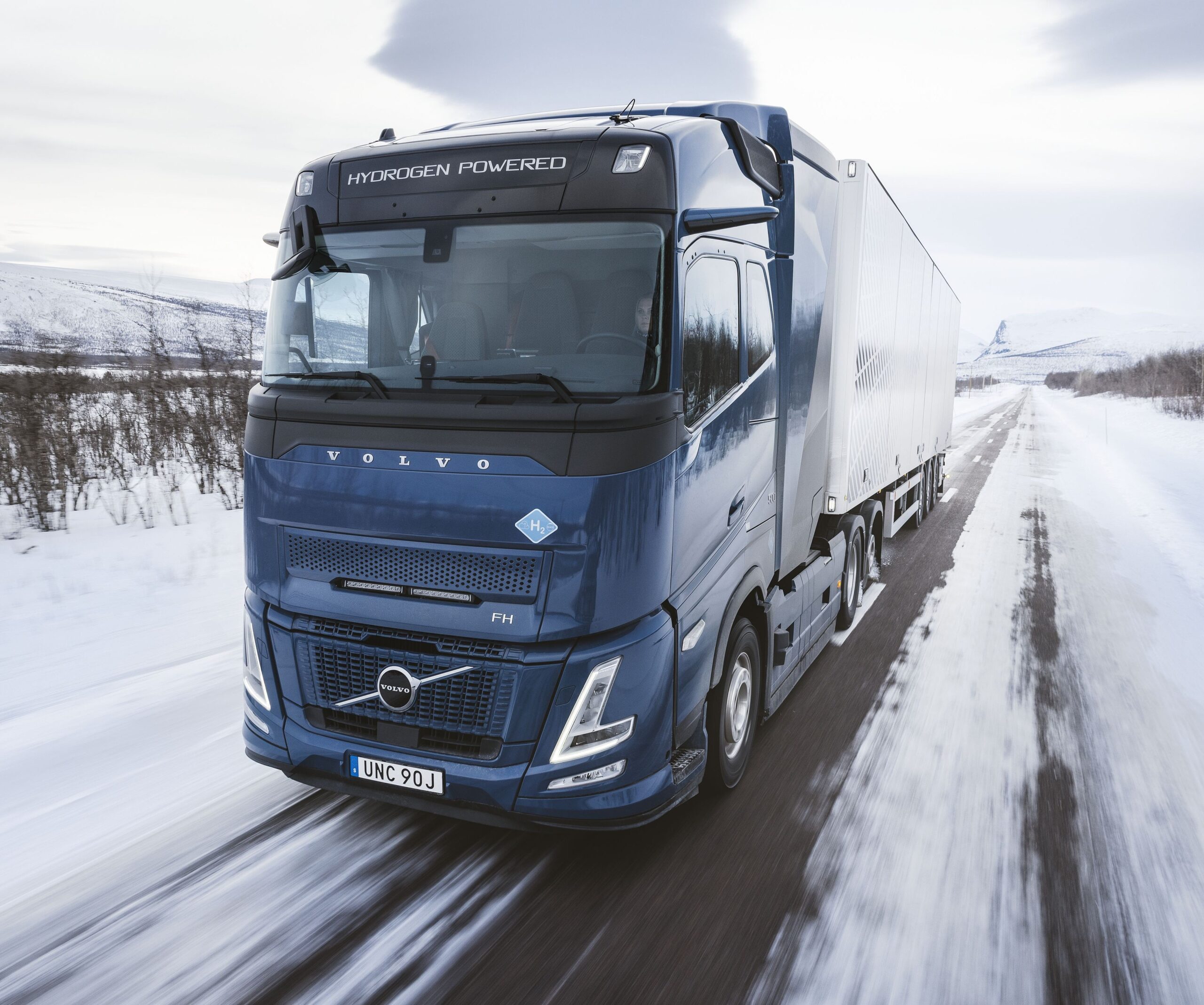
Volvo’s hydrogen combustion trucks are now in real-world trials, with commercial introduction planned before 2030. The company is positioning the solution as a high-performance alternative within its broader decarbonisation roadmap, highlighting improvements in energy efficiency, fuel consumption and engine output compared with conventional hydrogen combustion systems.
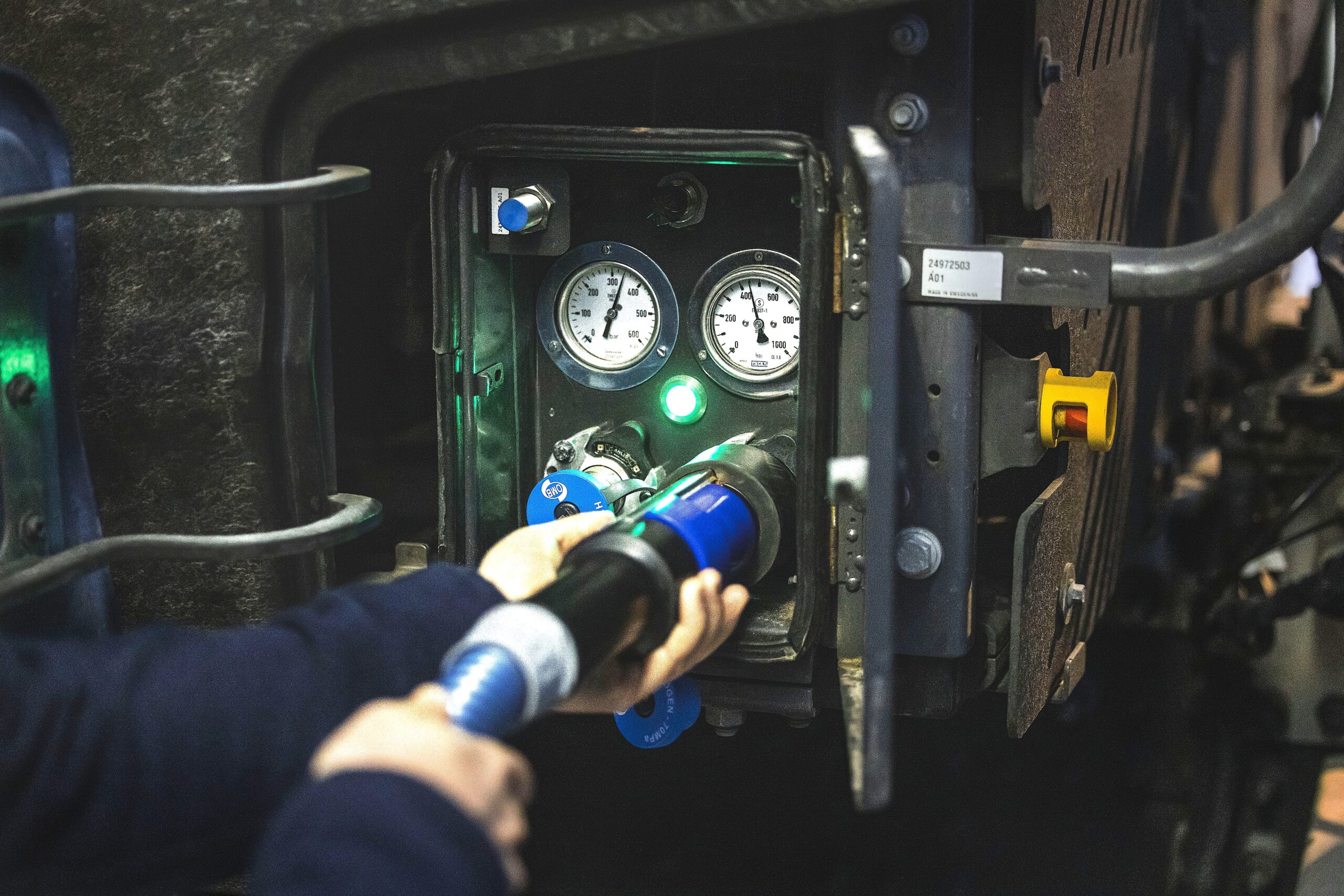
At the center of the development is High Pressure Direct Injection (HPDI), a system that uses a small quantity of ignition fuel injected at high pressure to initiate combustion before hydrogen is introduced. Volvo is already deploying this technology at scale in gas-powered applications, with more than 10 000 units in operation globally.
“On-road testing is an important milestone for our hydrogen combustion engine trucks. I feel confident that they will be the best in the industry if you look at fuel efficiency, power, torque and drivability. Customers will be able to operate them just like diesel trucks. Our experience with HPDI technology in more than 10 000 gas-powered trucks is strong proof of its performance,” says Jan Hjelmgren, Head of Product Management at Volvo Trucks.
Diesel-like operating logic for long-haul reality
Hydrogen combustion is being targeted particularly at long-distance applications and markets where battery-electric infrastructure remains limited or operationally constrained. In these cases, range, refueling time and payload consistency remain decisive operational factors.
Volvo notes that hydrogen combustion trucks, when paired with renewable HVO (Hydrotreated Vegetable Oil) as ignition fuel, have the potential to deliver net-zero CO2 emissions on a well-to-wheel basis.
Under EU CO2 regulatory frameworks, such vehicles are classified as Zero Emission Vehicles (ZEV), reflecting their lifecycle emissions profile rather than tailpipe output alone.
Technically, the system builds on Volvo’s established diesel powertrain architecture, allowing fleets to retain familiar drivability characteristics while transitioning to significantly lower carbon fuel pathways.
HPDI and fuel flexibility at the core
Volvo’s hydrogen combustion development is closely linked to HPDI technology supplied by Cespira. The system delivers diesel-like performance characteristics while significantly reducing CO2 output when paired with low-carbon fuels.
Alongside hydrogen combustion, Volvo is also advancing fuel-cell electric truck development, with low-volume introduction planned before 2030 as part of its broader electrification roadmap.
A multi-path decarbonisation strategy under pressure
Rather than committing to a single propulsion route, Volvo continues to pursue a three-track strategy: battery-electric, fuel-cell electric and combustion engines using renewable fuels such as hydrogen, biogas and HVO.
“We see great potential for hydrogen combustion engine trucks and they will have a role to play in the transformation to zero tailpipe emission transport. Several technologies will be needed to decarbonise.
“As a global truck manufacturer we offer a variety of decarbonisation solutions and help our customers choose the best alternative based on transport assignment, available infrastructure and green energy prices,” Hjelmgren concludes.
Editor’s comment: The significance of Volvo’s hydrogen combustion programme is not just technological – it is strategic. As instability around critical maritime routes such as the Strait of Hormuz reinforces the vulnerability of oil-linked logistics systems, fleet operators are being pushed towards energy optionality rather than single-path dependence.
Battery-electric solutions remain central to the long-term transition but they are not yet universally deployable across all duty cycles and geographies. Hydrogen combustion, particularly when layered onto proven diesel-derived architectures, represents a pragmatic bridge technology – not as a replacement ideology, but as a resilience mechanism. For the road freight sector, the direction of travel is becoming clearer: decarbonisation is no longer only about emissions targets. It is about maintaining movement in an energy system that is becoming increasingly unstable.
Click on photographs to enlarge