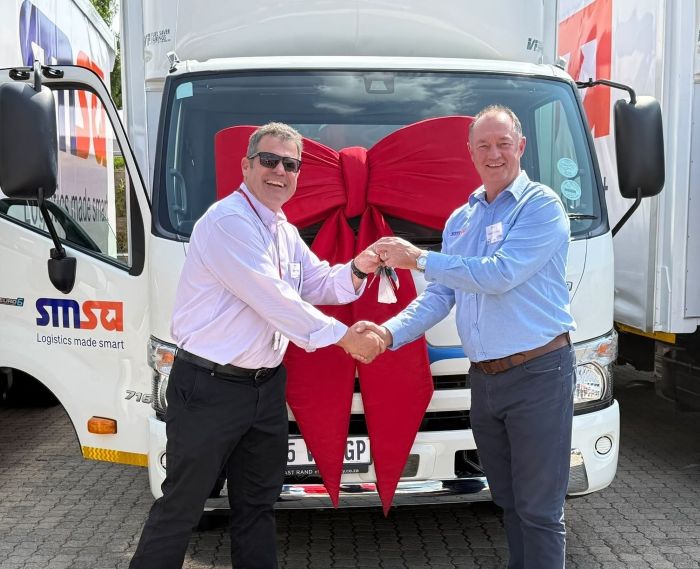
When buying an alternative propulsion truck, there is no quick fix and all players have to be on the same page in terms of goals and objectives in order to make the transaction a long-term strategic alliance partnership with all-round benefits. This is what struck me when I attended the handover by Hino Trucks South Africa of five new Hino 300 hybrid trucks to SMSA recently writes Patrick O’Leary.
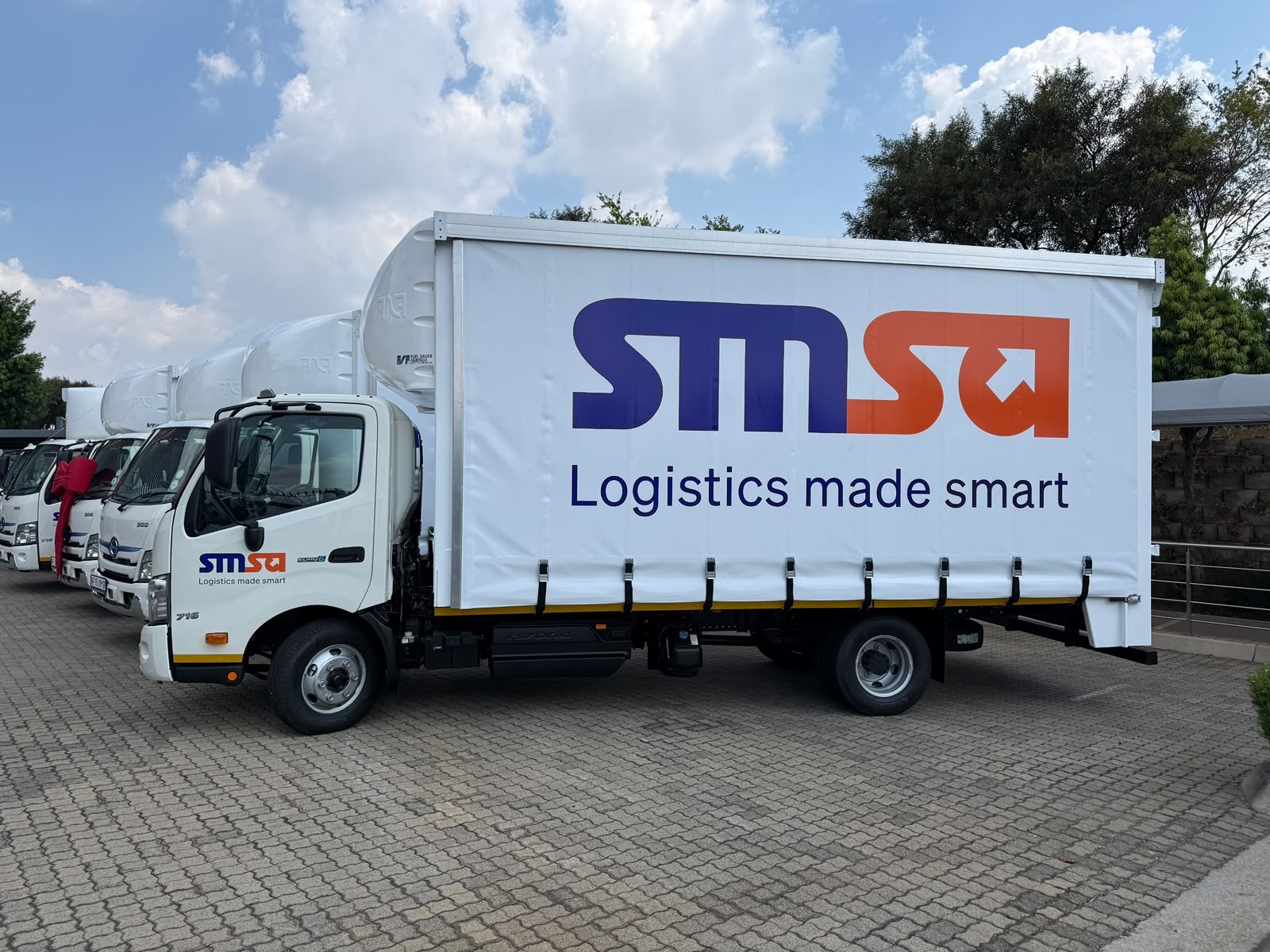
If one just looks at the ‘news of the day’ here it is: SMSA Africa Logistics Group has added a further five Hino 300 diesel-electric hybrid trucks to its fleet after a successful trial period using three of these trucks in its delivery fleet. That was the core reason behind the handover function held at Toyota Africa Parts Centre (TAPC) in Boksburg. However, behind the core news lies a lot more. It’s been a journey of over two years.
On the day, Hino Trucks South Africa was there as the truck manufacturer, TAPC was there as the customer, SMSA was there as the provider of transport services to TAPC and through Hino South Africa, KINTO was also there as the provider of the financial services. Let’s go to the customer first: That would be TPSA.
So what are their requirements. According to Yazeed Ebrahim, senior manager of Logistics for TPSA, being part of the global Toyota network, they subscribe to Toyota’s global environmental visions which focus on a reduction of CO2 emissions, the conservation of water, establishing a recycling-based society and establishing a society in Harmony with Nature.
In terms of CO2 emissions from the facility, Ebrahim said they have invested in a 3.4MW solar plant with 6.4MWh battery capacity. “This has resulted in us being approximately 80% of the grid.” He added that the machinery used in the facility is all electric and taps into the solar for charging.
In terms of water conservation, TPSA has a 2-million litre water harvesting tank which is used for irrigation and cleaning activities on site – such as solar panel cleaning. “For recycling,” he said “we have robust waste management systems and processes where we recycle 98% of waste with the ultimate aim being to achieve Zero waste to landfill.”
As for being in harmony with nature initiatives, there is a wetland next to the site which TPSA supports with conservation and rehabilitation.
Vehicle emissions largest CO2 contributor
According to Ebrahim, one of the largest contributing factors to CO2 from the TPSA business is the CO2 from vehicle emissions as they are responsible for CO2 emissions for upstream and downstream logistics activities. Every day, some 52 trucks depart from the facility with 10 000 parcels delivering to 330 delivery points travelling a total of 60 000 kms per day. It is no wonder that vehicle emissions are the largest contributing factor to CO2 from the TPSA business. That takes us back to the Hino 300 Hybrid.
SMTA (formerly Namlog before becoming a subsidiary of the SMSA Group based in Saudi Arabia) has, for some years, been a transporter for a substantial part of the logistics network and it was back in 2024 that HINO, TPSA and SMSA pulled out a blank sheet of paper and started to get on the same page.
At that time, Hino Trucks South Africa had brought in the Hino Hybrid model which promised reduced emissions and better fuel consumption. TPSA needed to reduce its CO2 emissions and SMSA wanted to get on board. It was thus that a trial period was decided on and for the past two years, that trial has been conducted. SMSA did not buy the trucks. It was a test bed which, if successful, would benefits all three partners. And it has been a success.
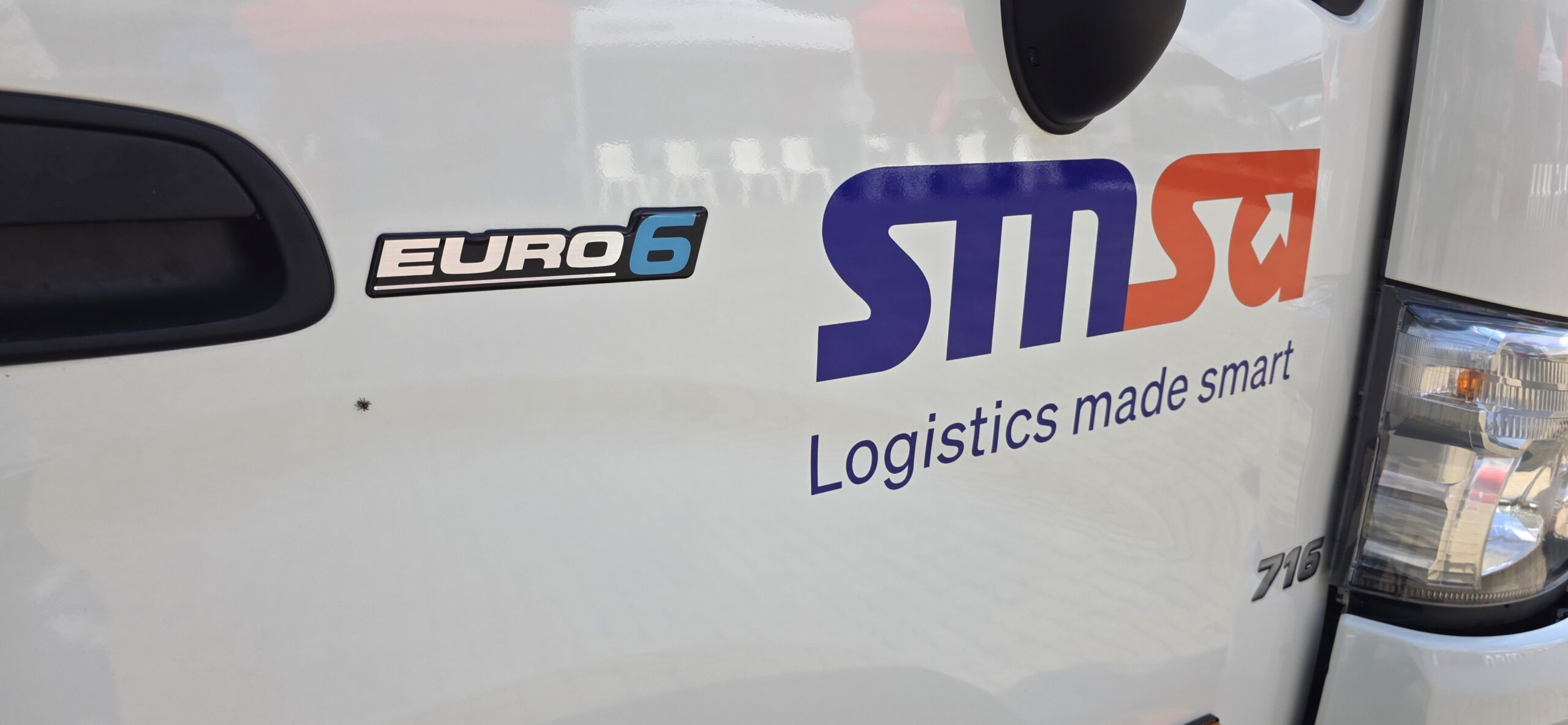
As Louis Ungerer, Managing Director, SMSA Africa Logistics Group, said: “During the trial, the company experienced 100% uptime on these vehicles and achieved fuel savings of approximately 19% in urban operations and around 14% when the vehicles were deployed across a combination of urban and outlying routes. In addition, emission levels are far lower than those trucks with combustion engines because the Hino 300 Hybrid is Euro 6 compliant. This assists us in lowering the carbon footprint of our company’s overall operations.”
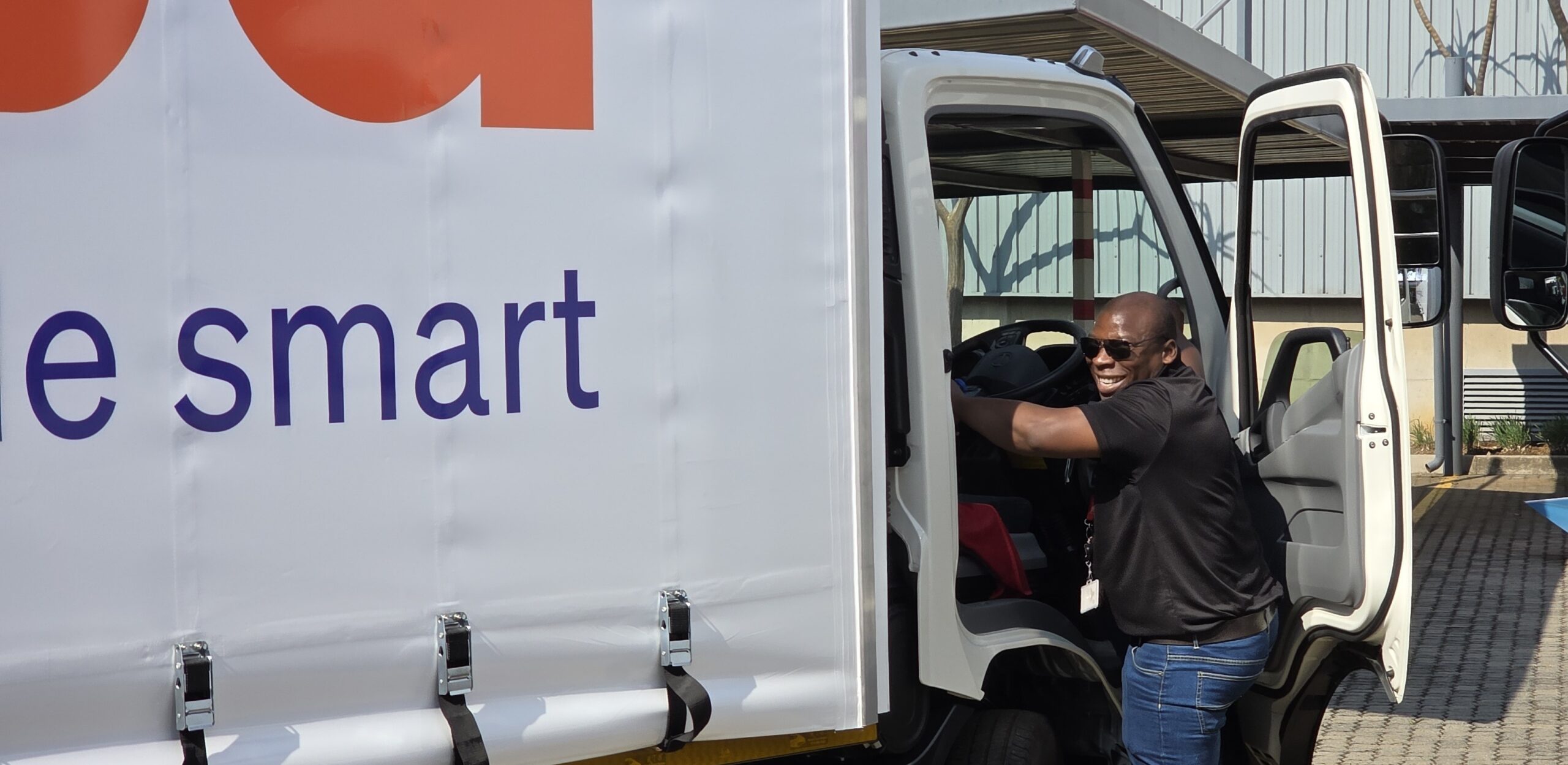
He added that drivers are also happy with the diesel-electric hybrids saying there is no real difference in driving them and the combustion engine Hino.
All was coming together to meet SMSA’s overall visions, as spelt out by Ungerer. “As the demands on the logistics industry continue to grow, we must find ways to deliver faster and more reliably while using resources responsibly and reducing our environmental impact. For SMSA, sustainability is not separate from operational performance. It is part of how we build a stronger, more resilient business for the future.
“For SMSA, this is not simply about adding five trucks to our fleet. It is about using real-world experience and measurable results to guide our future logistics strategy. By investing in practical, proven technology, we are building a fleet that is better equipped to meet today’s requirements and tomorrow’s expectations.”
He added that the successful trial has shown that sustainability and efficiency can work together, “strengthening our operations while supporting the communities and environment in which we operate.” Boom! Jackpot. Saving costs and the planet.
Anton Falck, Vice President, Hino Trucks South Africa, is chuffed with these results. At the initial handover of the test models two years ago, he said: “Hino Motors Japan and its worldwide distributor network are fully committed to carbon reduction with an ultimate objective of a zero situation. The company is using a mix of different solutions from battery electric to hybrid, hydrogen fuel cells and hydrogen as a combustible fuel. This is all part of a drive to meet Hino’s 2030 Environmental Milestone of reducing lifecycle CO2 emissions by 25% compared to fiscal 2013. We are part of this programme and the Hino 300 Hybrid is our first step.”
And that first step has now translated into success for Hino, SMSA and TPSA and, of course, for the survival of the planet.
But there is another party on the page – the money guys and this is where KINTO comes into play. KINTO is Toyota Motor Corporation’s global mobility brand, with more than 45 international operations with KINTO South Africa being wholly owned by Toyota SA Motors. The financial support to put the extra five Hino 300 Hybrid trucks into the SMSA fleet was provided by Kinto South Africa via a Full Maintenance Lease (FML) product.
Enlarging on the offerings from KINTO, Falck said it is a FML company that was started by Toyota in Japan and provides full maintenance leases or operating leases to customers in order to take on the vehicles. “It is a perfect fit in the sense that the vehicle is delivered directly to the customer from the manufacturer via us selling the vehicle legally to KINTO and then KINTO providing it to the customer.”
So there we have all players on the same page.
How it works
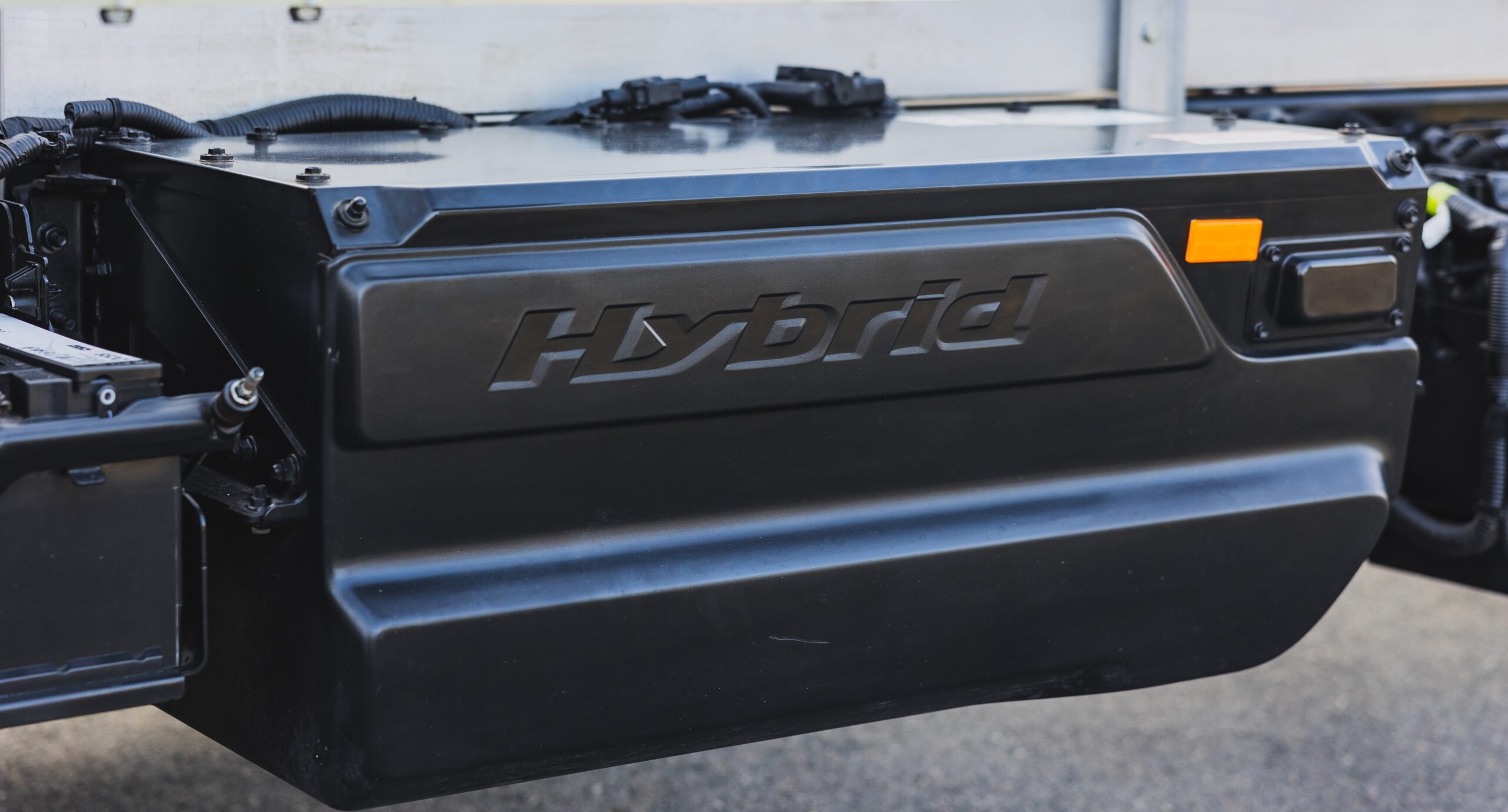
As for the hybrid technology, here’s how it works. The Hino 300 Hybrid uses a parallel system where the engine drives the wheels through the transmission and simultaneously drives an electricity generator. When running in easy conditions the truck can run on the electric motor alone, depending on the remaining power in the batteries as controlled by a dedicated computer.
Unlike many hybrid passenger cars which downsize engine capacity, Hino has kept the full-size diesel engine for the 300 Hybrid to ensure a long working life and under-stressed powertrain. An electric motor is located between the clutch and gearbox, working in parallel with the 4-litre turbo-diesel engine to offer assistance that leads to improved efficiency and reduced carbon dioxide emissions.
The diesel engine and electric motor combined produce 111 kW of power and 470 Nm of torque, with maximum torque delivered as low as 1 200 r/min. The Hino 300 Hybrid uses a six-speed automated manual transmission (AMT), which can be manually overridden by the driver if required.
Change begins with one truck
One may ask why FleetWatch is making such a fuss over a mere five trucks? Well, the world is facing a crisis in terms of global warming and while five Hino 300 hybrid trucks may seem a drop in the ocean when measured against the enormous challenge of reducing global carbon emissions, the significance of these five trucks lies not merely in their numbers but in what they represent – a willingness to act rather than wait. Meaningful change doesn’t always begin with grand gestures. Sometimes it begins with just one truck, one decision, one company prepared to do things differently.
We’re not claiming that five trucks will save the planet. We’re saying that five trucks demonstrate that doing something is better than doing nothing – provided that ‘something’ delivers genuine results, as they have here. Multiply that commitment across an industry and those small steps become giant strides. If everyone waits until they can make a massive difference, nothing gets done. That is the Power of One – or in this case, five Hino 300 Hybrid trucks.
Click on the video below to hear the views from Anton Falck and Louis Ungerer at the handover. They are both definitely on the same page.
WATCH THE VIDEO. Click HERE
Click on photographs to enlarge