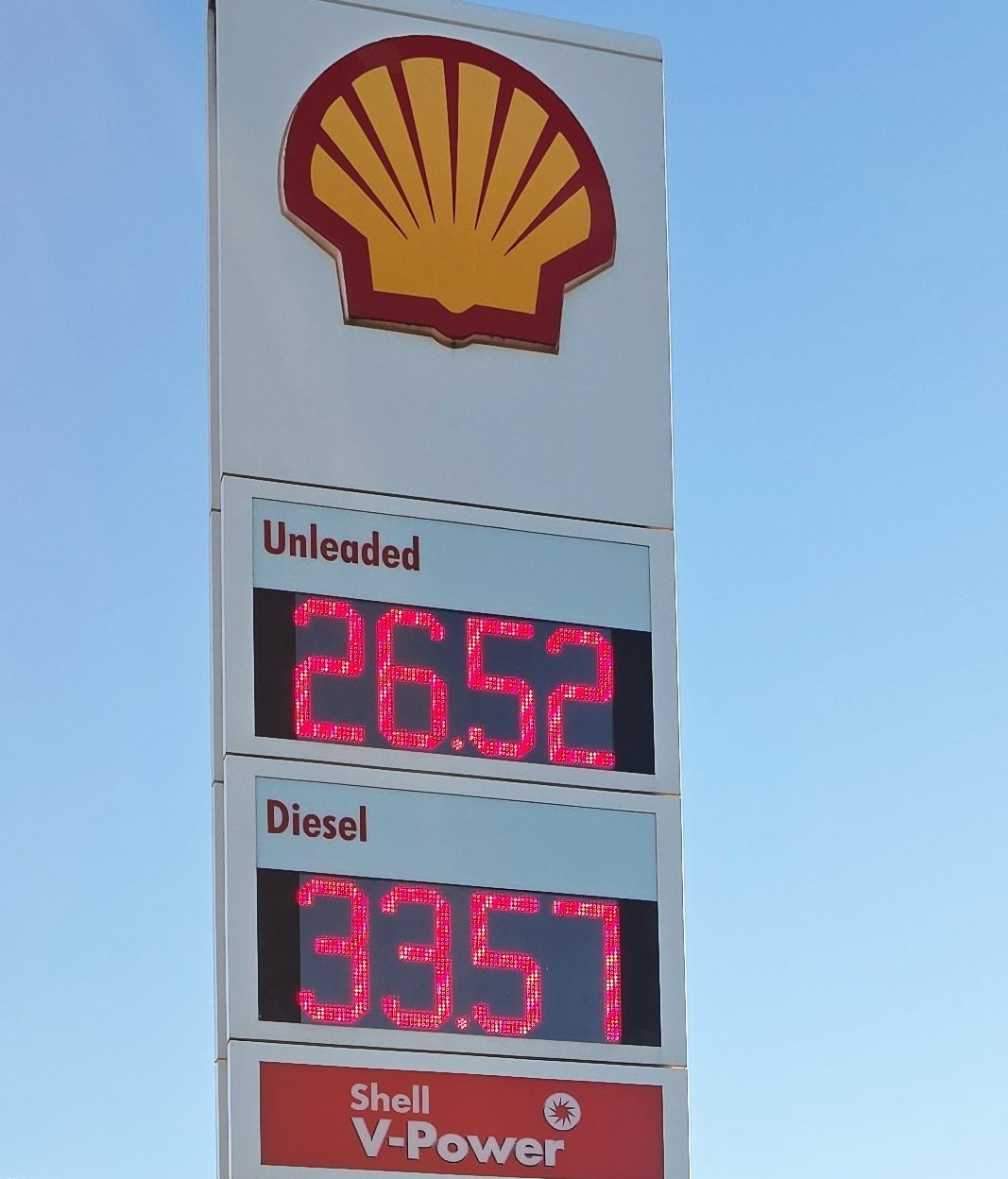
South Africa’s road freight and logistics sector is once again staring down the barrel of punishing diesel increases. With global oil markets rattled by geopolitical instability, a volatile rand and mounting domestic cost layers, diesel is rapidly evolving from a manageable operating expense into a systemic business risk.
In light of this, WesBank says fleet operators can no longer afford to treat fuel purely as a fluctuating line item, arguing that smarter fleet management, data-driven efficiency and even selective electrification are becoming critical tools in protecting profitability in an increasingly unpredictable operating environment.
Fuel volatility has become a structural business threat
South Africans have felt the impact of fuel price increases once again. While there may be occasional relief in the months ahead, the bigger picture is clear. Fuel price volatility is something businesses will need to actively manage for the foreseeable future.
For commercial fleet operators, the current diesel price shocks place extreme structural pressure on daily operations, directly affecting margins, operational efficiency and long-term planning.
From a Fleet Management and Leasing perspective, says WesBank, businesses are moving from simply absorbing fuel increases to actively managing them.
“Fuel price increases are often seen as a short-term shock but in reality, they reflect deeper global dynamics that South Africa has very little control over,” says Andisiwe Nikelo, CEO of WesBank Fleet Management and Leasing. “For commercial fleets, that means fuel can no longer be treated as a variable cost alone. It needs to be managed as a strategic risk.”
Global instability and rand weakness continue to drive prices
At the core of the fuel price is the Basic Fuel Price, largely determined by international factors such as global oil prices, shipping costs and the rand-dollar exchange rate. Because South Africa imports most of its fuel, it remains highly exposed to global disruptions.
“On-going geopolitical tensions have disrupted global oil supply and instead of stabilising after the initial shock, prices have remained elevated and unpredictable,” says Avhapfani Tshifularo, CEO of the Fuels Industry Association of South Africa. “For a country like South Africa, which is heavily reliant on fuel imports, this creates on-going vulnerability to international market shifts.”
Currency weakness adds further pressure. “Even in periods where global oil prices decline, a depreciating rand can keep domestic fuel costs high,” Tshifularo adds.
On top of this, regulated costs such as the General Fuel Levy, Road Accident Fund levy and carbon tax continue to shape the final price.
“People often assume fuel prices are purely about oil,” Nikelo explains. “But for businesses, especially those running fleets, there are multiple layers to the price and very few of them are within their control.”
From fuel bill to operational risk
For commercial trucking fleets, diesel price volatility is becoming an operational risk that affects pricing, delivery timelines and customer commitments. “Fuel price instability is no longer occasional. It has become a continuous, systemic risk that businesses need to actively manage,” says Tshifularo.
South Africa’s reliance on imported fuel, combined with limited strategic reserves and on-going exchange rate pressure, means this volatility is likely to persist. Geopolitical instability continues to compound the issue.
“Conflicts such as the Russia-Ukraine war and tensions involving Iran can disrupt global oil supply and drive price volatility,” Tshifularo adds. “At the same time, exchange rate fluctuations and global supply decisions add further uncertainty.”
At the same time, inefficiencies in how fuel is distributed locally can create additional pressure, particularly when demand spikes or supply chains are constrained.
“In many cases, shortages are not due to a lack of fuel but rather constraints in how efficiently it can be distributed when demand increases suddenly,” Tshifularo notes.
Smarter fleet management is becoming essential
In a high-cost, high-volatility environment, fleet management becomes one of the most effective ways to control fuel spend, yet it is still underutilised by many businesses.
Fleet Management and Leasing is not just about financing vehicles. It is about giving businesses the tools, data and insights to run their fleets more efficiently.
Key practices making measurable differences include route optimisation using telematics and data to reduce unnecessary mileage, managing driver behaviour such as speeding and excessive idling, matching the correct vehicles to specific operations, maintaining vehicles properly and closely monitoring fuel usage to identify inefficiencies or misuse.
For many businesses, these are practical interventions capable of delivering meaningful savings without major disruption.
“Visibility is critical. Once you understand how fuel is being used across your fleet, you can start making smarter decisions that reduce waste and improve efficiency,” Nikelo says.
Electrification enters the fleet conversation
Electrification is also beginning to feature more prominently in commercial fleet discussions, although adoption in South Africa remains at an early stage.
Electric vehicles reduce reliance on fuel, helping businesses limit exposure to ongoing diesel increases over time. However, WesBank stresses that the transition must remain practical and commercially viable.
Urban delivery applications, where routes are predictable and charging infrastructure is more manageable, may present the strongest early opportunities. The company also argues that fleet operators should evaluate total cost of ownership rather than focusing solely on upfront acquisition costs.
“Electrification is not a silver bullet but it is part of the long-term solution,” says Nikelo. “For some fleets, even a partial shift can start to reduce exposure to fuel price risk.”
Diesel pressure is rippling through the wider economy
Fuel costs continue to affect the broader economy, particularly in sectors heavily dependent on transport and logistics. Diesel remains a critical operational input for mining, manufacturing and freight transport.
As fuel costs rise, those increases move through supply chains and ultimately contribute to broader inflationary pressure across the economy. For transport operators, efficient fuel management is therefore becoming as much about competitiveness as profitability.
Better coordination could ease pressure
There is also a role for industry and policymakers in improving how the fuel system operates, WesBank notes. Practical interventions such as improving the reliability of existing pipelines, terminals and storage infrastructure could help ease pressure without requiring major capital investment.
“Improving coordination across storage and distribution, as well as better visibility of available fuel, can significantly reduce pressure during periods of volatility. In many cases, the challenge is not supply but how effectively that supply is managed and moved,” Tshifularo suggests.
Nikelo concludes: “Businesses need to shift their mindset. You cannot control the price of fuel, but you can control how efficiently you use it.”
Editor’s comment: The South African trucking industry is increasingly being boxed into a corner where diesel price volatility is now a defining operational reality, making accelerated efficiency measures, deeper telematics integration and, gradually, alternative-energy experimentation all the more critical.
Click on photographs to enlarge.