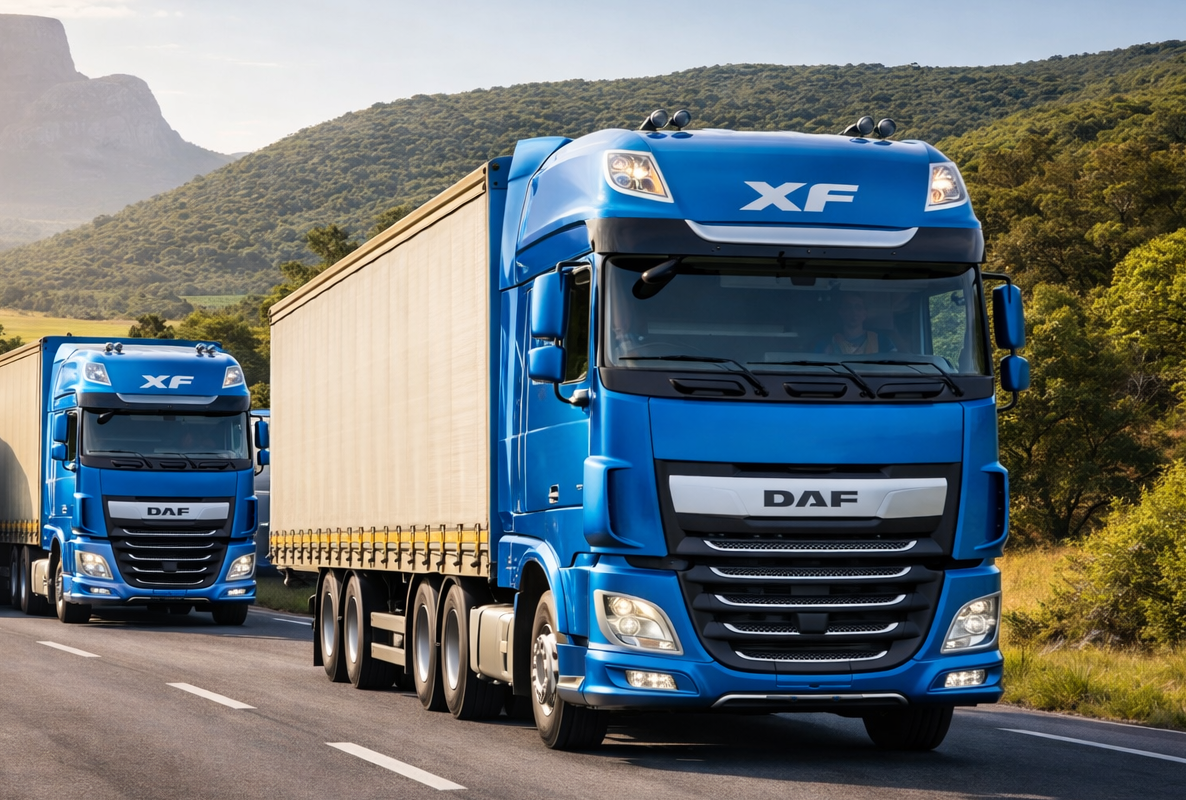
With road freight volumes expected to rise in 2026, DAF Trucks (a Babcock subsidiary) argues that disciplined fleet planning will be critical to capturing growth without overexposing operators to CAPEX risk. In a market shaped by diesel price volatility, regulatory pressures and payload demands prone to supply chain disruption, effective fleet expansion must be driven by an ‘engineered’ capital strategy.
According to Mark Gavin, Sales Director of DAF Trucks at Babcock: “Sustainable transport growth is rarely accidental – it is engineered. Many operators enter the market with quality pre-owned units to manage capital exposure.
“That’s often a smart and strategic starting point. The key is to ensure those vehicles are properly inspected, supported and backed by a strong aftermarket network.”
Starting smart in a tightening market
Pre-owned assets remain a pragmatic entry strategy, particularly for emerging operators or those cautiously expanding into new contracts. Lower upfront capital outlay preserves working capital – a crucial buffer in margin-sensitive freight environments.
But, as Gavin notes, fleet strategy evolves alongside operational maturity. “We see a clear transition point. Once operators begin running heavier combinations or expanding into longer routes, the focus moves beyond purchase price to total cost of ownership.”
That transition typically coincides with increased gross combination masses (and on-road risk), more demanding duty cycles and higher utilisation rates – conditions where specification, not purchase price, becomes decisive.
A fine balancing act
Scaling a fleet for heavier payloads or extended line-haul work demands more than incremental horsepower. It requires a carefully calibrated balance between power output, driveline efficiency and durability.
“It’s about balance,” says Gavin. “You need the right combination of power, fuel efficiency and reliability. If you get that balance correct, you protect margins while increasing capacity.”
Modern long-haul platforms such as those from DAF Trucks increasingly integrate optimised aerodynamics and advanced driveline technologies. The result is higher output without disproportionate fuel penalties – a critical advantage when diesel remains the dominant operating cost in bulk and long-distance transport.
Lifecycle value as the anchor metric
While a vehicle’s purchase cost will always influence procurement direction to one degree or another, Gavin stresses that fleet profitability will always hinge on total cost of ownership: “Capital cost is important but it’s only one part of the equation. Fuel consumption, service intervals, parts availability, warranty support and residual value all influence long-term profitability.”
Operators who plan around lifecycle value rather than acquisition price typically experience stronger asset sustainability, improved uptime and more resilient resale values. In a projected 2026 growth environment, that discipline can mean the difference between fleet growth that strengthens a balance sheet and fleet expansion that strains bottom line integrity, he adds.
The human element
Fleet productivity is not purely mechanical – it is also human, says Gavin: “Driver comfort plays a direct role in safety, productivity and retention. Ergonomic cabs, intuitive layouts and reduced fatigue contribute to operational consistency. In a competitive driver market, that matters.”
As driver shortages persist globally and locally, vehicle ergonomics, cabin space and fatigue-reduction features become operational enablers, not luxuries. Strategic fleet growth therefore extends beyond powertrains and payloads to encompass the people who translate mechanical capability into revenue.
Partnership, not procurement
At Babcock, Gavin frames fleet planning as a long-term collaboration rather than a transactional supply exercise: “Our role is not simply to supply trucks. It’s to work alongside operators – whether they are starting with pre-owned assets or scaling into higher-capacity units – and ensure their fleet decisions support sustainable growth.”
If 2026 is gearing up to reward operators with best-practice standards in place, fleet growth via disciplined fleet engineering will provide a distinct competitive edge, Gavin states, reminding fleet operators that while growth in the road freight sector may be cyclical, capital missteps can haunt operators for years.
“Fleet growth should never be accidental,” he concludes. “It should be engineered.”
Editor’s comment: History consistently demonstrates that poorly structured fleet expansion amplifies risk in volatile markets. The operators who thrive in 2026 are likely to be those who treat fleet planning as a financial strategy first and a procurement exercise second. Engineered growth, not opportunistic acquisition, remains the hallmark of resilient transport businesses.
Click on photographs to enlarge.