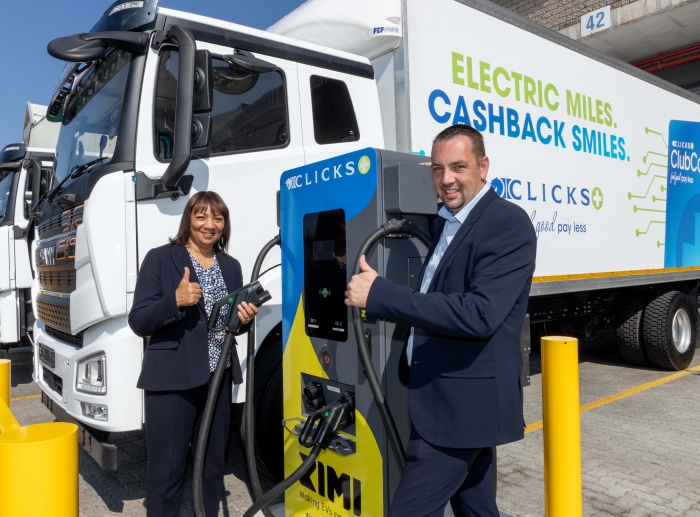
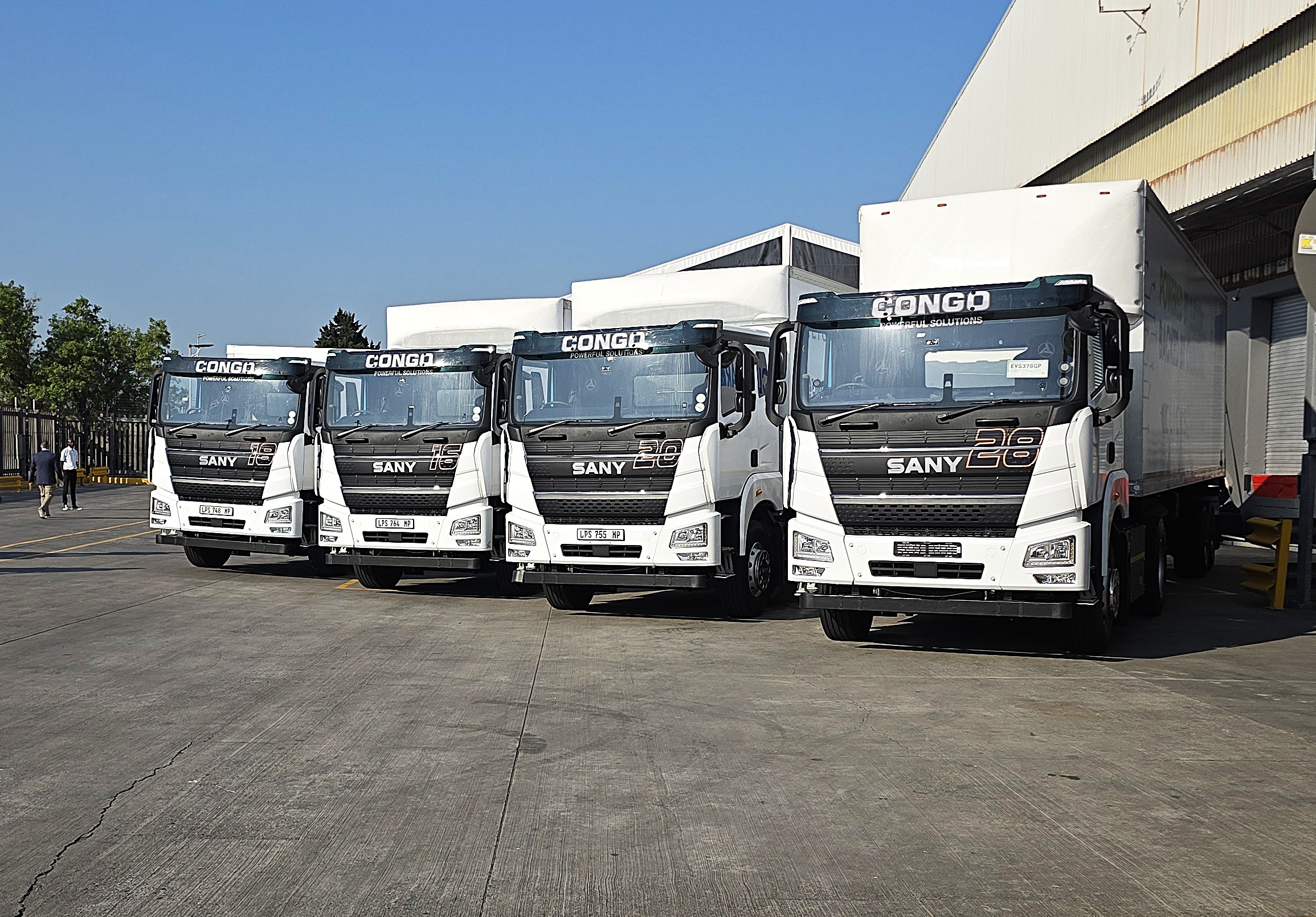
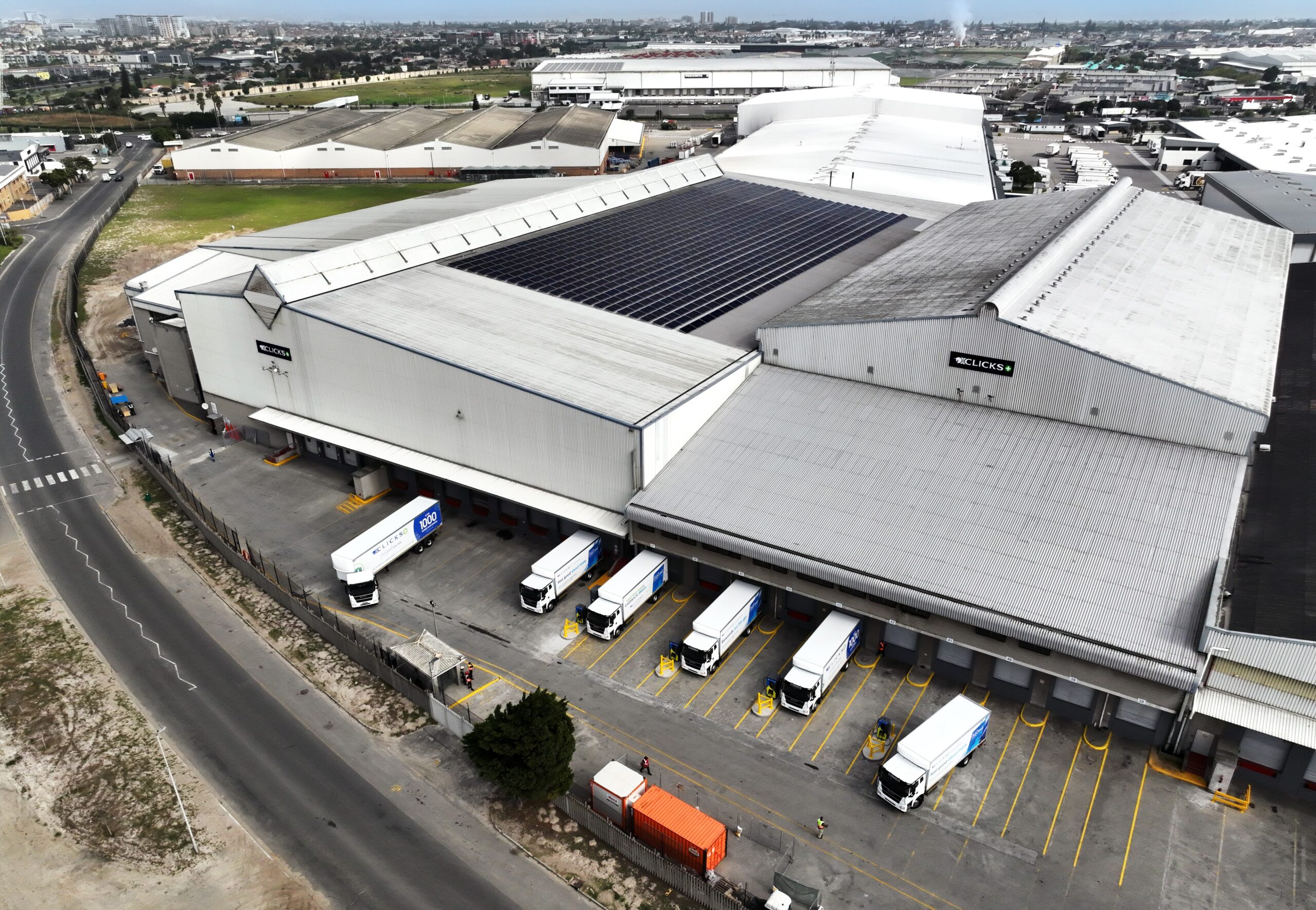
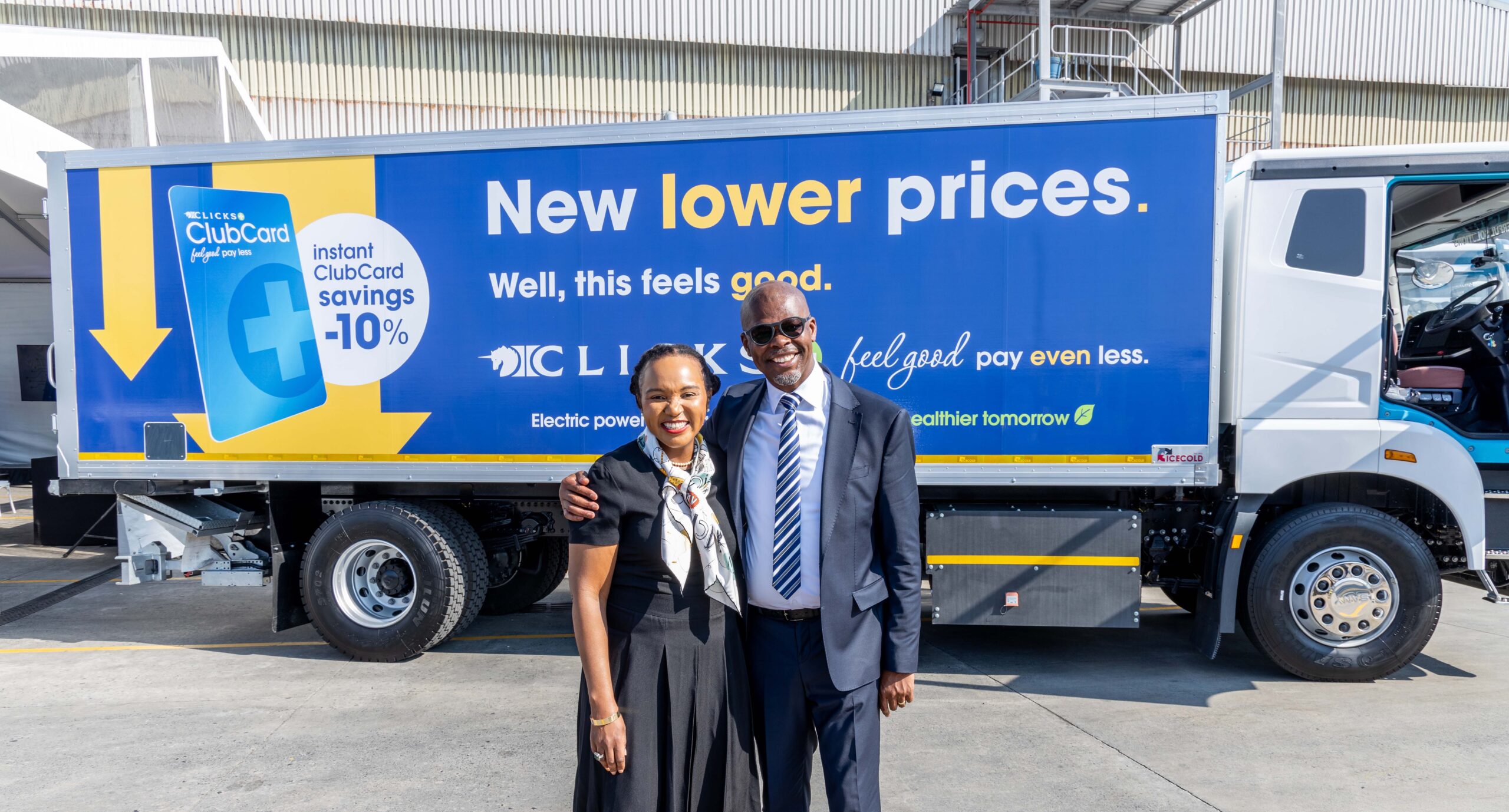
Over the years I have been to many truck handovers but this one was different in many ways. I’m talking about a function held by the Clicks Group to announce that its Montague Gardens distribution centre was set to become the first retail distribution centre in Africa to operate a 100% electric truck fleet – with the first batch of a 30-unit order of heavy-duty electric trucks from SANY being proudly displayed – and there’s more to come writes Patrick O’Leary.
“This is what responsible corporate citizenship looks like. With our partners, we are not simply responding to change. We are helping to lead it.” These words of Bertina Engelbrecht, Clicks Group CEO, encapsulate the holistic spirit of Clicks’ milestone event. I’m going to give her the podium first as without Clicks’ solid commitment to invest in its climate transition pathway and its long-term ambition to achieve net-zero emissions by 2050, this day would not have taken place.
Speaking to the assembled guests, Engelbrecht said the launch marked an important milestone for the Clicks Group but stressed that the significance of the move went beyond being the first.
“This is about more than being first. It is about how we lead,” she said, adding that customers increasingly expect companies not only to deliver value, convenience and service but also to operate responsibly and minimise their environmental footprint.
With road transport accounting for the bulk of transport-related emissions in South Africa, Engelbrecht said changing the way goods are moved on the country’s roads had an important role to play in building a lower-carbon future. Clicks, she said, had chosen to move early.
The 30 new-generation SANY heavy-duty electric trucks secured by the group represent a significant first step in what is a far more ambitious electrification programme. By the end of 2027, Clicks plans to have 68 electric trucks operating in its fleet, representing around 62% of its current national fleet. This is well ahead of its original target of having 30% of the fleet electric by the end of 2029. The longer-term target is for more than 90% of the group’s heavy-duty truck fleet to be electric by September 2028.
“It is a bold, ambitious target. But today shows that we are turning ambition into action,” Engelbrecht said.
Fuel savings
While the environmental benefits are central to the strategy, the numbers also point to a compelling commercial case. The initial 30-truck fleet is expected to eliminate the consumption of around 780 000 litres of diesel annually and avoid approximately 2 000 tonnes of tailpipe carbon dioxide emissions each year. Clicks projects annual fuel savings of between R20-million and R25-million, together with a further R2-million to R3-million reduction in maintenance costs.
Supporting the move is substantial investment in the energy infrastructure required to make electric trucking viable. Clicks has invested more than R65-million in solar photovoltaic generation, battery energy storage and charging infrastructure, including R41-million invested in battery energy storage systems at two distribution centres.
The trucks can be charged using a combination of solar-generated electricity, stored energy and grid power – an important consideration in the South African operating environment.
The first 14 electric trucks will operate from the Montague Gardens distribution centre in Cape Town, with the remaining two diesel trucks at the facility due to be replaced by electric units by the end of October. This will make Montague Gardens the first retail distribution centre in Africa to operate a 100% electric truck fleet.
A further 14 electric trucks are being deployed at the group’s Centurion distribution centre, with the electrification programme scheduled to extend into KwaZulu-Natal by September 2027.
The scale of the operation the trucks will serve is significant. The Cape Town fleet delivers to around 290 stores while the Centurion operation services approximately 566 stores.
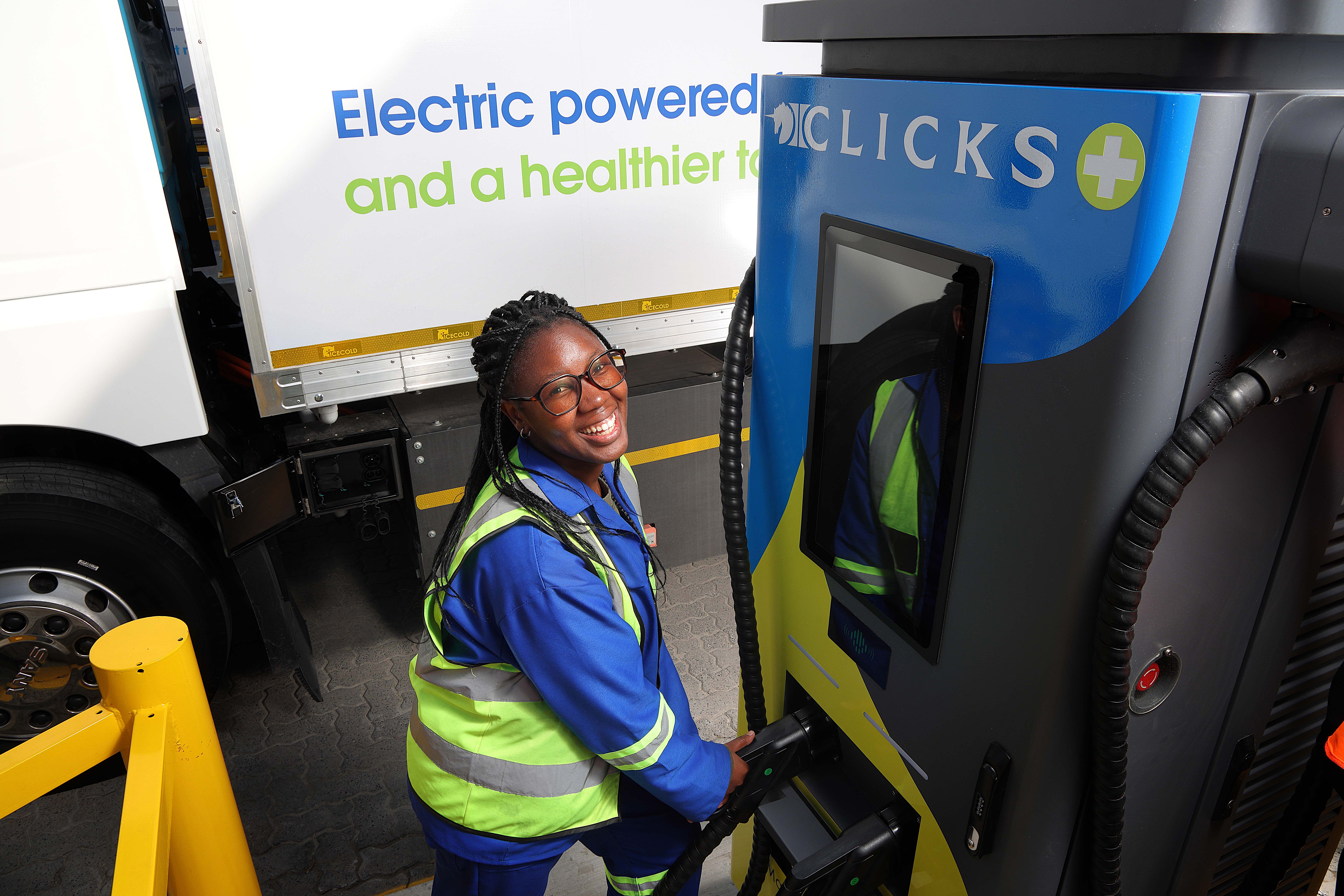
And these SANY electric trucks are not destined for light-duty, low-mileage demonstration work. Equipped with 318 kWh batteries, the trucks have a claimed range of between 380 and 400 km per charge and an 11.5-tonne payload. Each is expected to travel between 110 000 and 120 000 km annually. DC fast charging can take the batteries from 20% to 80% charge in approximately 30 minutes.
Technology will play an equally important role in ensuring the fleet is used efficiently. Clicks’ transport management system provides real-time fleet visibility and incorporates route optimisation, vehicle-utilisation monitoring, charging coordination and performance tracking.
The heavy-duty trucks also form part of a broader electrification strategy. Clicks already operates Maxus eDelivery vans and smaller electric MellowVans and plans to introduce electric bikes for omni-fulfilment operations.
Net-zero emissions by 2050
For Engelbrecht, however, the transition is not being treated as a stand-alone environmental project but as part of the group’s overall business strategy and its ambition to achieve net-zero emissions by 2050.
“Sustainability is not a separate initiative. It is an inherent part of our strategy,” she told guests. “It shapes the decisions we make, the infrastructure we invest in and the way we prepare the business for the future.”
And perhaps the most telling aspect of the Clicks initiative is that the environmental and commercial arguments are being placed firmly alongside each other. The company is not positioning electric trucks simply as a means of reducing emissions but as assets expected to work hard, cover substantial annual mileages and contribute towards lowering operating costs.
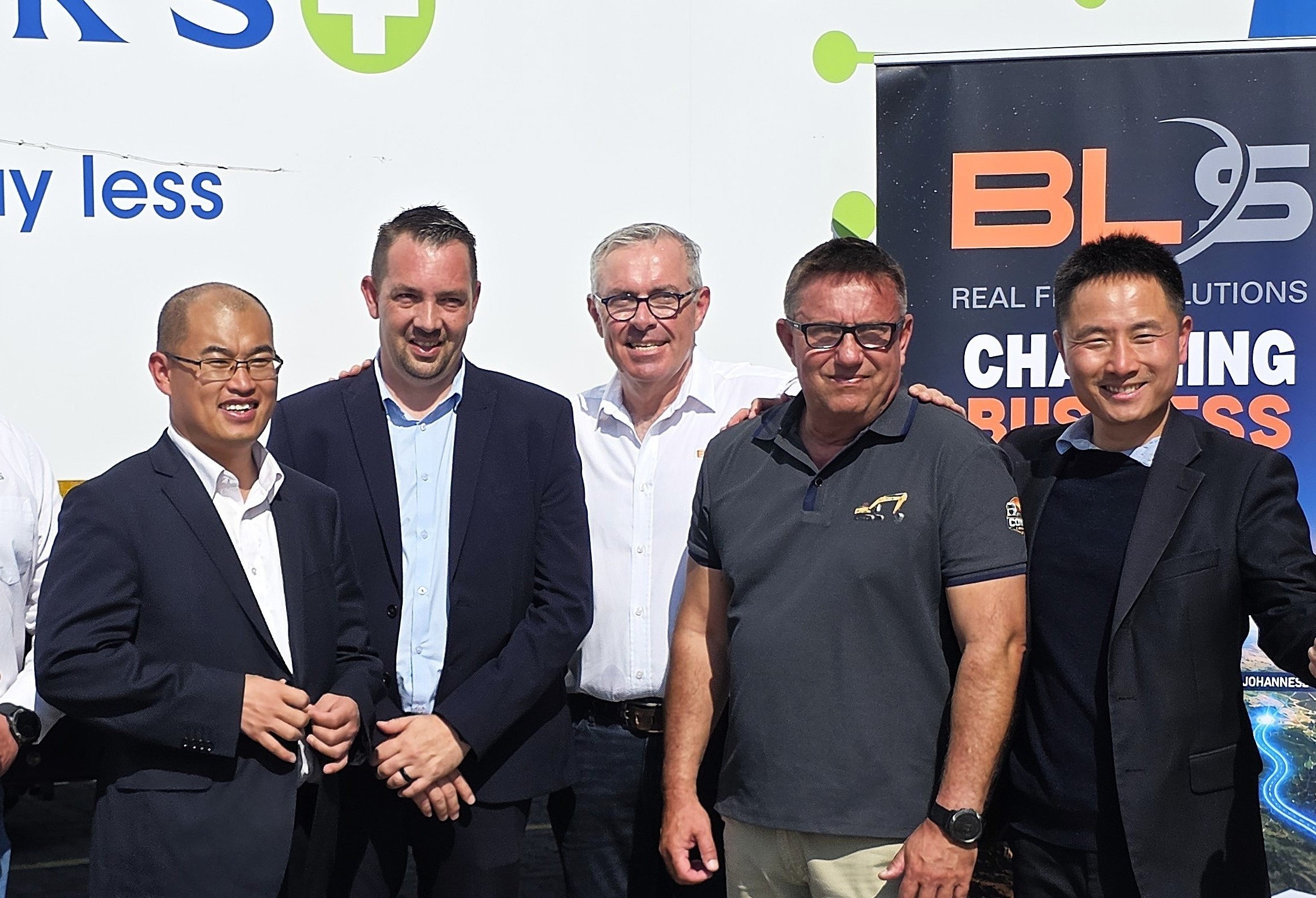
That is where the Clicks experience becomes particularly relevant to the wider South African road transport industry and on this point, it is not just Clicks alone which is driving the way forward. The word ‘partnership’ is critical when transitioning to electric trucks at this scale. It starts with Clicks wanting to go this route. Then it needs a transporter willing to join in the way forward and in this case, it is Congo Carriers. It also needs the charging infrastructure and here is where Zimi comes into play alongside solar-generated electricity, stored energy and grid power. Of course SANY, as the electric truck supplier, plays a central role as does Boutique Leasing Services (BLS) in the purchase and leasing of the trucks to the transporter.
The money equation
In conversation with John Loxton, CEO of BLS, what stood out for me was that electric trucks shift the leasing conversation from the asset to the operation. With an EV, questions such as where will it run, how far will it run, when will it charge, is the power available, who manages the charging and battery and what happens if the operating profile changes? “You need to manage the whole ecosystem. It’s not just about buying a truck,” said Loxton.
In other words, the introduction of electric trucks into a fleet requires a fundamentally different approach to simply leasing and acquiring a conventional diesel truck.
This deal represents BLS’s first major electric trucks – not vans – transaction and one which Loxton believes demonstrates how the leasing and management of commercial EVs will need to evolve as more operators enter this space. BLS has leased the SANY electric trucks to Congo Carriers having purchased the vehicles from SANY.
According to Loxton, central to the approach is determining whether the operation makes commercial sense from a Total Cost of Ownership (TCO) perspective. This means looking beyond the acquisition price of the vehicle to its intended usage, energy requirements and supply, charging infrastructure, battery management, maintenance and other services required throughout its operating life.
“Electric vehicles will only make commercial sense if they are procured as part of a packaged, managed solution,” says Loxton. “You cannot look at the vehicle and energy separately. The energy supply and its optimisation have to form part of the solution.”
For this reason, BLS has formed an alliance with energy solutions company Zimi which, as mentioned, is also involved in the Clicks project. Loxton says this allows the vehicle leasing and fleet management elements to be considered alongside the energy and charging requirements of the operation.
The Clicks transaction also illustrates the importance of accurately establishing the vehicle’s intended duty cycle before putting an EV into service. BLS assesses the expected usage profile against the contractual requirements and overall economics of the operation.
“We analyse the viability of the project against TCO,” says Loxton. “We need to understand the usage profile and manage that against the contractual profile. Otherwise, you can end up with a truck standing and a lot of questions being asked.”
This, he stresses, demands a partnership approach involving the fleet operator, customer, vehicle supplier, energy provider and fleet management company.
BLS describes itself as a fleet management business. Its operating leases can incorporate services such as telematics, tracking, insurance, roadside assistance, maintenance, servicing and workshop management, with the objective of managing costs and operational risk throughout the vehicle’s life.
In the Clicks arrangement, BLS owns the trucks and rents them to Congo Carriers while working with the various parties involved in the operation. For Loxton, it is a model likely to become increasingly relevant as electric commercial vehicles gain traction in South Africa.
As for SANY, they are thrilled with this development. “We are standing on the shoulders of giants.” These were the words of Davis Xiao, managing director of GHM, the local distributor for SANY electric trucks in South Africa. His words not only once again encapsulated the ‘partnership’ concept of a deal of this type but also demonstrated a level of humbleness.
The word ‘humble’ is one which sat with me as I flew back to Johannesburg that night. The spirit of the occasion was not one of boastful chest puffing. Rather it was one of pride in simply doing the right thing, not only for today but for future generations. It was a great day for the present – and the future.
WATCH THE VIDEO. Click here
Click on photographs to enlarge.