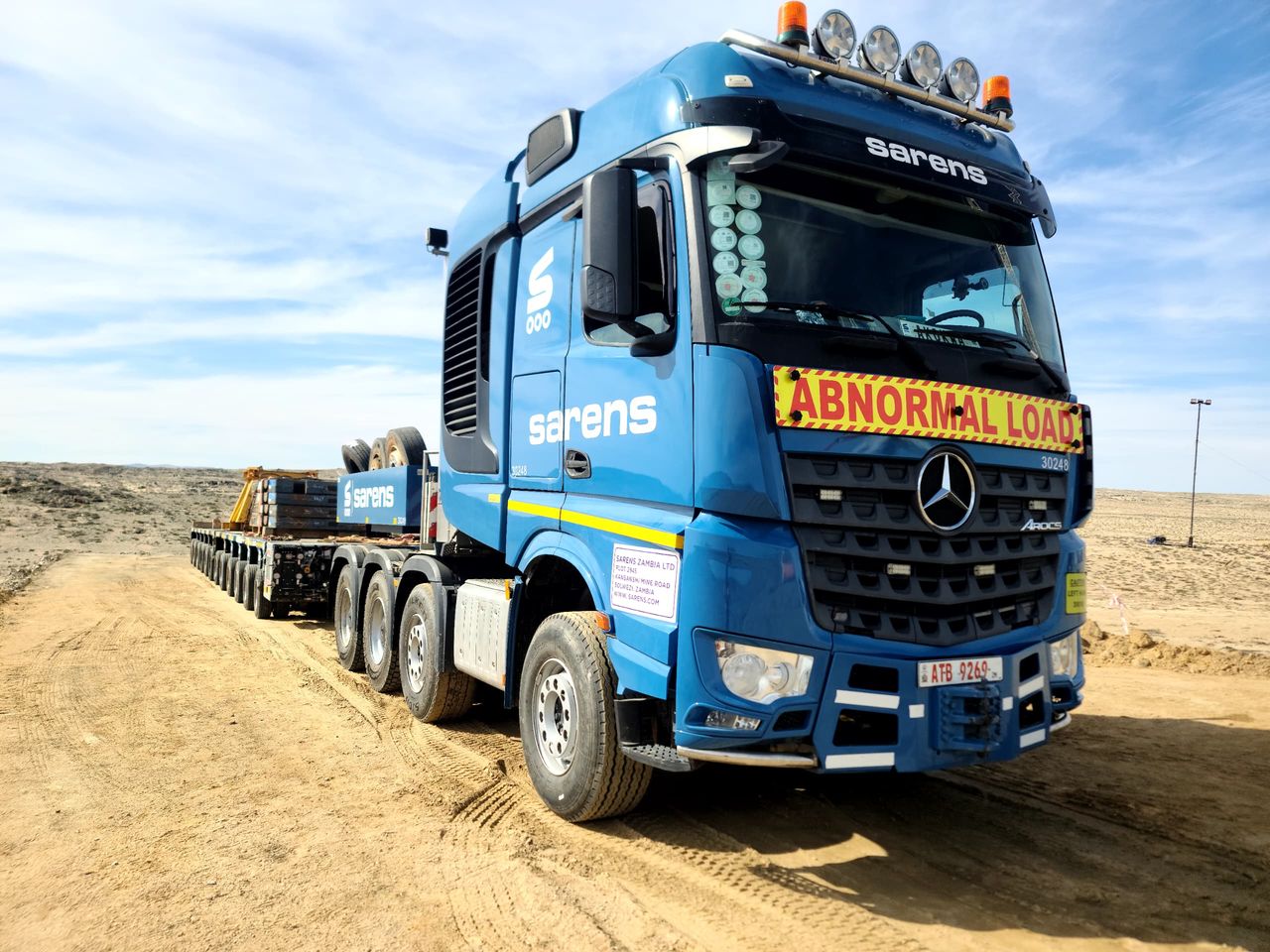
Expansion of international companies in the Southern African region to upgrade infrastructure, mining capacity and energy generation is accelerating – and with it the need for specialist heavy logistics capability. Among the firms deepening their footprint is Sarens, the global heavy-lift group specialising in large-scale crane supply and operation and abnormal-load transport.
From established bases in Durban and Dar es Salaam, the company has supported complex projects along key trade corridors. It now extends that network westward with a new logistics hub in Namibia’s Walvis Bay corridor – positioning advanced trailers and self-propelled modular transporters closer to emerging oil and gas, mining and offshore developments across the SADC region.
Four hectares of capability
The newly acquired 4.14-hectare Walvis Bay facility strengthens Sarens’ operational base for projects in Namibia as well as Angola, Zambia, Botswana, Zimbabwe and the Democratic Republic of Congo.
From this strategic location, the company will provide abnormal transport solutions, warehousing, staging, shunting and material handling services – a timely intervention as Walvis Bay advances port expansion initiatives such as North Port and the development of Farm 39/28.
Initial equipment deployment includes K25 SPMTs in push-pull configuration, extendable trailers up to 64 metres and lowbed combinations rated to 120 tons. Additional fleet investment is planned for the second half of the year as regional demand evolves.
The inland positioning of the hub also addresses a practical challenge. By enabling protected storage and shunting away from the immediate coastal environment, Sarens can help customers mitigate corrosion, sand ingress and congestion pressures at port facilities.
Local roots, global muscle
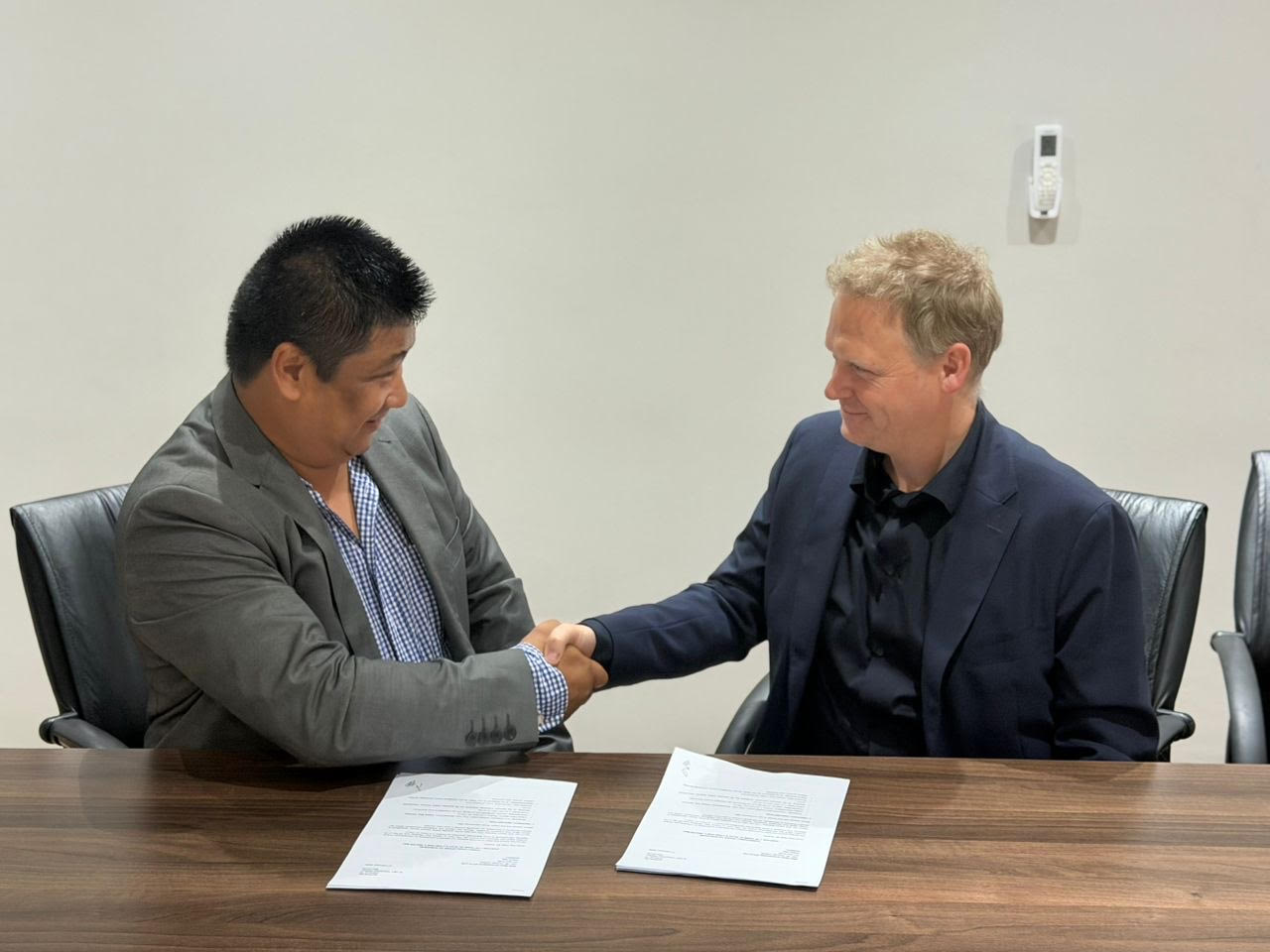
According to Sharde Fisher, Country Manager for Sarens in Namibia: “Our company is known for establishing itself in the countries where it operates, investing in the creation of its own infrastructure and local employment.”
He adds, “Our flexibility and adaptation to local markets is one of our main characteristics which, combined with our global presence, allows us to meet the needs of our customers, whether in the early stages of their projects, during their execution, or when they need to accelerate their development.”
Sarens already has a track record in Namibia’s energy transition. The company supported the installation of 125-ton wind turbines at the InnoVent Diaz I Windfarm and is currently erecting seven turbines at the InnoVent Diaz II Windfarm in Lüderitz – a development expected to contribute approximately 13% of the country’s electricity generation while significantly reducing coal consumption.
With crawler, mobile and rough-terrain cranes – including 500-ton crawler and mobile units deployed in Lüderitz – the expanded Walvis Bay hub deepens Sarens’ regional capacity.
More importantly, “it signals sustained commitment to supporting Southern Africa’s infrastructure, mining and energy ambitions with engineered heavy-lift and transport expertise,” Fisher concludes.
Editor’s comment: Sarens’ decision to anchor itself in the Walvis Bay corridor reflects a deeper global industrial shift where Southern Africa is no longer seen as a peripheral market but a primary growth theatre demanding permanent, high-spec capacity on the ground. By pairing crane muscle with modular transport depth and protected staging infrastructure, the company is de-risking project execution for developers. In a region where timing, terrain and trade routes define project economics, embedded foreign investment and expertise will help entrench long-term partnerships with local stakeholders.
Click on photographs to enlarge