Driver fatigue remains a serious safety concern in South African road freight, where long-distance routes, demanding delivery schedules and extended or irregular working hours can combine to put drivers and other road users at risk. A new global partnership between driver-monitoring technology specialist Smart Eye and fatigue-management company Optix aims to address the problem by combining real-time AI detection with 24/7 human intervention and predictive intelligence.
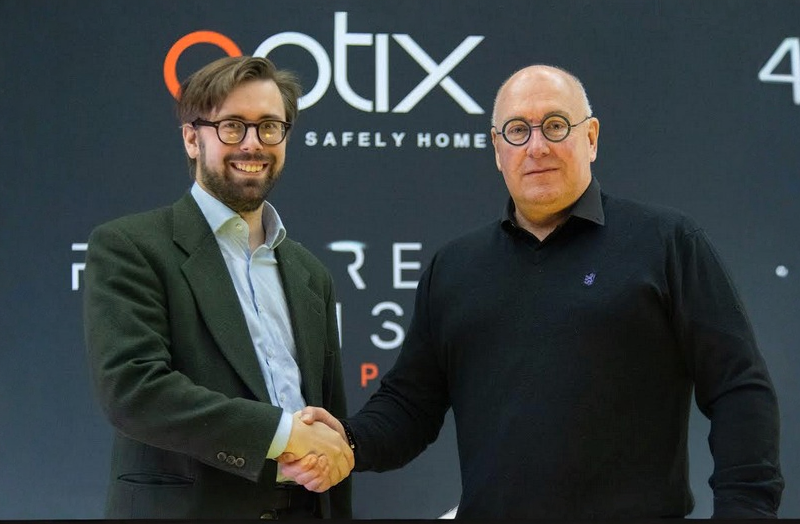
Announced in Johannesburg on 3 November, the partnership brings together Smart Eye’s automotive-grade AI driver monitoring technology and Optix’s round-the-clock Control Tower operations, offering commercial fleet operators an integrated approach to identifying, managing and preventing fatigue-related incidents.
From detecting fatigue to taking action
Fatigue contributes to as many as 20% of road crashes globally, according to the companies. However, while many fleet technologies can detect signs of driver fatigue and issue an alert, they often leave the responsibility for responding to that warning entirely with the driver. The Smart Eye-Optix solution is designed to close this gap by connecting detection directly to intervention.
Smart Eye’s AIS driver support system uses AI to monitor drivers in real time for signs of drowsiness, distraction and impairment. When a critical fatigue event is detected, Optix’s Control Tower specialists can respond, working with fleet operators to initiate appropriate action.
The system also draws on data from millions of events each month, alongside Optix’s decades of fatigue-management experience, to identify emerging patterns and risks before they develop into incidents.
The partnership’s approach therefore extends beyond simply alerting drivers. It combines four elements: detecting potential fatigue, acting on critical alerts, predicting emerging risks and preventing incidents through timely intervention.
Human intervention remains central
Steve Ford, Chief Executive Officer at Optix, believes technology alone cannot adequately address the human consequences of driver fatigue: “Every alert in our Control Tower is a real person, a parent, partner, or friend often far from home and at their most vulnerable. Fatigue isn’t a choice; it’s a condition that demands real action, not just an automated warning.
“With Smart Eye’s world-class driver monitoring and Optix’s round-the-clock intervention, we’re delivering more than just alerts, we’re giving fleets the power to actually prevent fatigue-related incidents. Together, we make sure drivers and everyone sharing the road with them, get safely home.”
John Finér, Chief Technology Officer at Smart Eye, says the partnership builds on more than 25 years of developing technology to help systems understand human behaviour: “Our AIS driver support system brings that experience to commercial fleets, detecting signs of drowsiness, distraction and impairment in real time.
“Combining AIS with Optix’s human intervention and predictive intelligence gives fleet operators both the information and the operational support to better manage fatigue-related risks.”
Turning alerts into safer journeys
For fleet operators, the partnership addresses an important distinction: knowing when a driver is becoming fatigued is not the same as ensuring something is done about it.
By combining real-time monitoring, predictive analytics and human intervention, Smart Eye and Optix aim to give commercial fleets a more comprehensive means of managing one of the industry’s most persistent safety risks.
Editor’s comment: Driver fatigue is not simply a driver-management issue. It is a fleet-operational risk that can have devastating consequences for drivers, their families and everyone sharing the road. Technology that identifies fatigue is valuable, but its real worth lies in what happens next. The human intervention element of this partnership is therefore particularly important.
Click on photograph to enlarge