The Automobile Association (AA) of South Africa is calling on every municipality to publish a list of broken traffic lights and streetlights, complete with fault reference numbers and repair dates. With Transport Month ending this week, the AA wants councils to publish their lists now, prioritise urgent repairs before the local government elections on 4 November and the festive season and provide weekly updates on progress.
The call has direct implications for South Africa’s road freight industry, which depends on smooth-flowing traffic to keep trucks on schedule, deliveries on time and operating costs under control. Motorists share the same need for predictable traffic flow. Broken signals create congestion, waste fuel and put drivers and pedestrians at risk. The AA says municipalities have an opportunity to demonstrate accountability by making faults and repair commitments public before voters go to the polls.
In July, Kariega businessman Jevon Dyer loaded about five broken traffic lights onto a trailer and offloaded them outside the Nelson Mandela Bay Municipality’s customer care office. The lights outside his shop in Caledon Street had been out for months and he said he had witnessed several accidents and near misses at the intersection.
“I thought, why not? I was just tired,” he said at the time. About a week later, the lights were still lying outside the building.
Days after Dyer’s protest, the metro’s political head for roads and transport, Yolisa Pali-Jongilanga, told a council committee that the city could no longer justify repairing the same traffic lights when thieves stripped their cables within weeks. On the M17, she said, the cables were stolen seven weeks after repairs.
“We cannot afford to continuously repair the same traffic lights every three months due to repeated acts of vandalism,” she said. “It almost seems as though we are feeding the thieves each time we do repairs.”
Nelson Mandela Bay is not alone. In Pietermaritzburg, some residents reportedly wait almost an hour in afternoon peak traffic when signals on key routes are out.
In Johannesburg, the Johannesburg Roads Agency (JRA) said in July that more than 300 traffic signals had equipment that was stolen or vandalised. By then, the lights at Chadwick Avenue and 5th Street in Wynberg had been out for more than a year, with the JRA reporting that there was “currently no date for repairs”. In Polokwane, residents reported in July that 21 intersections had broken traffic lights.
Stop signs replace some signals
Some municipalities have stopped repairing traffic lights at the worst-affected intersections. Ekurhuleni spent roughly R120-million on repairs in a single financial year before replacing signals at some high-risk intersections with stop signs. The city said some of these changes could become permanent.
In Centurion, the city decommissioned the traffic lights at Botha and Hoffmeyer streets, converting the intersection to a three-way stop.
In Gauteng, the provincial Department of Roads and Transport manages only 547 of the province’s more than 4 500 signalised intersections. In July, it appointed contractors for a repair and restoration programme expected to take 36 months.
“When a traffic light dies, the driver waits. The person on foot takes the gamble,” said Bobby Ramagwede, CEO of the AA. “Mobility is not transport. It is the freedom to get to work, get your children to school, get home again and change your circumstances. Every dead intersection takes some of that freedom away and it takes it first from the people who walk.”
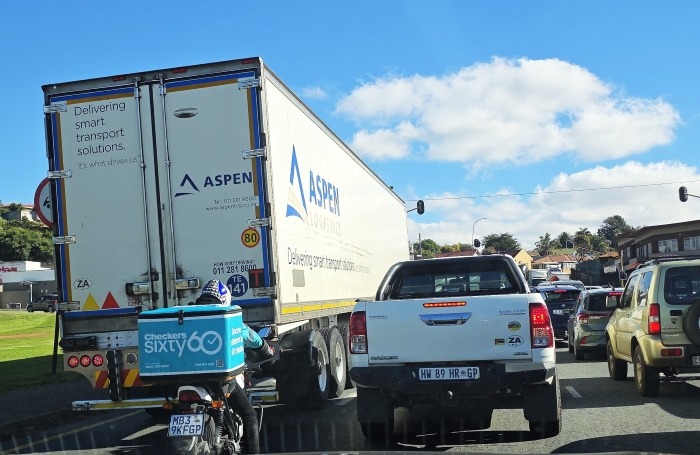
The AA is a motorist focused organisation and FleetWatch points out that non-functional robots add huge costs to transporters. Every minute spent crawling through congested traffic is a minute lost to the delivery schedule, with fuel, driver hours and operating costs ticking away. Broken traffic lights make that problem worse, while creating hazards for motorists and pedestrians.
The AA wants municipalities to prioritise routes to schools, polling stations and busy pedestrian corridors. Responding on Facebook, Nomkhosi Magwaza said: “Some drivers don’t respect pedestrians at a four-way stop. They drive crazy, and you have to beg to go across the road.”
“People ask why a mobility organisation cares about the person on foot. My answer is simple: if it moves, it concerns me. People crossing a dead intersection are road users too,” said Ramagwede.
Until repairs are completed, the AA urges voters to plan how they will get to and from their polling stations and keep help within reach. Its AA Armed Response service, available through the MyAA app, allows users to call for armed response wherever they are at the press of a button. The AA is encouraging South Africans to set up the service before 4 November so that help is a tap away when travelling to and from the polls.
Broken signals carry an economic cost
The consequences extend beyond road safety. The Centre for Risk Analysis has warned that the road-safety and economic costs of broken traffic signals rise the longer repairs are delayed, with insurers and motorists bearing the immediate burden.
The JRA faces a maintenance backlog of more than R115-billion against an annual budget of R1.8-billion. For about a week in June, the City of Johannesburg stopped supplying fuel to the agency’s vehicles. It’s member of the mayoral committee for transport said field teams were “effectively grounded”.
Broken traffic lights also waste fuel. Queues at dead intersections leave vehicles idling in stop-start traffic, burning fuel while making little progress. An idling passenger car uses roughly one to two litres of fuel an hour, depending on engine size and air-conditioning use.
For a commuter stuck for close to an hour in afternoon traffic, that could mean up to two litres burned while barely moving. With inland 95-octane petrol costing R30.25 a litre this month, the waste adds up.
The government announced on 21 October 2026 that petrol prices would fall by R1.50 a litre and diesel by R3.00 a litre. “The levy cut is good news but motorists will still feel it at the pump,” said Ramagwede. “The government has a second lever that has nothing to do with the oil price. A driver idling at a broken robot is paying for fuel that takes them nowhere. Fix the light and that money stays in their pocket. It is a saving government can start delivering this week, and it starts with a list.”
Cape Town tackles traffic-light theft
Cape Town is piloting a different approach to protecting traffic signals. At some high-risk intersections, the city seals wiring and components inside a buried concrete chamber. Sensors alert law enforcement if anyone attempts to dig it up, while batteries keep the lights running during power cuts. The city’s mayoral committee has described the chambers as a success.
“If one city can engineer the theft out, every other city owes its residents an answer on why it cannot,” added Ramagwede.
What road users can do
Until repairs are completed, the AA advises road users to:
-
Treat a non-functioning traffic light as a four-way stop, as advised by the JRA, taking extra care during peak hours and near schools.
-
Obey stop signs where municipalities have replaced traffic lights, while remaining alert to drivers who may not follow the rules.
-
Keep windows closed and valuables out of sight at stop streets and dead intersections, where residents report increased smash-and-grab incidents.
-
Slow down on unlit roads and allow for pedestrians who may be difficult to see.
-
If walking, wear light-coloured or reflective clothing, carry a torch or use a phone light, and walk facing oncoming traffic where there is no pavement.
-
Walk with others where possible, especially early in the morning and after dark.
-
Set up AA Armed Response so that help is a tap away when travelling to and from polling stations or walking after dark.
-
Report faults to the relevant municipality and keep the reference number. Report suspicious activity around traffic signals and other infrastructure to the authorities, as Gauteng’s Department of Roads and Transport has requested.
The AA is also asking employers to consider how staff travel before sunrise and after dark. Shift workers often walk to and from work in darkness. Employers can adjust shift times, organise transport or lift clubs, and log faults along employees’ routes.
Businesses that depend on particular intersections can also help protect the infrastructure through formal agreements with municipalities, while leaving responsibility for repairs where it belongs.
Editor’s Comment: South Africa’s trucking industry knows all about the cost of delays on the road. As mentioned above, every minute spent crawling through congested traffic is a minute lost to the delivery schedule, with fuel, driver hours and operating costs ticking away. Broken traffic lights make that problem worse, while creating hazards for motorists and pedestrians.
Vandalism is a real problem and municipalities cannot be expected to replace stolen cables indefinitely without addressing the cause. But neither can road users be expected to accept intersections that remain dysfunctional for months or even years. A list of faults, reference numbers and promised repair dates is hardly a technological breakthrough. It is basic accountability.
The AA’s proposal gives municipalities a practical starting point: publish the information, update it weekly and prioritise the intersections where failures pose the greatest risks. It would also allow residents and businesses to see whether commitments are being met, rather than being left guessing.
With local government elections and the festive-season traffic peak approaching, the timing could hardly be more relevant. Trucks need roads that work, motorists need traffic that flows and pedestrians need to cross safely. All three depend on infrastructure that is maintained and managed properly.
A public list will not fix a single traffic light by itself. But it will make it harder for a municipality to hide behind silence. The first green light should be accountability.
Click on photographs to enlarge