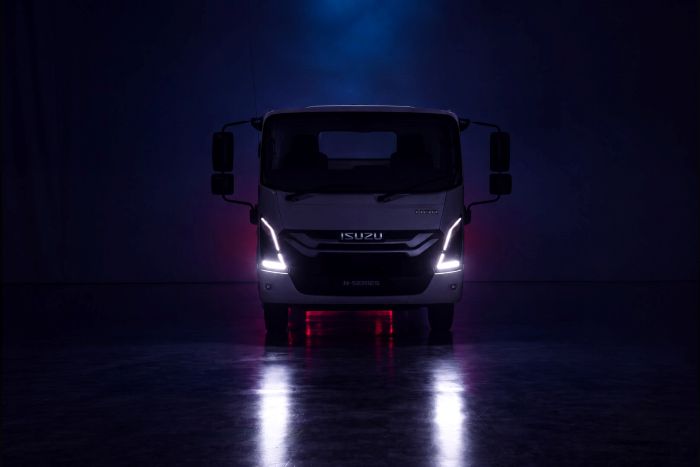
Isuzu Motors South Africa will launch its Next Generation N-Series in November, introducing technology, emissions and design updates aimed at improving fleet efficiency, safety and driver comfort.
Built around Isuzu’s “With you, for the long run” promise, the new N-Series retains the engineering and commercial vehicle capabilities associated with the brand while introducing upgrades designed for the demands of modern fleet operations.
According to Mpho Nkhumeleni, Department Executive for Commercial Vehicle Sales at Isuzu Motors South Africa: “Our customers demanded a vehicle that can withstand harsh terrains while actively contributing to the profitability of their businesses. These new models are a result of that research, blending robust engineering with cutting-edge intelligence.”
The Next Generation F-Series is also in the pipeline, with its market introduction expected early next year.
Euro 5 emissions technology without AdBlue
Selected models feature Euro 5 engines with an exhaust after-treatment system incorporating a Diesel Oxidation Catalyst (DOC) and a Particulate Oxidation Catalyst (POC).
The system does not require AdBlue or other additives and is designed to operate on 50 ppm diesel, with 10 ppm diesel best suited to the system. For operators, this provides an emissions solution without the additional logistical requirement of managing an AdBlue supply.
Aerodynamic improvements to the redesigned cab are intended to improve airflow over the vehicle and deliver marginal fuel-economy benefits.
Connected technology and enhanced safety
Operational efficiency is further supported by connected fleet technology and driver assistance features. Isuzu Insight provides fleet-related vehicle information, while selected models are equipped with Advanced Driver Assistance Systems (ADAS).
Bi-LED headlights with integrated Daytime Running Lights improve visibility, and Automated Manual Transmissions are available on applicable models.
“Technology only adds value when it works for the business,” says Nkhumeleni. “With the Next Generation range, we have focused on practical improvements that can support the driver while giving operators better tools to manage efficiency, safety and vehicle performance.”
The redesigned cab incorporates improvements to the driving position, steering wheel, controls and seating. Selected N-Series models also feature mechanical suspension seats designed to improve driver comfort during daily operations. These changes recognise the driver as an important part of fleet performance, with comfort and ergonomics contributing to the overall operating experience.
Backed by six decades of SA trucking expertise
The new N-Series builds on more than six decades of Isuzu truck expertise in South Africa. The first Isuzu Elfin TKG10 1.5-ton truck arrived in the country in 1964, beginning a commercial vehicle journey that has continued through successive generations of J-Series, N-Series, F-Series, G-Series and FX/FY trucks.
Isuzu supports its customers through a commercial vehicle dealer network, aftersales expertise and parts availability – important considerations for operators seeking to minimise downtime and protect productivity.
The company’s Gqeberha plant manufactures commercial vehicles for the South African market and exports into Sub-Saharan Africa. Isuzu has also led South Africa’s combined medium- and heavy-truck market, excluding vans and buses, for 13 consecutive years.
The Next Generation N-Series will officially launch in South Africa in November, combining updated emissions technology, connected fleet capabilities, safety features and driver-focused improvements in a package aimed at the practical realities of southern African commercial fleet operations.
Editor’s Comment: We know that new truck technology must deliver measurable operational value rather than simply add shiny new features. Isuzu’s approach with its Next Generation N-Series is properly grounded, focused on upping the vehicle’s overall efficiency, particularly with an emissions system that requires no AdBlue and a suite of connected efficiency and safety technologies, plus enhanced driver comfort. The real test, as always, will be how these improvements perform under local operating conditions and how effectively they contribute to lower total cost of ownership over the vehicle’s working life. FleetWatch is looking forward to the November launch!
Click on photograph to enlarge