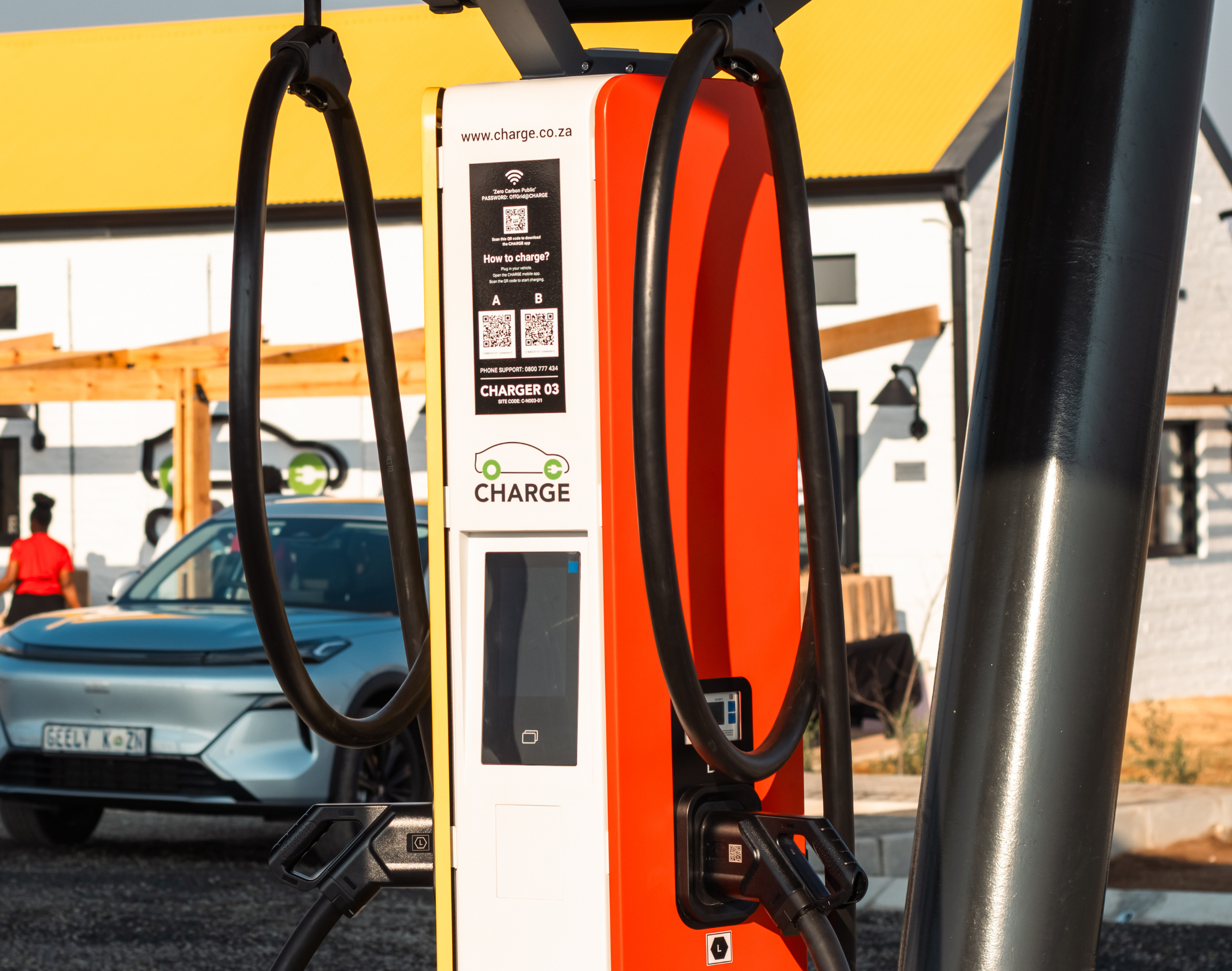
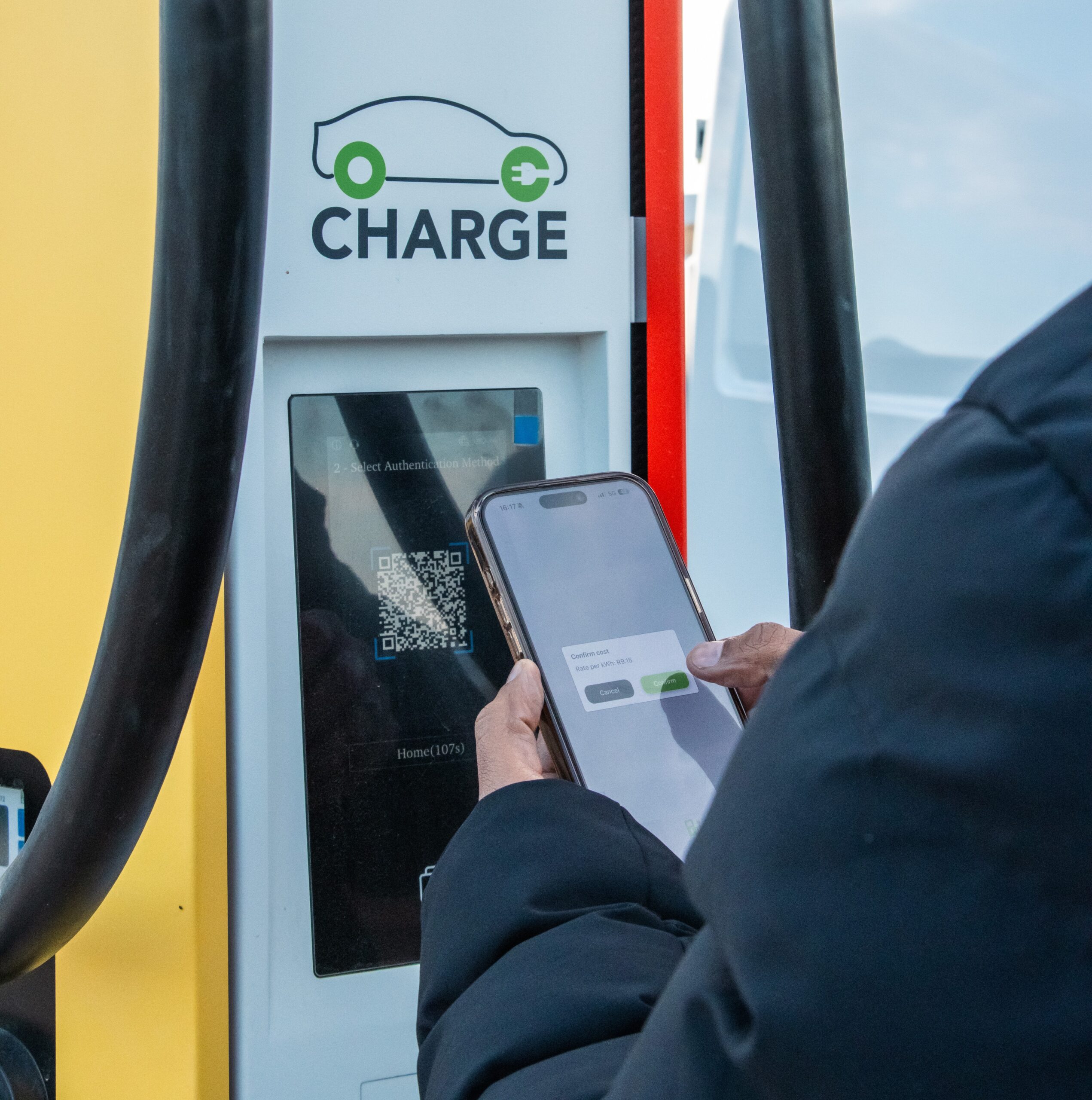
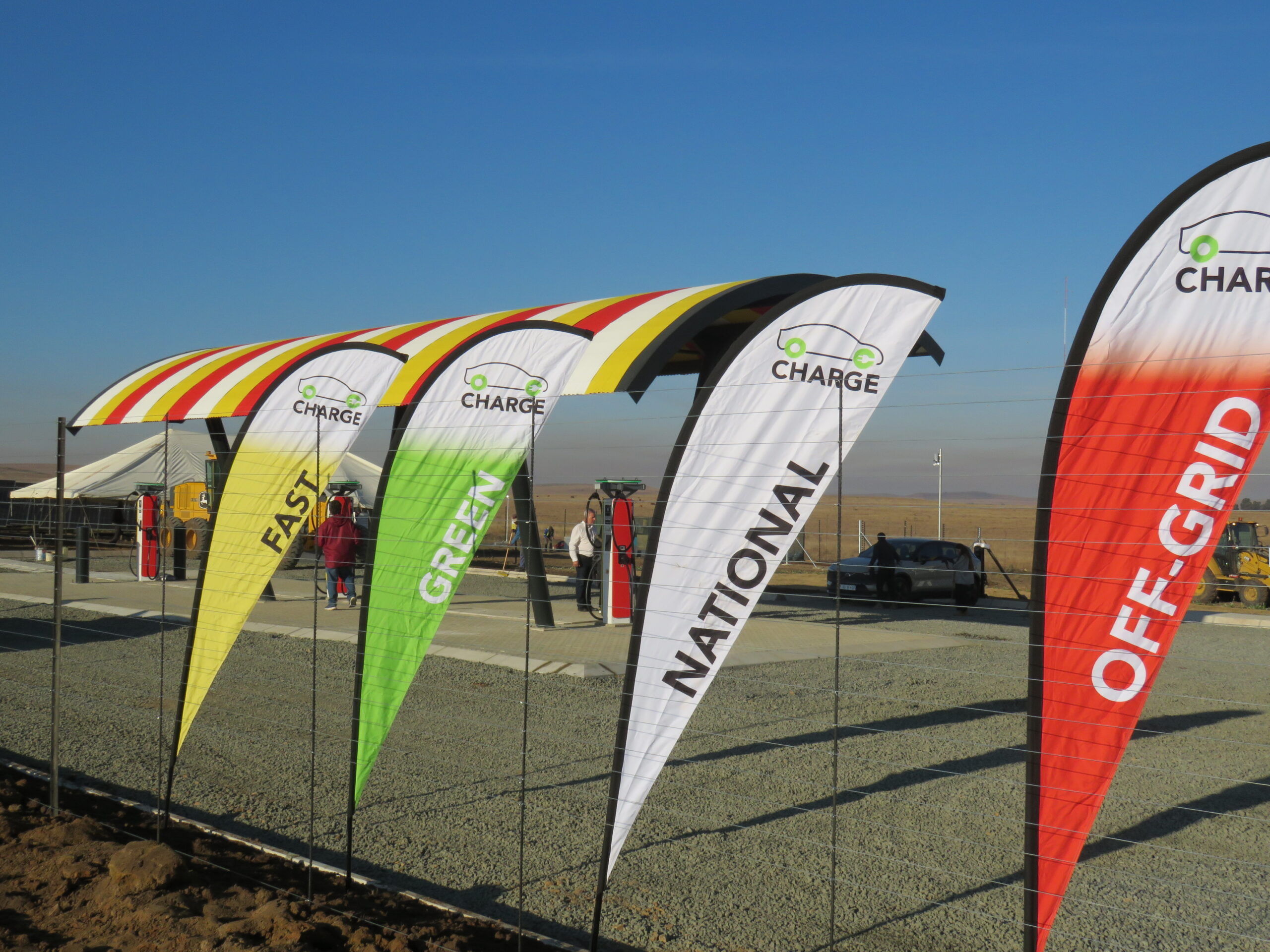
After launching its off-grid, solar-powered EV charging network on the N3 corridor in May this year, Zero Carbon Charge (CHARGE) has confirmed plans to double charging capacity at both Charge hubs in response to growing demand from customers stopping to charge their electric passenger and commercial vehicles.
The upgrade will increase total charging capacity at each hub from 360 kW to up to 720 kW, with available power automatically allocated between vehicles based on how many are charging and each vehicle’s charging capacity.
Where sufficient capacity is available, the system can direct up to 600 kW to a single connector, allowing more vehicles, including commercial trucks, to charge simultaneously at higher power. The upgrade will also future-proof the network for the next generation of 800-volt vehicles entering the market and lay the groundwork for CHARGE’s move towards megawatt-level charging.
“When we launched these hubs in May, we built them to accommodate today’s vehicles while leaving room to grow,” said Joubert Roux, CHARGE Co-Founder and Chair. “Demand from customers driving both passenger and commercial vehicles has made it clear that we need to bring that growth forward.”
“This expansion also reflects what is happening in South Africa’s EV market. The latest NAAMSA figures show electrified vehicles now account for 6% of new light vehicle sales, with NEV sales growing by over 500% year on year. This is a recognised tipping point in market penetration. More EVs on the road means greater demand for charging, and the infrastructure needs to keep pace.”
Once the upgrade is complete, even with six vehicles charging simultaneously, each EV will have access to a minimum of 120 kW. That means our minimum available power will equal the maximum available at other public charging sites in South Africa.
At a constant charging rate, a passenger vehicle charging at 120 kW could add approximately 150 km of range in 15 minutes. At 400 kW, that figure could rise to roughly 500 km over the same period, while an electric truck charging at 500 kW could add approximately 75 km. Actual range added will vary depending on vehicle efficiency, battery characteristics and charging conditions.
The expansion extends beyond charging hardware. Solar capacity at each site will grow by 66,1%, from 280 kWp to 470 kWp, while battery storage will increase by 117,1%, from 645 kWh to 1.4 MWh. The additional storage will help bank renewable energy and support high-power, off-grid charging when solar production is insufficient.
Combined, the two upgraded Charge Hubs will have the potential to generate approximately 1.6 GWh of renewable energy annually – enough, if fully directed to electric mobility, to support around 8 million passenger-vehicle kilometres or 940 000 heavy-truck kilometres each year. Measured against the Johannesburg-Durban route, that is equivalent to close to 6 900 passenger-vehicle return trips or 810 heavy-truck return trips annually along the N3.
CHARGE estimates that the additional solar generation could avoid approximately 585 tonnes of carbon-dioxide-equivalent emissions each year compared with drawing the same energy from the national grid, taking the hubs’ total post-expansion emissions avoidance to approximately 1 450 tonnes annually. To date, the Charge Hubs have saved 24 400kg of carbon emissions.
“It’s not only about how many electric vehicles are on the road. It’s about displacing imported diesel and petrol with energy we generate here and building the kind of energy resilience that comes with it. These sites will save 800 000 litres of fuel directly, most of it imported. That is the advantage of off-grid, renewable-powered infrastructure,” said Roux.
Boost for commercial freight
The upgrade is also a boost for CHARGE’s commercial freight partners on the corridor. “High-speed, green charging capacity is what transforms electric freight from a pilot project into a competitive edge. This N3 upgrade ensures our clients’ electric trucks and vehicles stay fully charged and on schedule, proving that zero-emission transport on South Africa’s busiest freight route is now a reality,” said Michael Maas, CEO and Co-founder, Zimi.
CHARGE expects to place orders for the upgrade in the coming weeks, with the expanded capacity targeted for completion before the end of the year. The company’s next major rollout phase along the N1 corridor will be built with megawatt-level charging capacity from the start.
“The N3 has shown us what happens when the infrastructure is ready before the demand fully arrives,” Roux concluded. “We expect exactly the same story to play out on the N1 and we’re already planning for it.”
This has been the experience worldwide – build the charging infrastructure and the demand follows.
About Zero Carbon Charge:
Zero Carbon Charge is building a national network of off-grid, ultra-fast EV charging hubs across South Africa, powered entirely by renewable energy. These stations use solar-powered microgrids to deliver reliable, scalable, and grid-independent energy, helping accelerate the country’s transition to electric mobility. By decentralising energy generation and reducing carbon emissions, the initiative supports a cleaner, more resilient transport and energy future.
Click on photographs to enlarge