South Africa’s trucking industry has never had more technology, more data or greater operational visibility at its disposal. From telematics and route optimisation to sophisticated risk management and fleet monitoring systems, road freight operators have invested heavily in improving their capabilities.
However, according to Wesley Niemann, educator, researcher and consultant in Supply Chain Management and Logistics in the Department of Business Management at the University of Pretoria, many of those gains are being consumed by the realities of operating in an increasingly complex environment.
Instead of using technology to drive new efficiencies and productivity, freight operators are often deploying it simply to maintain service levels and keep trucks moving. In this opinion piece written for FleetWatch, Niemann argues that South Africa’s logistics sector is confronting a productivity paradox – one with implications not only for transport operators but also for the broader economy. Here’s what he has to say. There’s a lot of food for thought in his views.
The productivity paradox facing South African freight operators
Conventional wisdom suggests that improved capability should lead to improved productivity.
In most industries, organisations that invest in better technology, stronger management practices, more sophisticated planning systems and enhanced operational visibility should be able to deliver better outcomes over time. Greater capability should translate into higher efficiency, lower costs, improved service levels and stronger competitiveness. Yet many South African freight operators find themselves confronting a paradox.
The logistics sector has become significantly more capable over the past decade but the productivity gains that should have accompanied these improvements have often remained elusive.
This is not because logistics companies have failed to innovate. On the contrary, many operators have invested heavily in telematics, route optimisation systems, fleet visibility technologies, risk management capabilities, compliance systems and operational planning processes.
Fleet managers today possess access to levels of operational intelligence that would have been unimaginable twenty years ago. Driver monitoring systems have become more sophisticated. Maintenance planning has improved. Customer visibility has increased. Transport planning has become increasingly data driven.
When capability becomes compensation
Under normal operating conditions, these developments should have generated substantial productivity improvements. The problem is that much of this capability is increasingly being consumed by the operating environment itself. Instead of using enhanced capabilities to create new efficiencies, logistics firms are often deploying them merely to maintain acceptable levels of performance. This distinction is critical because it reveals a largely overlooked dimension of South Africa’s economic challenge.
Consider the evolution of route planning. Advances in technology have provided transport operators with unprecedented visibility into vehicle locations, route performance and delivery schedules. In many markets, such capabilities enable operators to improve vehicle utilisation, reduce fuel consumption and optimise network efficiency.
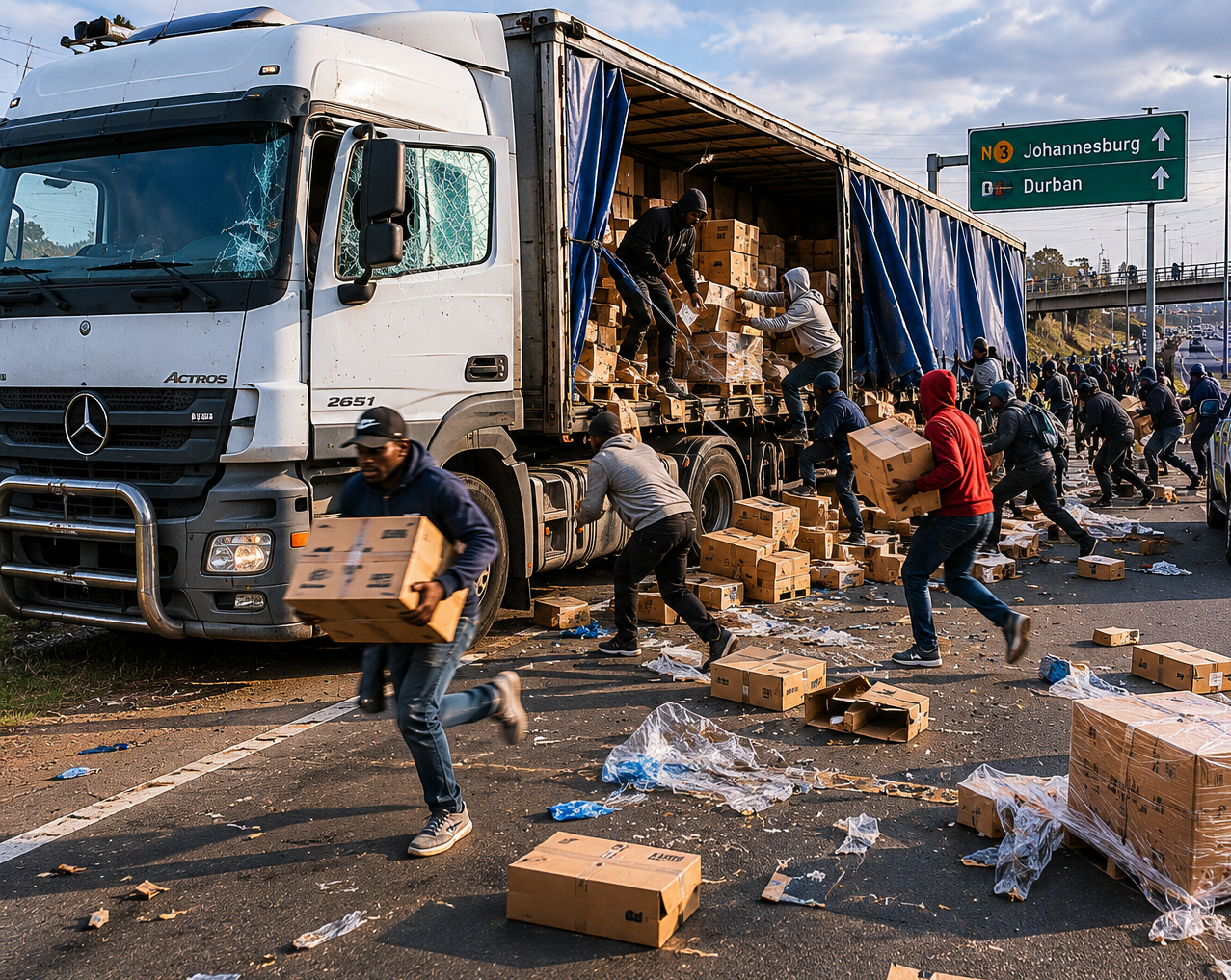
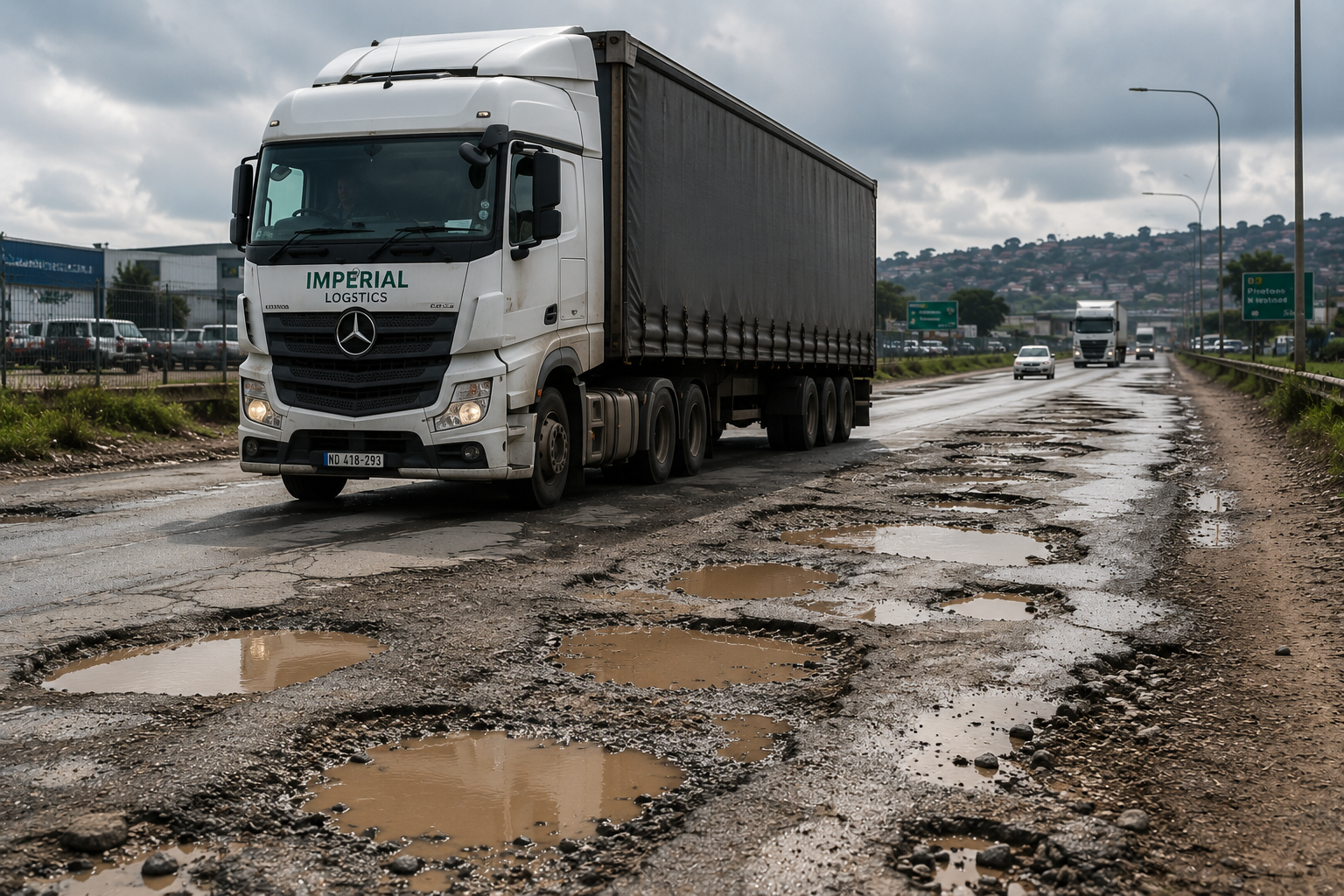
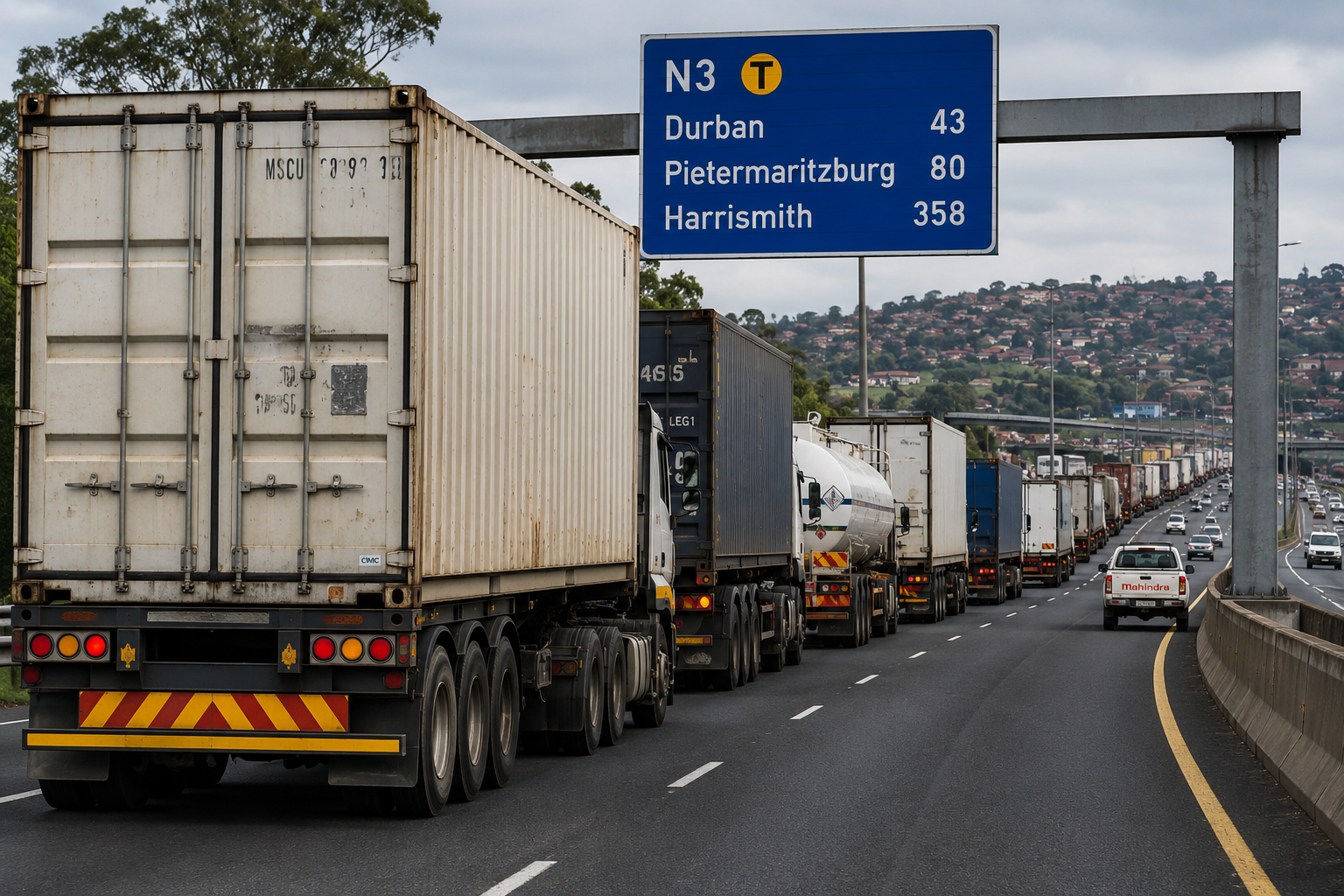
In South Africa, however, a growing proportion of route planning effort is directed towards avoiding disruption rather than enhancing productivity. Congestion, infrastructure deterioration, security concerns, road closures and operational uncertainty increasingly require planners to focus on risk mitigation. The technology remains valuable, but its primary function shifts from optimisation to compensation.
The same pattern can be observed in fleet management.
Modern telematics systems provide operators with powerful tools to improve asset utilisation and reduce operating costs. Yet many organisations increasingly rely on these systems to manage risks associated with vehicle security, route deviations and operational unpredictability. Again, capability is not being used primarily to generate new value. It is being used to protect existing value.
Productive versus defensive investment
The distinction may appear subtle but its economic implications are significant.
Productive investment is generally expected to expand capacity, improve efficiency or increase output. Defensive investment, by contrast, is intended to preserve continuity amid uncertainty. While both forms of investment may be necessary, they produce very different outcomes.
Across large parts of the logistics sector, investment increasingly appears to be shifting from productive to defensive purposes. This trend becomes particularly evident when examining how transport operators allocate managerial attention.
In a stable operating environment, managers would be expected to focus primarily on network design, customer service innovation, asset productivity and long-term competitiveness. Increasingly, however, substantial management effort is devoted to contingency planning, risk assessment, disruption management and operational workarounds.
These activities are essential. But they rarely generate competitive advantage in the traditional sense. Instead, they enable firms to continue operating despite instability elsewhere in the system.
The impact beyond transport
The consequences extend beyond the freight industry itself. Agricultural supply chains provide a useful example. South African farmers operate within highly sophisticated production systems and compete in demanding international markets. Yet growing amounts of investment are directed towards maintaining continuity rather than improving productivity. Backup power systems, security measures, alternative logistics arrangements and infrastructure workarounds all consume resources that might otherwise have supported expansion, innovation or efficiency improvements.
The same dynamic is increasingly visible within manufacturing. Larger inventories are often maintained not because demand requires them, but because supply chain uncertainty necessitates additional buffers. Warehousing capacity expands to accommodate risk. Working capital becomes tied up in contingency stock. Operational resilience improves, but productivity gains are diluted.
A broader economic concern
From a supply chain perspective, these developments point towards a broader economic concern.
An economy’s long-term competitiveness depends not only on its ability to function, but on its ability to improve. Growth requires that talent, capital and managerial attention be directed towards activities that generate additional value. As a greater proportion of those resources is consumed maintaining continuity, the economy may remain operational while gradually becoming less productive.
This is the essence of the productivity paradox confronting South African freight operators. The sector continues to demonstrate remarkable resilience. Goods continue to move. Supply chains continue to function. Customers continue to be served. In many respects, the logistics industry has become more sophisticated, more adaptive and more capable than ever before.
Yet much of that capability is being deployed to address systemic challenges rather than market opportunities. The danger is not that the freight sector becomes less competent. The danger is that ever-greater competence is required simply to achieve the same outcomes. That is a fundamentally different problem.
It means that productivity gains generated through innovation, technology and improved management are increasingly offset by the costs of navigating a complex and uncertain operating environment. The industry works harder, invests more and develops greater capability, yet too much of that effort is absorbed by preserving performance rather than advancing it.
For freight operators, this is an operational challenge. For South Africa, it is an economic one. Because no economy can sustainably improve its competitiveness if its most capable sectors are forced to devote an increasing share of their resources to overcoming obstacles rather than creating value.
Editor’s Comment: Anyone running a truck fleet today will recognise the picture Niemann paints. Modern fleet operators are armed with more data, smarter systems and better vehicles than ever before, yet many of those tools are increasingly being used to navigate potholes, congestion, crime, infrastructure failures and operational uncertainty rather than unlock new productivity.
The road freight industry’s resilience deserves credit. South Africa’s shelves remain stocked and supply chains continue to function despite immense challenges. But resilience comes at a cost. When management attention, capital investment and technology are directed towards overcoming obstacles instead of creating value, the country’s competitiveness inevitably suffers. Niemann’s warning is therefore not simply a logistics concern. It is a reminder that economic growth depends on enabling productive sectors to move forward, not merely survive.
Click on photographs to enlarge