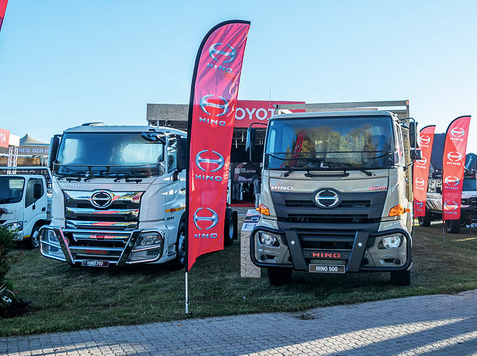
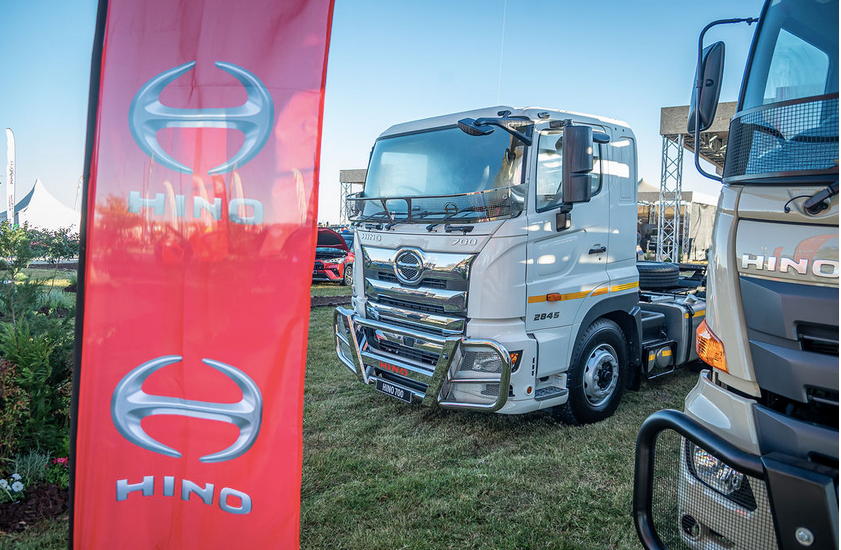
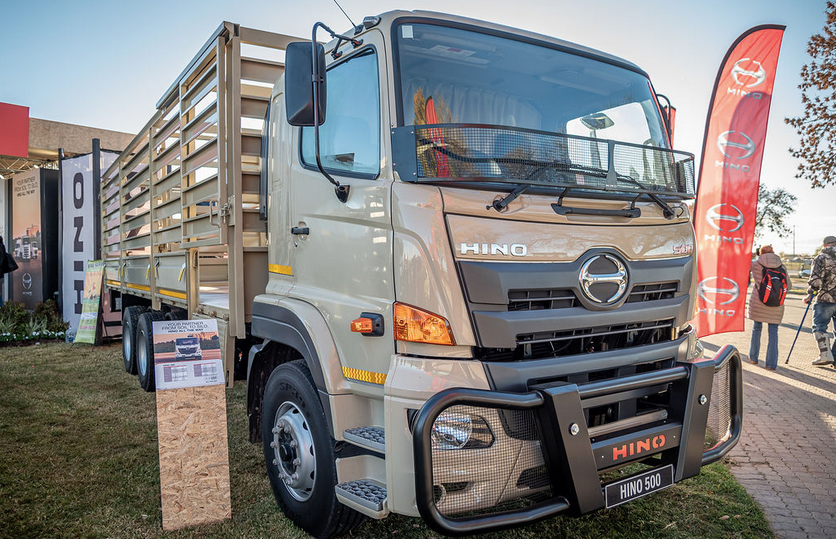
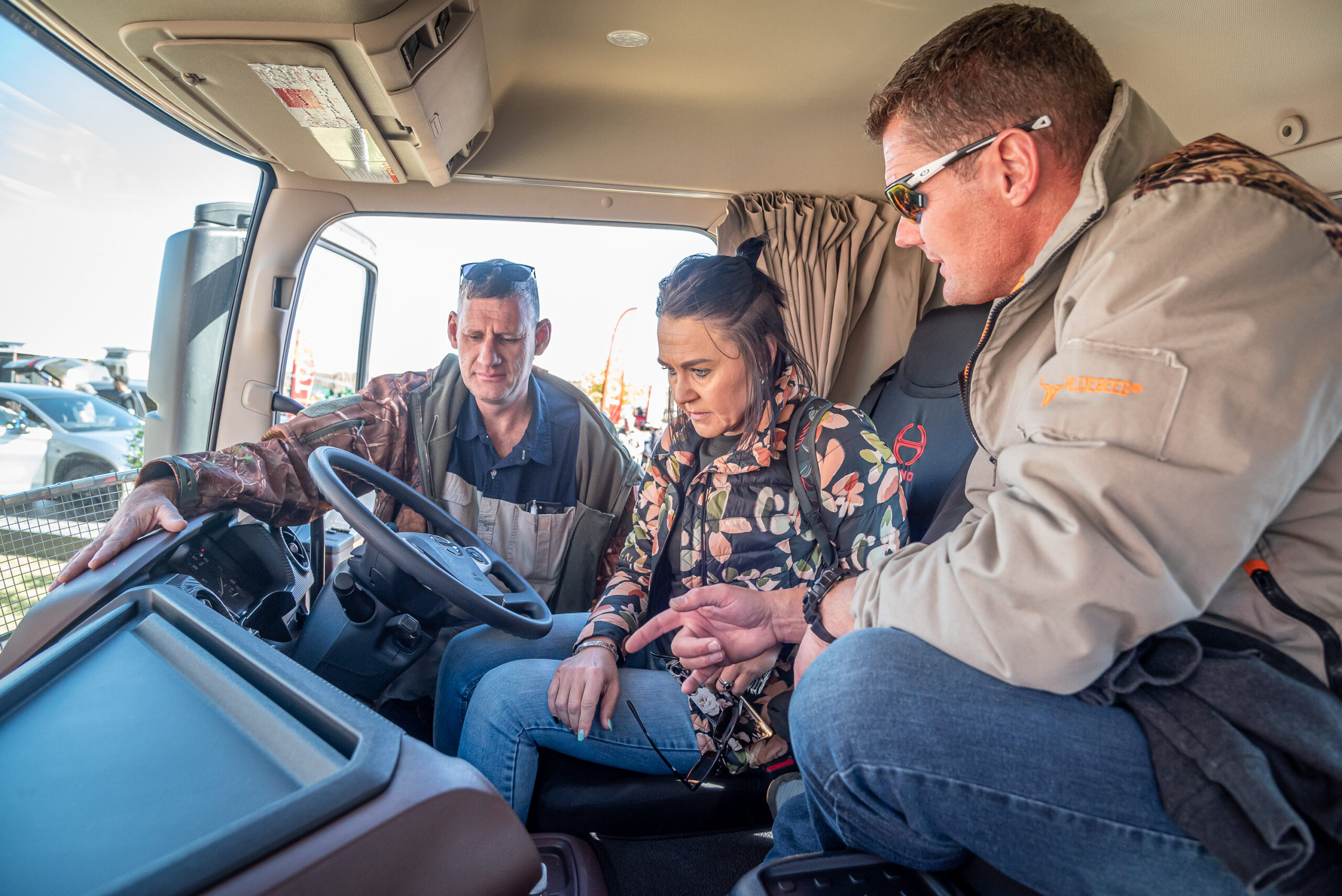
Supply chain disruption, volatile fuel prices, tariff barriers and shifting regulatory frameworks continue to reshape the global commercial vehicle sector, placing growing pressure on manufacturers to adapt to rapidly changing market conditions. Facing these headwinds with gusto, Hino South Africa used its media briefing at the NAMPO Harvest Day 2026 agricultural show to provide an update on market conditions, customer support initiatives and future technology programmes.
“Sales by Hino and the other Japanese truck manufacturers are showing more resilience than their European counterparts in a global automotive industry that is in greater turmoil now than ever in its 150-year history,” said Anton Falck, Vice President of Hino South Africa.
Local manufacturing under pressure
Falck said uncertainty around future technologies, evolving legislation, trade barriers and rising energy costs continued to challenge vehicle manufacturers globally, with South Africa affected through its integration into international supply chains.
“In South Africa, we have a well-established vehicle manufacturing sector which supports many component makers and employs a substantial workforce. However, they now face a changing situation where increasing numbers of vehicles are arriving at South African ports as built-up imports. This is another game changer that we, the local manufacturers, must face.”
Despite these challenges, Hino South Africa exceeded the 3 000-unit sales mark again in 2025, recording 3 178 units and securing a 10.2% share of the local truck market.
While this was slightly down on the 3 343 units and 10.8% share achieved in 2024, the company maintained its position as a significant player in the local truck market.
The company sold 930 units during the first four months of 2026 and remains confident of surpassing 3 000 units again this year.
Falck also pointed to the formation of Archion, the new company combining Hino Motors and Mitsubishi Fuso. He said the combined strengths of the two brands in vehicle design, manufacturing and aftersales support would help ensure long-term competitiveness in a rapidly changing market.
Datatrack results underline customer support focus
Customer support remained a central theme throughout the briefing, with Hino South Africa continuing its strong performance in the Datatrack customer care survey.
“We at Hino South Africa are very proud of our ongoing strong performances in the local Datatrack quarterly customer care survey of 13 truck brands. We were again in first position in Q1 2026 combined ranking for sales, service, and parts with a total of 99.69, which was well above the national average of 95.76,” said Falck.
The result marked the 12th consecutive quarter, dating back to Q1 2023, that Hino has secured the top combined ranking. The Datatrack survey, which has been conducted for 38 years, is based on feedback from approximately 30 000 South African truck operators.
Hino also achieved the highest rankings in both the sales and service categories during the first quarter of 2026, while its parts score remained above the national average.
Direct sourcing from Japan strengthens parts strategy
A significant focus during the briefing was Hino South Africa’s decision to transition its parts supply chain from Hino Motors Europe to direct sourcing from Japan.
“At Hino South Africa, our commitment remains firmly focused on delivering superior customer experience and strengthening our value proposition across the entire lifecycle of our vehicles. From the initial purchase experience to aftersales support, service, repairs and parts supply, our strategy is guided by the Hino Total Support philosophy – ensuring maximum vehicle uptime while reducing operational costs for our customers,” said Falck.
“A key area of focus is our parts business and supply chain transformation. In partnership with Hino Motors Limited in Japan, Hino South Africa made the strategic decision earlier this year to transition our parts supply directly from Japan to South Africa, moving away from the previous supply route through Hino Motors Europe,” he explained.
The transition presented several operational challenges during implementation.
“As with any major transformation project, we experienced unforeseen operational challenges during implementation,” noted Falck. “Unfortunately, these challenges impacted the availability of certain service filters within our dealer network and affected some of our customers.”
Falck said the company has since made substantial progress in restoring stability:
“Our ‘Allocation Fill Rate on First Request’ has now returned to approximately 95%, approaching pre-transition performance levels.”
The recovery was supported by new supplier partnerships, strengthened logistics capabilities, the identification of critical stock requirements and an increase in stockholding levels. Hino said these measures place the company in a stronger position to achieve its target allocation fill rate of 96%.
Expanded warranty and customer support programmes
Hino South Africa also used the briefing to highlight several customer-focused initiatives introduced during the past year. In 2025, the company launched a six-year drivetrain warranty across its truck range, extending coverage from the previous two-year warranty period. Service and maintenance plans were also enhanced with revised cents-per-kilometre structures aligned to the new warranty programme.
The company will build on this initiative with the introduction of Hino Care Gap Cover in mid-2026. The new programme will replace the previous Hino Extended Warranty offering and provide broader protection on selected components, including towing, cooling systems and electrical components, while maintaining the same pricing structure.
Hybrid trucks enter real-world fleet operations
One of Hino South Africa’s latest projects is the introduction of diesel-electric hybrid models into its Hino 300 Series range. An initial batch of 32 units is being imported, with the first eight already in South Africa.
These vehicles are being operated by Namlog as part of a transport contract at the Toyota Africa Parts Centre. The remaining vehicles will be allocated to major fleet operators.
All 32 trucks will operate under Kinto, Toyota’s international subscription model that combines vehicle use, servicing and maintenance into a single monthly payment structure. Optional insurance cover is provided through Kinto Protect.
Falck said the arrival of the hybrid models coincided with significant increases in diesel prices and rising transport operating costs: “The Hino 300 Hybrids have been recording fuel savings of between 15-30% depending on the type of operation, and this type of saving is most welcome at these times of rapidly rising transport costs. Using these trucks also assists in cutting a fleet’s carbon emissions.”
Hydrogen dual-fuel technology set for local preview
Looking beyond hybridisation, Hino also confirmed plans to preview a prototype dual-fuel truck in South Africa next month. The vehicle operates on both diesel and hydrogen and forms part of the company’s broader multi-pathway approach to future energy solutions, recognising that different markets and operating environments may require different technologies.
“As you can see from our comprehensive range of activities, Hino South Africa is very much alive and well prepared to take up the challenges of a rapidly changing market, with our main focus and our efforts always being ensuring we have satisfied customers,” concluded Falck.
Editor’s Comment: The most significant takeaway from Hino’s update may not be any single product or programme, but the breadth of activity taking place simultaneously. From restructuring its parts supply chain and extending warranty support to deploying hybrids and evaluating hydrogen, the company is pursuing multiple pathways as it prepares for a market that remains difficult to predict. Across the global truck industry, that kind of flexibility is increasingly becoming a competitive advantage in its own right.
Click on photographs to enlarge