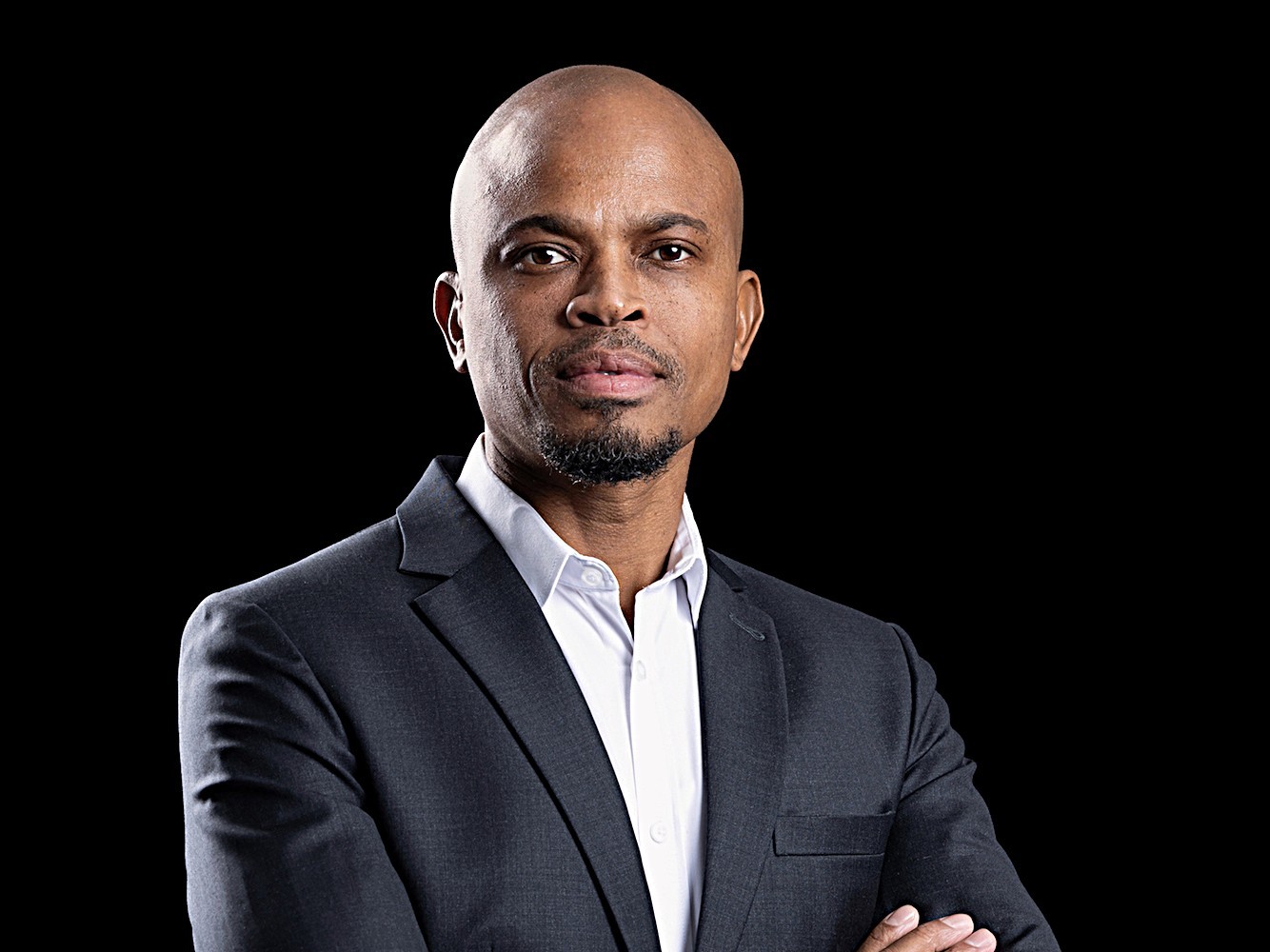
April 2026 marked 32 years since the end of apartheid and 30 years since the adoption of the Constitution of the Republic of South Africa which ushered in a new era of hope for millions. In this opinion piece, Jacques Rikhotso, Managing Director of Bridgestone Southern Africa and Chairperson of the South African Tyre Manufacturers Conference (SATMC), reflects on the role manufacturing will play in the country’s evolving economic landscape in an age of Industrial Resilience.
Freedom without factories: The unfinished business of SA’s economy
South Africa’s manufacturing activity fell 2,8% year on year in February 2026, worse than the expected 0,3% decline. It marked the fourth consecutive month of contraction and the weakest performance since April 2025. Against a backdrop of suppressed domestic demand and rising imports of manufactured goods, the sector is now facing what is widely described as a “perfect storm”.
Inflation pressures are expected to intensify further, driven in part by global oil price volatility, adding another layer of strain to already fragile industrial conditions.
The tyre sector as a warning signal
Within this broader industrial slowdown, the tyre manufacturing sector illustrates the structural pressures at play. Local production capacity has steadily declined, falling from 11,6 million units in 2015 to 9,8 million in 2024.
Actual production dropped more sharply, from 9,7 million to 6,7 million over the same period, coinciding with the exit of Goodyear Tyres manufacturing.
At the same time, imports have surged from 7,5 million units in 2016 to 10,1 million in 2025, placing sustained pressure on domestic producers and downstream manufacturing ecosystems.
Investment, competition and industrial resilience
Despite these headwinds, local tyre producers – including members of the South African Customs Union – continue to invest in manufacturing capability and distribution networks. The aim, they argue, is to safeguard road user safety and maintain a viable industrial base.
Industry players continue to engage with the International Trade Administration Commission of South Africa (ITAC) on fair trade mechanisms intended to address dumping practices and restore more balanced competition in the domestic market.
The concern, however, is broader than any single sector.
Without a resilient manufacturing base, South Africa risks undermining long-term growth potential and deepening its persistently weak economic trajectory, which has averaged around 1% since 2024.
Industrial policy and the limits of extraction
As President Cyril Ramaphosa’s investment drive targets R2-trillion in pledged investment by 2028, attention is increasingly turning to the composition of that investment. The argument emerging from industry is that South Africa must shift decisively towards tech-driven manufacturing, advanced beneficiation and innovation-led industrialisation, rather than remaining anchored in extractive sectors alone.
With its established financial system, infrastructure base and academic capacity, South Africa retains the structural ingredients to reposition itself as a regional industrial hub and a gateway into the wider African market.
Sectors such as computing, electronics, defence and automotive manufacturing are identified as critical pillars in this transition, aligning economic development with the long-term vision articulated in the Freedom Charter itself, that “all shall be equal before the law.”
Economic sovereignty beyond political freedom
The central tension highlighted in the analysis is that political freedom has not yet translated into full economic inclusion. While constitutional democracy is firmly established, equality of economic opportunity and access remains uneven.
Industrial sovereignty, it is argued, is ultimately tied to domestic manufacturing capacity, technological capability and self-reliance. As manufacturing output contracts and import dependency rises, so too does vulnerability in the industrial system.
Manufacturing is also positioned as a multiplier sector, creating backward linkages into mining and agriculture and forward linkages into services, research and development, skills formation and innovation ecosystems. Each factory, in this framing, sustains far more than its direct workforce.
The policy choice ahead
The conclusion is clear: South Africa remains – and will remain – a consumer of global goods. However, the balance between consumption and production must be recalibrated if long-term sovereignty is to be protected.
Consumer choice, in this context, is no longer neutral. It carries implications for employment, industrial strength and national economic resilience. Where necessary, trade instruments may need to protect consumers from substandard or unsafe imports while preserving fair competition.
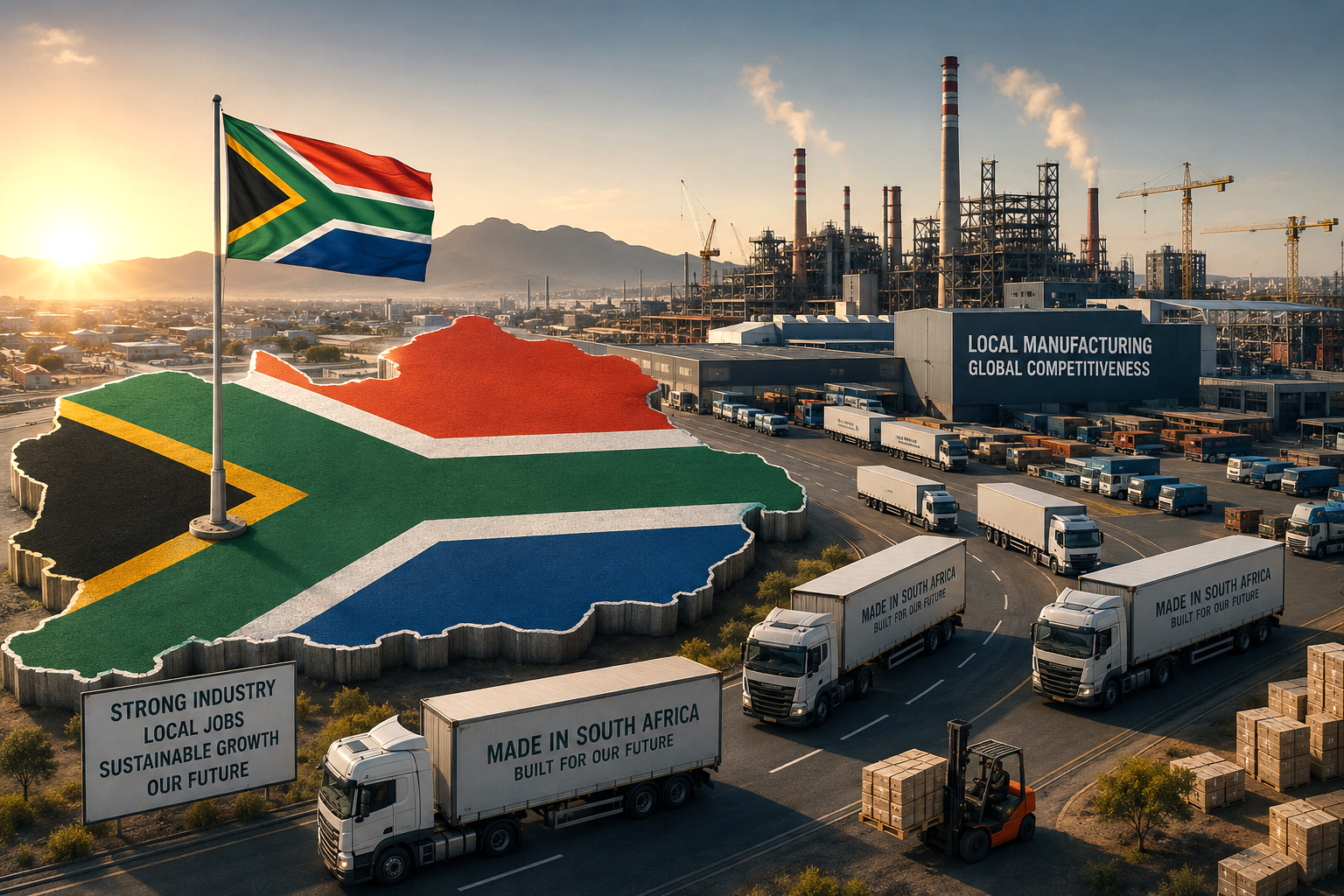
Ultimately, economic sovereignty is not only shaped in Parliament or at the ballot box, but also in industrial parks, factories and production lines across the country.
Strengthening manufacturing is presented not simply as an economic strategy but as a nation-building imperative rooted in the original intent of the Freedom Charter.
By rebuilding industrial capacity and protecting local value creation, South Africa does more than pursue growth. It reasserts its ability to determine its own economic future.
Editor’s Comment: Rikhotso analysis here is a timely and uncomfortable reminder that deindustrialisation is not an abstract economic metric but a lived reality that negatively impacts jobs, logistics capacity and ultimately national competitiveness. The link between manufacturing decline and rising import dependency is particularly relevant to the transport and freight sector, which sits directly downstream of industrial activity.
At a time when global supply chains are increasingly volatile, South Africa’s reliance on external production capacity introduces a strategic vulnerability that cannot be ignored. As such, the many calls for a shift towards advanced manufacturing in South Africa have never been more pressing.
Click on photographs to enlarge