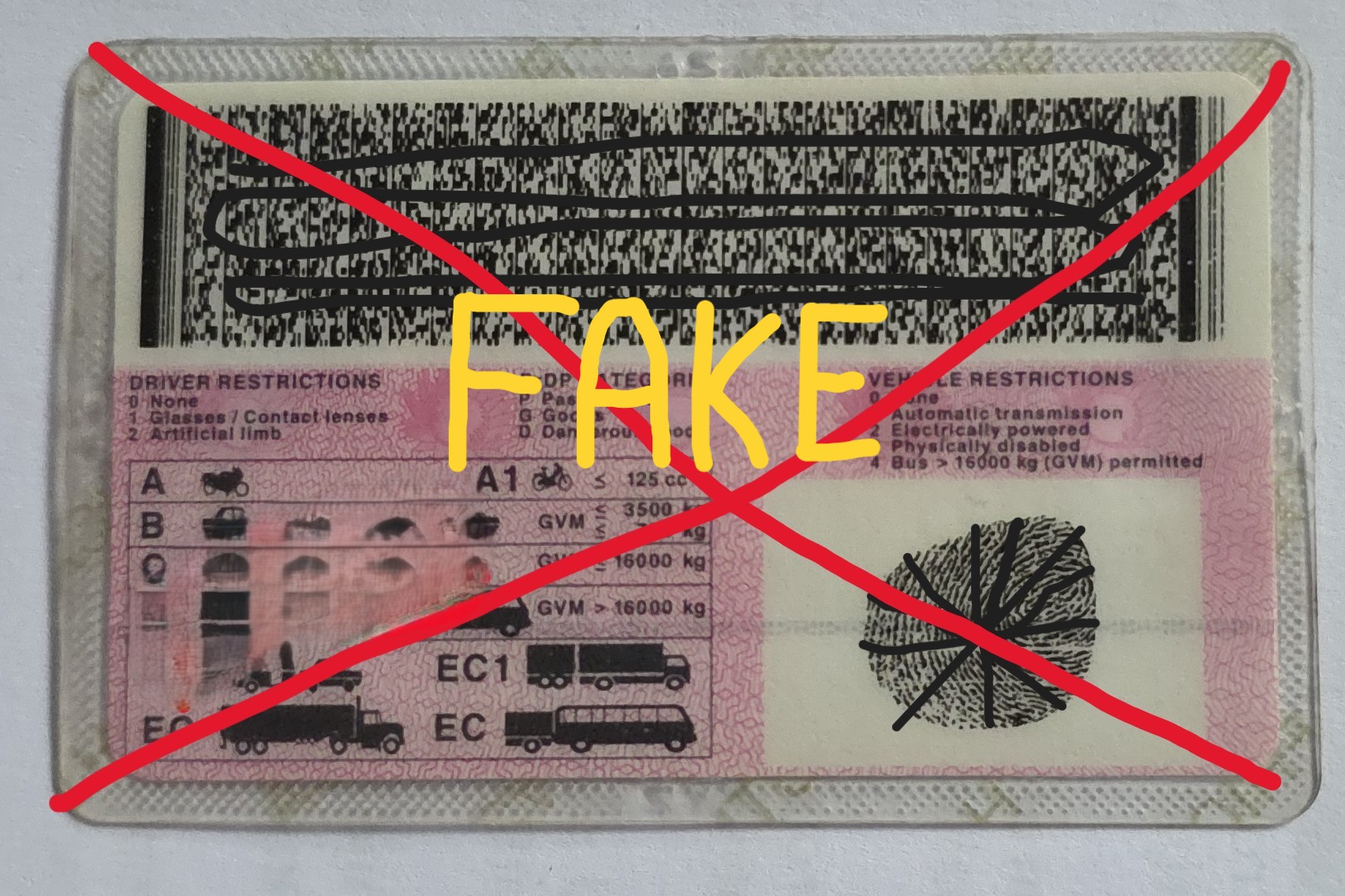
In South Africa’s transport and logistics sector, the aftermath of an accident is usually framed by the visible impact – damaged vehicles, disrupted schedules and immediate operational disruption. Inside a claims office, however, the focus moves away from the incident itself to something far more decisive: the integrity of the information submitted.
So says Leigh Johannsen, Managing Director of Check Your Driver who adds that once a claim is lodged, it enters a structured verification process where documents are reviewed, timelines reconstructed and every detail cross-checked against supporting records and official databases.
Within this process, the driver’s licence remains one of the most important verification tools. It is the primary proof that the individual behind the wheel was legally permitted to operate the vehicle at the time of the incident.
“At face value, most licences appear legitimate. But in a claims environment, appearances are never enough,” she says. The point here is: verification is based on validation against issuing authorities and official records, not visual inspection.
When verification fails
Even minor inconsistencies can trigger escalation. A licence number that does not align with issuing records, formatting that deviates from recognised standards or information that cannot be reconciled with official databases is often enough to move a claim into investigation.
“Even minor inconsistencies can prompt further scrutiny,” says Johannsen. “A number that does not align, a format that differs from official standards, or information that cannot be reconciled with supporting records is often enough to shift the direction of a claim.”
When a licence cannot be validated, or is confirmed as fraudulent, the consequences are immediate. Claims may be delayed or repudiated, liability may be reassessed and investigations may be expanded.
The operational impact beyond the claim
For operators, the implications rarely end with a single incident. Johannsen explains. “It can raise questions around internal processes, compliance measures and the steps taken to ensure that drivers are properly verified before being placed on the road.”
What is increasingly evident is that irregularities are not isolated incidents,” says Johannsen. “Verification processes continue to reveal a concerning frequency of discrepancies, particularly with foreign-issued licences.”
In many cases, documents that appear credible on inspection do not withstand formal validation against issuing authorities or recognised databases.
Why timing matters
By the time a claim reaches assessment, the opportunity to prevent that risk has already passed. The claims process does not create exposure – it reveals it.
“By the time the claim is under review, the opportunity to prevent risk has already passed,” says Johannsen. “Decisions are made based on the information available, and in that moment, there is little room to correct what should have been addressed earlier.”
At that point, outcomes are driven entirely by evidence. If documentation does not hold up under scrutiny, the consequences extend well beyond the incident itself – affecting cost, liability and operational continuity.
Editor’s comment: What this ultimately underscores is how much of fleet risk sits upstream of the claims process. Licence verification is often treated as administrative, yet it is increasingly a frontline control point with direct financial consequences. As scrutiny intensifies, particularly around cross-border documentation, the quality of onboarding and verification processes will be reflected more clearly in claims outcomes. The claims office is not creating the risk – it is revealing whether it was ever properly controlled in the first place.
Click on photograph to enlarge