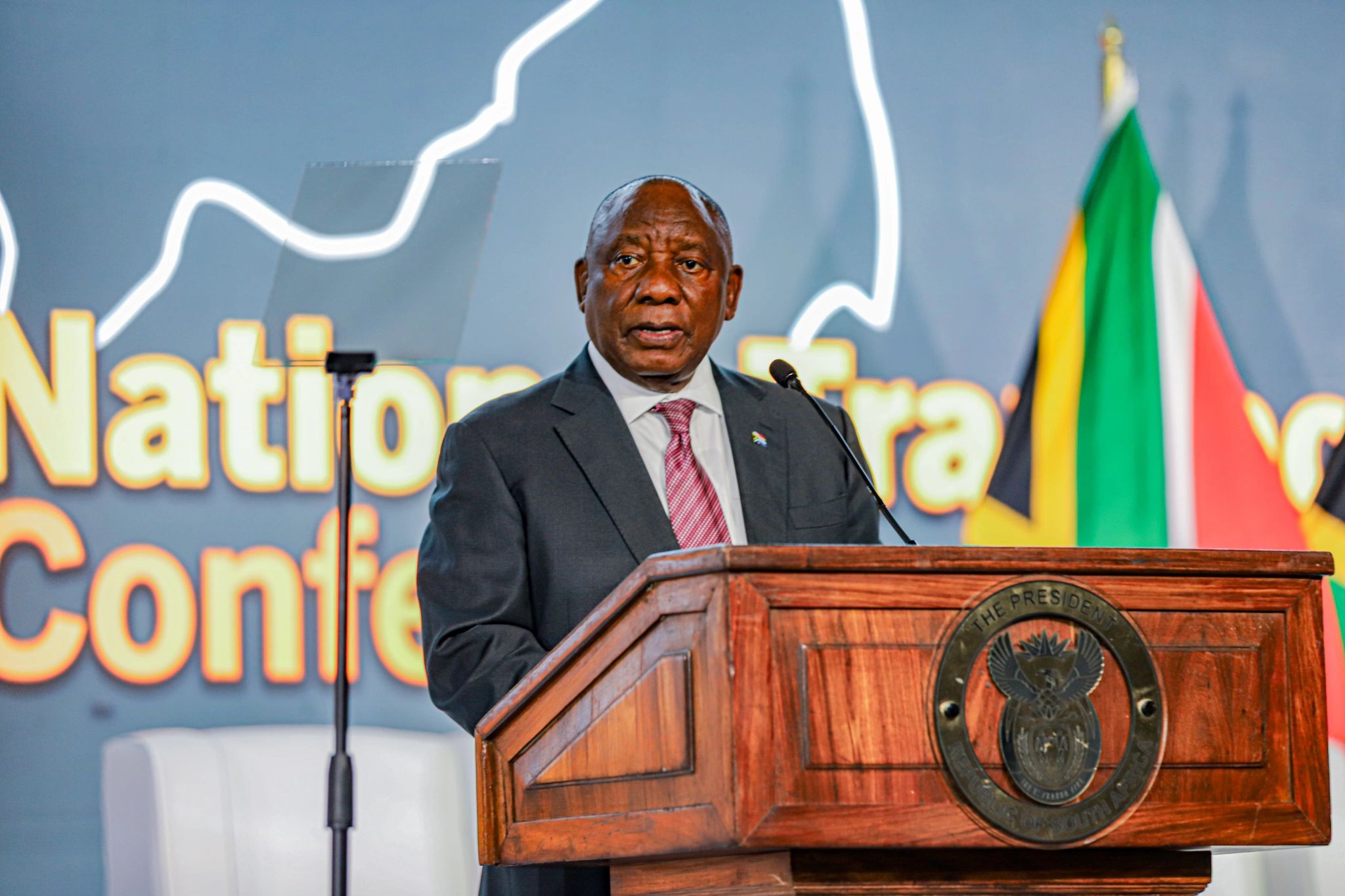
With the war in the Middle East wreaking havoc on global oil markets, South Africa’s road freight sector finds itself at a historical juncture – where diesel volatility faces off against the push for net-zero trucking, a key theme of the inaugural National Transport Conference 2026 in Johannesburg recently.
With road transport responsible for a staggering 97% of the sector’s emissions, the stakes are high – not just for environmental compliance but for economic resilience, fleet sustainability and long-term energy security.
Policy signals and global alignment
Opening the conference, Transport Minister Barbara Creecy underscored the sector’s dual role as both an economic enabler and an environmental challenge, noting that road transport must evolve in step with climate realities.
President Cyril Ramaphosa reinforced this in his keynote, stating that “South Africa needs a modern, inclusive and efficient transport system, but it should also reduce the cost of transport to the economy.”
For industry stakeholders, that balancing act – cost versus compliance – remains the defining tension.
Presenting at the event, Hiten Parmar, Executive Director of Electric Mission (an SA-based not-for-profit organisation with extensive experience in the electric mobility and energy sector), said South Africa is positioned within a broader global shift:
“Specific actions are being taken to decarbonise transport in every region, where countries across the world are already making progress. This is not unique to South Africa.”
Technology pathways – promise meets practicality
From a technology standpoint, Parmar pointed to zero-emission vehicles as an immediate lever. “On the technology front, zero-emission vehicles are an immediate solution to eradicating tailpipe emissions. South Africa already has a positive ratio across the country of electric vehicle charging stations to the fleet of electric vehicles,” he said.
While fuel cell electric vehicles remain absent from the local market, battery electric platforms are steadily gaining traction across passenger vehicles, buses and, increasingly, heavy-duty applications.
For fleet operators, however, questions remain around total cost of ownership, range, charging infrastructure and payload penalties – all critical factors in long-haul logistics.
Regulation as a catalyst
Beyond technology, regulatory reform is expected to play a decisive role. Parmar highlighted supply-side mechanisms such as fleet mandates and emissions standards as key levers to accelerate change.
“A key regulatory reform for the transport sector is on the supply side mechanisms, which may include a fleet mandate, fuel efficiency or vehicle emissions standards. These allow fleet-wide performance benchmarks, encouraging vehicle manufacturers to innovate,” he noted.
Such measures could reshape OEM strategies and fleet procurement decisions – but only if implemented with clarity, consistency and industry consultation.
Energy sovereignty – the missing link
Yet perhaps the most pressing issue raised at the conference was South Africa’s structural dependence on imported oil. In a world of escalating geopolitical risk, this reliance is increasingly seen as both an economic and strategic vulnerability.
“In the context of geopolitics and conflicts, an overreliance on fossil fuel imports cannot achieve the aims of decarbonisation. South Africa will remain at the mercy of global dynamics until it achieves energy sovereignty. Greater action from government and an agile, enabling environment for the private sector will reduce sole reliance on the global oil supply,” said Parmar.
The current Middle East conflict – and its ripple effects on oil prices and inflation – served as a real-time case study of that vulnerability, with direct implications for transport costs and consumer prices.
Investment, resilience and the road ahead
Looking forward, Parmar framed the energy transition as an opportunity as much as a necessity. “A transition to electric mobility can mitigate the impact of geopolitical shocks, while also strengthening the local economy, creating resilience and attracting investment,” he said.
“With key energy transition minerals, size of the labour force, and potential for growth, South Africa can be an investment haven in Africa, with key socio-economic benefits,” Parmar concluded.
Editor’s comment: For South Africa’s trucking sector, the oil crisis is doing what policy alone has struggled to achieve – forcing a hard, immediate rethink of energy dependence. While the transition to electric and alternative drivetrains will not happen overnight, the direction of travel is unmistakable. The real challenge lies in bridging the gap between ambition and operational reality – ensuring that decarbonisation does not become a cost burden that cripples logistics but rather a strategic shift that strengthens it. In this equation, energy sovereignty may well prove to be the ultimate game-changer.
Click on photographs to enlarge