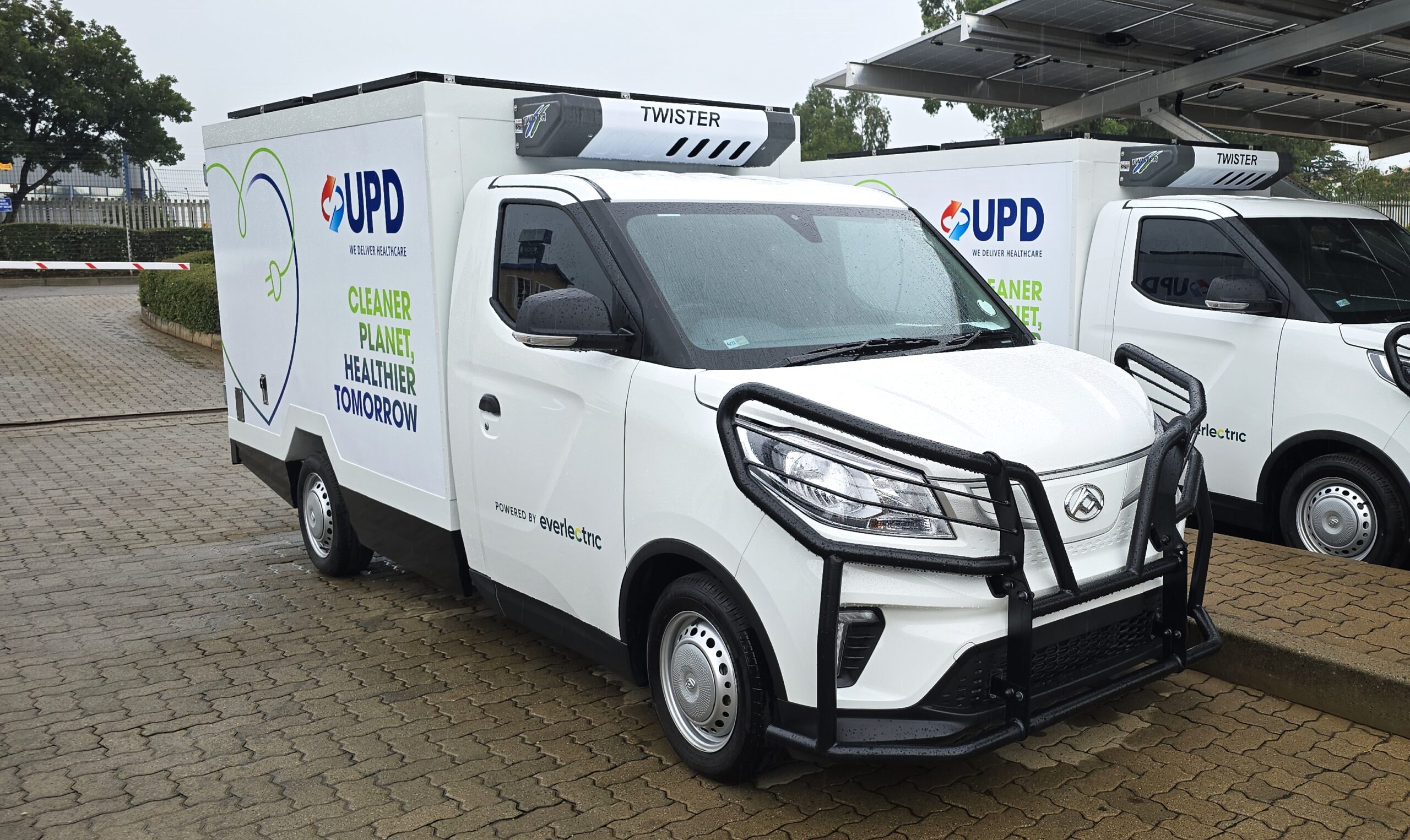
2026 is shaping up as a decisive year for truck fleet electrification in South Africa, moving the paradigm from long-term aspiration to near-term commercial reality. According to Paul Plummer, Chief Commercial Officer at Everlectric, the economics of electrifying urban and last-mile fleets are now viable for a much broader segment of the market. “For many fleets, the question is no longer if electrification will work, but which routes are already ready to make the switch,” he says.
As new electric vehicle classes enter the local market, fuel price volatility continues to undermine operating certainty and fleet data is offering unprecedented clarity on real-world usage patterns.
Everlectric works with fleet operators to assess, deploy and manage electric vehicles through data-led route analysis, flexible vehicle access models and integrated charging and energy solutions. Its offering spans vehicles, charging infrastructure, maintenance, telematics and energy management, enabling operators to evaluate electrification without the complexity of managing multiple suppliers.
New vehicle classes change the equation
Plummer argues that 2026 represents a convergence of factors that materially change the fleet electrification case. “2026 is the year when the economics of fleet electrification become more compelling than ever for a broader range of operators,” he says.
“The convergence of new vehicle classes, clearer operating economics and instability in fuel prices including South Africa’s Electric Vehicles White Paper, create a practical environment for last-mile and urban logistics fleets to begin electrifying the parts of their fleets that already make sense.
“For years, adoption centred around one-ton panel vans. However, the expected arrival of larger panel vans in 2026 gives fleet managers an electric option that meets their payload needs,” says Plummer.
“New four-ton-style trucks land directly in the urban distribution segment where operating efficiency, maintenance intensity and uptime are critical considerations.”
At the lighter end of the market, compact EVs are also reaching new cost thresholds. “In parallel, the compact EV category is opening up new opportunities with total cost of ownership now competitive at monthly operating levels that were previously difficult to reach (now at around R10 000 per month),” Plummer explains.
Route data exposes where EVs already win
The strongest case for electrification emerges via fleet data interrogation. “Once owners analyse the data of the routes their vehicles operate, how far they travel, and what they haul, the decision about which segments of the fleet to electrify becomes more straightforward,” says Plummer.
He notes that telematics often overturns long-held assumptions. “What often surprises fleet managers is how different things start to look once the data is analysed in detail. When you strip away assumptions and focus on actual telematics, weekly kilometre patterns, dwell time at depots and how loads shift across the day, it becomes obvious which parts of the fleet are ready to move and which are not.”
Urban routes with predictable cycles tend to stand out. “Most fleets have a large proportion of routes that repeat almost exactly. Those are the natural first adopters,” he says, pointing to “high stop–start intensity during peak hours, drop-off zones, and end-of-day charging back at the base” as areas where EVs deliver immediate operational advantage.
Pilots over theory
Plummer cautions against over-modelling and advocates for live testing. “From there, the question is how you want to take the first step,” he says. “Some fleet managers prefer to own the vehicles outright. Others wish to have everything, for example, vehicles, charging, maintenance, insurance, electricity management, and telematics, handled in one place so they can judge the economics without juggling multiple suppliers.
“Either approach works, as long as the transition is adequately tested in a live environment. A short pilot on real routes usually tells you more than months of theoretical modelling,” he adds.
Competitive pressure begins to build
Early adopters are likely to see benefits beyond fuel savings. “Fleets that begin electrifying the right segments early benefit from more predictable operating costs and improved resilience to energy and maintenance volatility,” Plummer says.
“Additionally, they will also be the first to see where electrification creates new efficiencies inside their networks.”
He argues that electrification is increasingly about operational control rather than environmental positioning. “This shift is not driven solely by fuel prices, which naturally move up and down over time. Instead, it reflects a broader focus on total operating cost, uptime, and control over energy and maintenance variables.”
As more suitable models enter the market, hesitation becomes harder to justify. “At this point, electrification becomes a pressure test of fleet data and of the ability to draw relevant insights from it.
“With the models arriving this year, the decision is no longer about taking a risk but about recognising that a workable, commercial option now exists for the right routes and use cases,” Plummer concludes.
Editor’s comment: Plummer’s analysis underscores a structural shift – driven by route data, vehicle availability and total cost transparency – that places urban and last-mile operations firmly in the electrification firing line. For road freight operators, the strategic risk may now lie less in ‘risky early adoption’ and more in failing to interrogate fleet data rigorously enough to unlock optimal fleet intelligence.
As EV options broaden in 2026, electrification becomes less a question of ideology and more a test of fleet intelligence and execution discipline.
Click on photographs to enlarge