When the 2026 Dakar Rally finished in Yanbu, Saudi Arabia on 17 January, Hino quietly extended one of the most durable performance records in global truck motorsport – 34 consecutive Dakar finishes in what remains the toughest endurance race in the world. In an event that started with 45 trucks and saw just 16 classified finishers, Hino crossed the line 15th, once again the only Asian truck manufacturer to contest the 14-day rally against a field dominated by European OEMs.
The 7 994 km route, including 4 840 km of timed special stages, tested every aspect of mechanical resilience and human decision-making. A rollover on the third last day cost the team more than two hours, while a punctured rear tyre just 15 km from the finish forced a calculated choice to keep moving rather than stop.
For fleet operators watching from afar, this is not motorsport theatre. It is a live demonstration of how durability, judgment and uptime interact under extreme pressure.
Engineering continuity, not spectacle
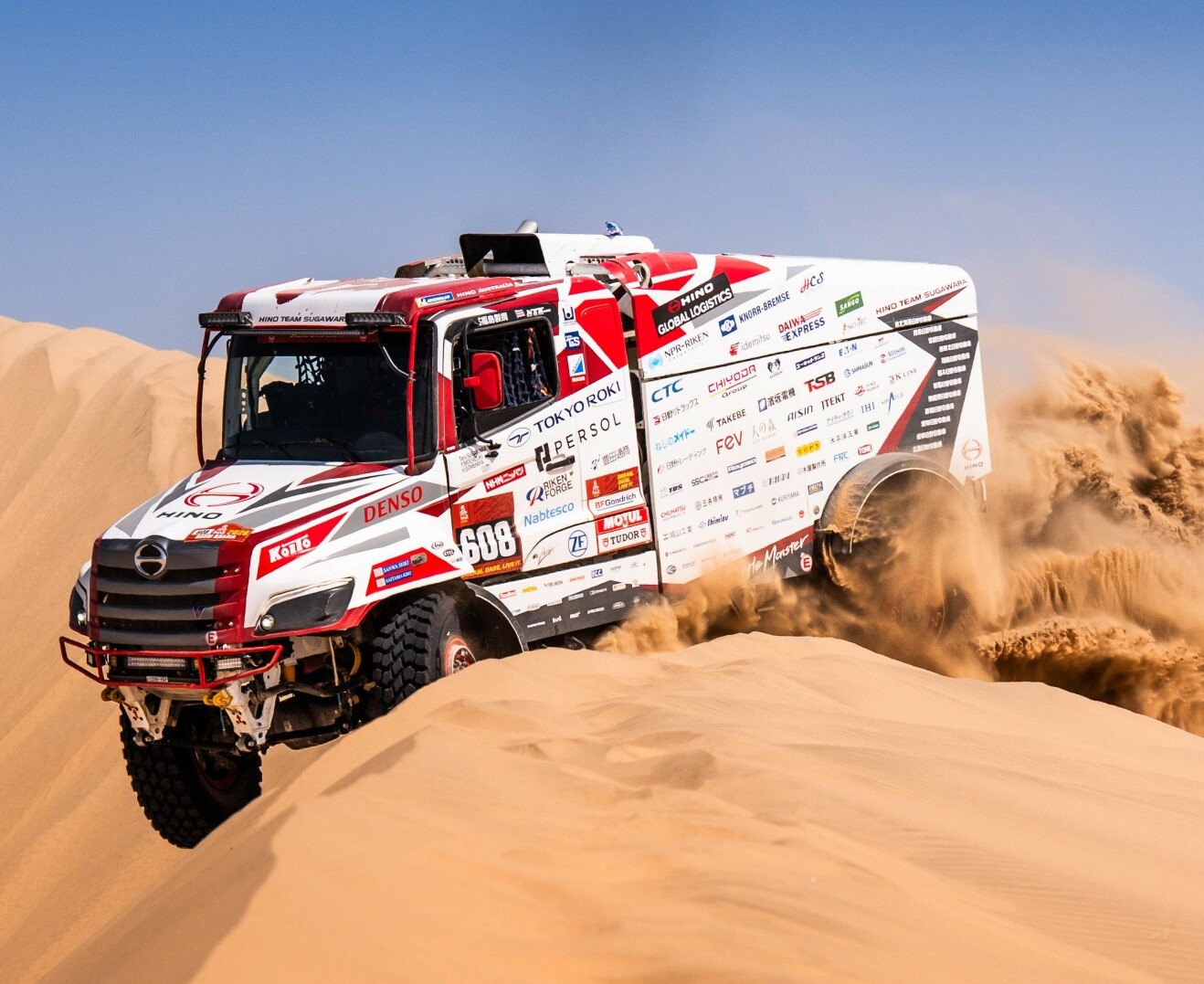
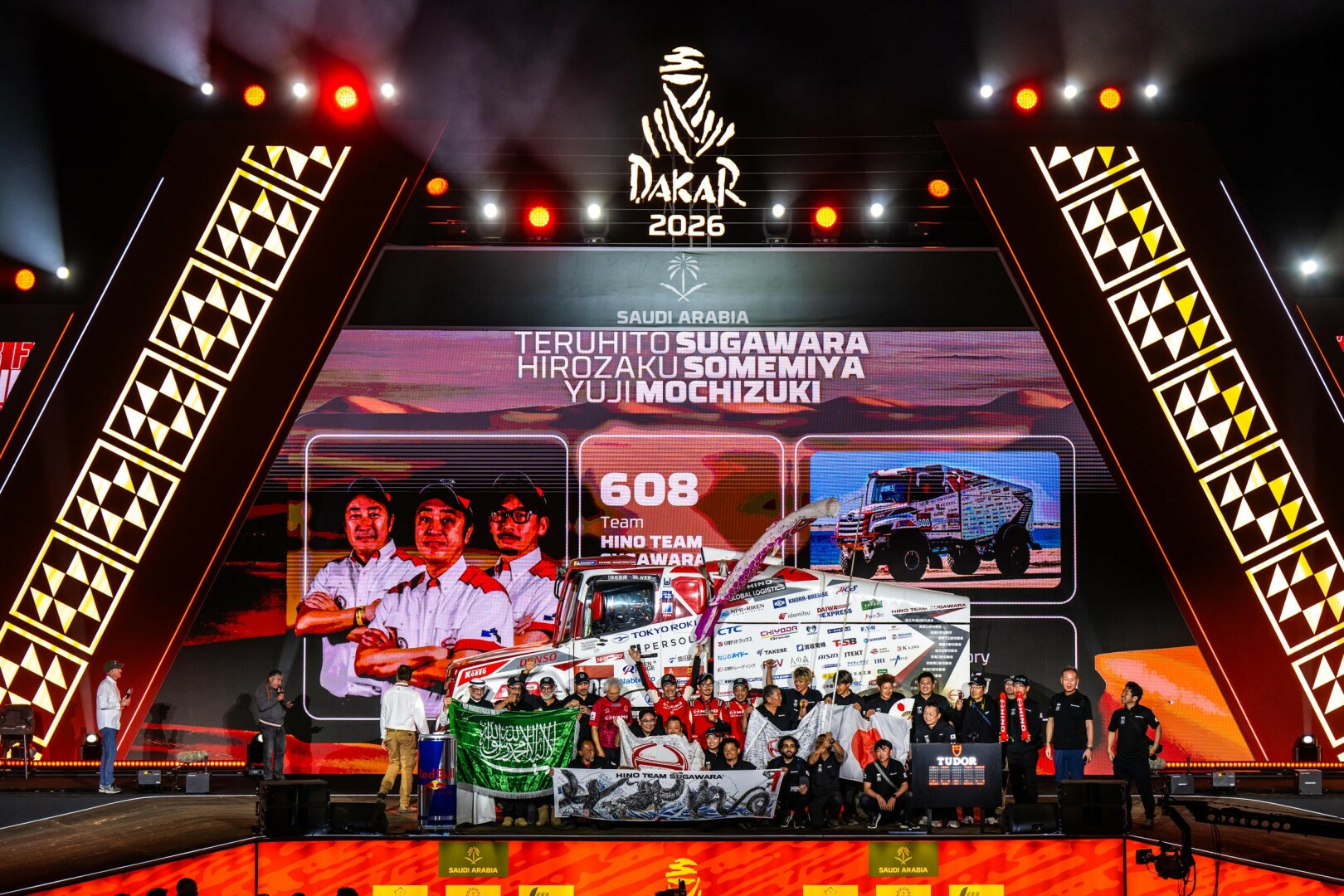
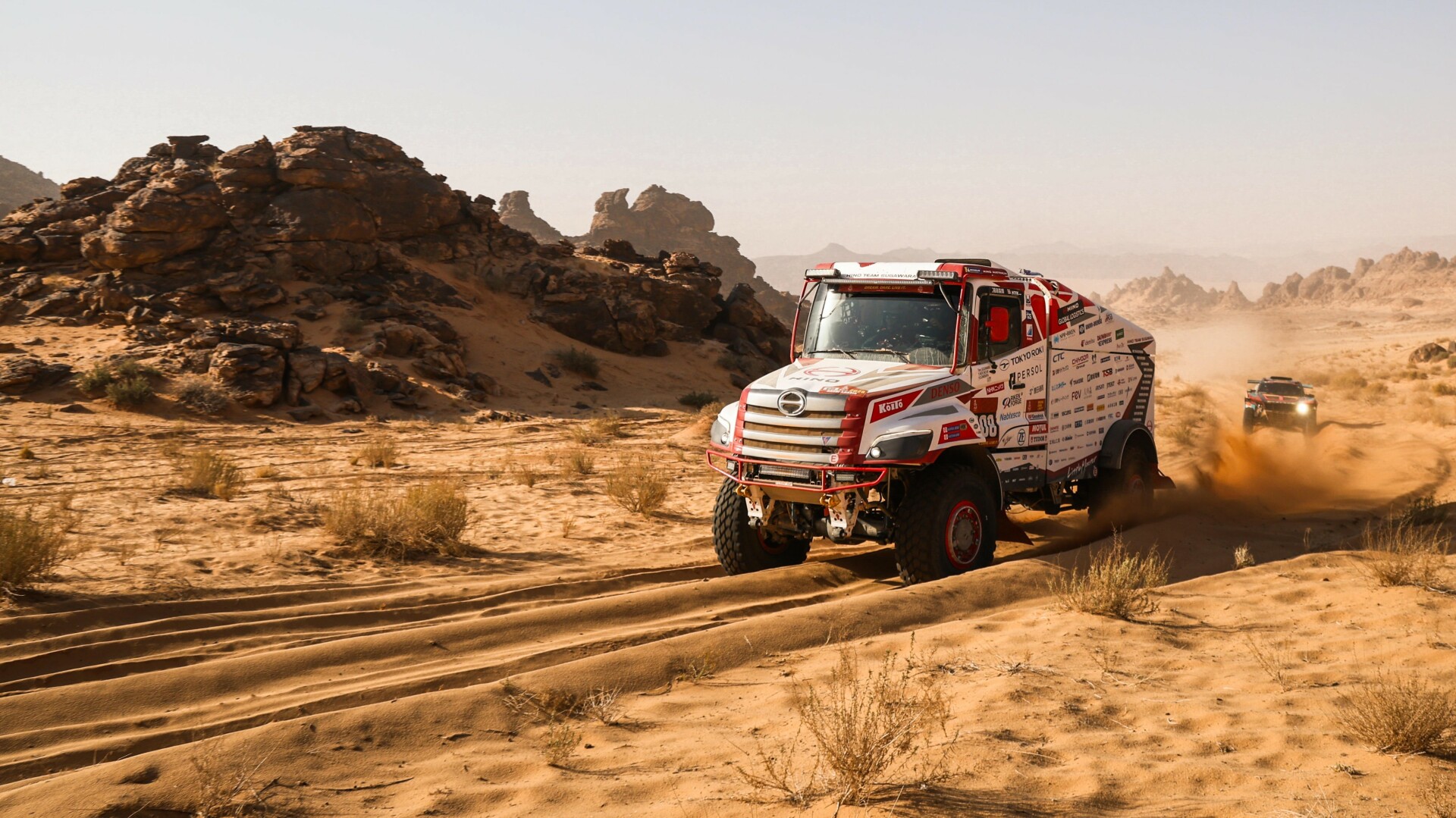
Hino was represented once again by Team Hino Sugawara, led by Team Principal Teruhito Sugawara, who completed his 20th successive Dakar finish. Navigated by Hirokazu Somemiya, with technician Yuji Mochizuki completing the crew, the team ran a four-wheel drive racing truck based on the bonneted Hino 600 Series sold in North America and mechanically similar to the Hino 500 Series operating on South African roads.
This engineering continuity matters. The Dakar truck is not a distant prototype disconnected from production reality. It reflects the same design philosophy, powertrain logic and serviceability principles that underpin Hino’s commercial vehicles in everyday fleet service.
Even as one of the few medium-sized trucks in the event, running a 9-litre engine, the Hino was able to hold a top-10 position for much of the rally through reliability rather than outright power.
The significance of this achievement was underlined by the presence of Makoto Wakamura, Hino Motors’ Deputy Chief Compliance Officer, at the Yanbu finish: “I’m glad the onboard crew, mechanics and support team united to deal with setbacks, while the high skills of the mechanics selected from Hino dealers in Japan, made a significant contribution to getting the truck to the end of a very tough race,” he said.
What Dakar success means for customers
Hino’s Dakar record is unusual not only for its longevity but for its restraint. The brand typically enters a single truck, doing so in 18 of the 34 Dakar Rallies it has contested since 1991.
That approach mirrors its commercial mindset – measured, consistent and engineered for finish rates rather than headlines. Its most dominant performance came in 1997, when three Hino trucks finished 1, 2 and 3 overall on the Dakar–Agadez–Dakar route.
Dakar is a public, unforgiving environment where weaknesses are exposed daily. A 34-year finishing streak signals predictability, resilience and a culture that prioritises getting home over chasing marginal gains.
Apart from sharing the excitement of Dakar, the emotional value of this record for Hino fleet operators extends from momentary reassurance to sustained confidence.
The business value is equally clear – the engineering disciplines honed in Dakar competition feed directly into Hino’s production vehicles, shaping driveline durability, chassis integrity and serviceability.
The result for operators is reduced unplanned downtime, stronger total cost of ownership performance and trucks that deliver predictable, dependable output across their full operating lifecycle.
“We are, once again, very proud of this ongoing public display of Hino quality, durability and reliability in this increasingly popular endurance event,” says Itumeleng Segage, General Manager of Hino South Africa. “These attributes are a mainstay of our ongoing sales success in South Africa, where Hino has been a competitor in the truck market since 1972.”
Editor’s comment: In an era where OEM marketing is increasingly driven by short-cycle innovation claims, Hino’s Dakar narrative stands apart. This is not about winning stages or chasing novelty. It is about finishing, year after year, in conditions designed to break machines and people alike. For South African fleets operating in demanding environments, that consistency translates into something deeply practical – confidence. Dakar success, sustained over decades, becomes more than motorsport credibility. It becomes a quiet but powerful promise that the truck you buy is built to endure long after the applause fades.
Click on photographs to enlarge