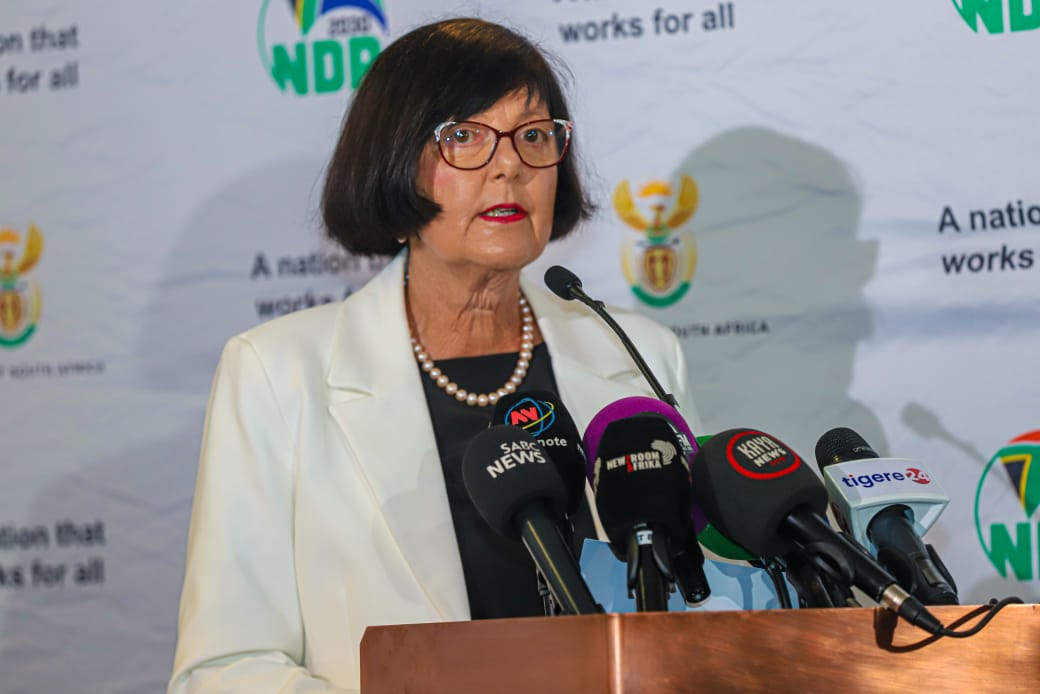
South Africa’s 2025/26 Festive Season Road Safety Campaign has delivered an encouraging set of results compared to last year with Transport Minister Barbara Creecy reporting a decline in both crashes and fatalities.
Presenting the preliminary findings in Tshwane, Creecy confirmed a 5% reduction in festive season fatalities and crashes compared to the same period last year, with 1 427 fatalities recorded from 1 172 crashes.
Outlining the full year’s statistics for the 12-month period of January 1st to December 31, 2025, Creecy said that preliminary statistics show that the number of road crashes and deaths are the lowest in five years.
“A total of 11 418 fatalities were recorded from 9 674 crashes in 2025 compared to 12 581 fatalities from 10 633 crashes in 2021. Furthermore the 2025 crashes decreased by 6.4% when compared to 2024 and fatalities decreased by 6.2% in the same period.”
Despite some improvements, this is nowhere near satisfactory. As the Minister stated: “The number of deaths caused by road accidents is a reason for national shame,” she said, stressing that road trauma is neither inevitable nor unavoidable. Analysis continues to point to human behaviour as the primary cause, with speeding and drunk driving being the dominant factors.
Partying not so festively
Going back to this past festive season, five provinces reported declines in fatalities, led by the Eastern Cape and Free State, while Gauteng, Western Cape, Mpumalanga and Northern Cape recorded increases. Data also showed that more than 40% of crashes and fatalities occurred between 15 and 28 December, confirming that risk escalates once travellers reach their destinations and engage in festive activities rather than during peak travel movements.
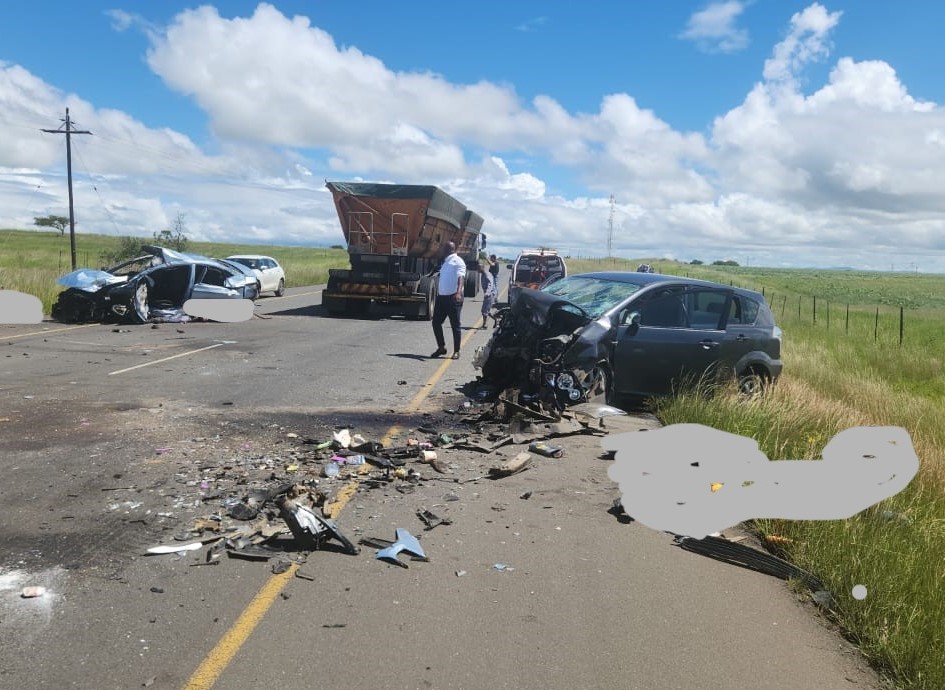
According to Creecy, “many of the crashes happened over the weekend between 19h00 and 21h00 and between midnight and 01h00. They involved collision with pedestrians, hit and run, single vehicle overturns and head-on collisions.
“The highest number of pedestrian fatalities were reported in the City of Cape Town, City of Johannesburg, eThekwini, Nkangala District and the City of Tshwane.”
Trucks and taxis do well
For the commercial road transport sector, the breakdown by vehicle type is significant. Small passenger vehicles accounted for 55% of crashes, followed by light delivery vehicles at 20%. Minibus taxis and trucks were involved in just 7% and 6% of crashes respectively – statistics that continue to challenge public perceptions around heavy vehicle risk, while underscoring the role of professional fleet discipline, vehicle roadworthiness and regulated driving hours.
Over the festive season, law enforcement activity was intensified nationwide with 1 632 roadblocks conducted and 1.8 million vehicles stopped and checked. Authorities issued more than 450 000 traffic fines, arrested 525 motorists for excessive speeding and tested 173 695 drivers for alcohol impairment.
Of these, 8 561 tested positive – a 144% increase year-on-year – with the highest breath alcohol content recorded in KwaZulu-Natal at fourteen times the legal limit. The fastest driver was apprehended in the Northern Cape at 222 km/h in a 120 km/h zone, while 89 motorists were arrested for attempting to bribe traffic officers.
Great news is that officers also arrested 89 motorists for trying to bribe traffic officers to avoid arrest.
Activating behavioural change
Beyond enforcement, the Department implemented 2 547 education and awareness programmes across mass transit hubs, malls and high-convergence areas, supported by sustained radio, television and social media campaigns. Creecy emphasised that these combined efforts are beginning to shift behaviour but progress remains fragile,
Gunning for zero tolerance on drink driving
In one of the most consequential policy signals for both the public and commercial fleet sectors, Creecy announced plans to amend Section 65 of the National Road Traffic Act to eliminate legal drinking and driving entirely.
“In today’s South Africa it is totally unacceptable that there is a law that allows people to drink and then drive,” she said. “The time has come for us to amend the law so we have a clear-cut, easy to understand and unambiguous policy that says drinking and driving is not allowed. If nothing else, we owe this to the memroy of the many fellow South Africans who have lost their lives on our roads..”
For FleetWatch readers, the synopsis is clear. Professional fleets and heavy vehicles remain a comparatively low contributor to national crash statistics, while enforcement intensity and data-driven interventions are delivering results.
At the same time, the proposed move to zero-tolerance alcohol legislation represents a potentially far-reaching shift that will reshape compliance frameworks, driver wellness programmes and operational risk management across South Africa’s road transport industry.
Click on photographs to enlarge