With more than a century’s experience of moving goods across Africa by road, Unitrans has navigated every major shakeup in the continent’s modern road transport story. That longevity makes the company a reliable trend spotter and as the industry eyes the close of 2025, Unitrans Executive for Digital and IT, Nicolé Mey, says the signs for 2026 are already clear: “What we are seeing across Sub-Saharan Africa is not incremental change but a fundamental re-wiring of how logistics works,” she says.
Drawing on insights from the AfDB (African Development Bank), World Bank, AfCFTA (African Continental Free Trade Area) Secretariat and regional research bodies, Unitrans has identified five defining shifts for the year ahead.
Digital transformation accelerates
Africa’s supply chains are digitising fast, driven by rising smartphone adoption and the region’s global lead in mobile money. Mey notes that in markets where customs systems have gone digital, “clearance times have improved by 30 to 50 percent, which has a direct impact on visibility and efficiency along key trade corridors.”
She adds that digital customs under the AfCFTA are reducing friction and enabling “mobile-first, agile tools that let Africa leapfrog traditional big-system implementations.”
Startups building freight marketplaces and AI fleet platforms are empowering cargo owners and hauliers to transact via mobile apps. “For logistics providers, embracing technology is no longer optional,” Mey says. “It is a prerequisite for competitiveness.”
With the digital economy projected by the World Bank and IFC to add USD180-billion to Africa’s GDP by 2025, the shift will only accelerate.
Green logistics takes centre stage
Sustainability pressures are rising across African supply chains, driven by regulators, export markets and ESG-linked procurement standards. “Going green is no longer a reputational differentiator,” Mey says. “It is becoming an operational requirement for anyone participating in global value chains.”
From electric delivery pilots to solar-equipped warehouses and alternative-fuel fleets, the sector is shifting toward cleaner operations that cut both emissions and costs.
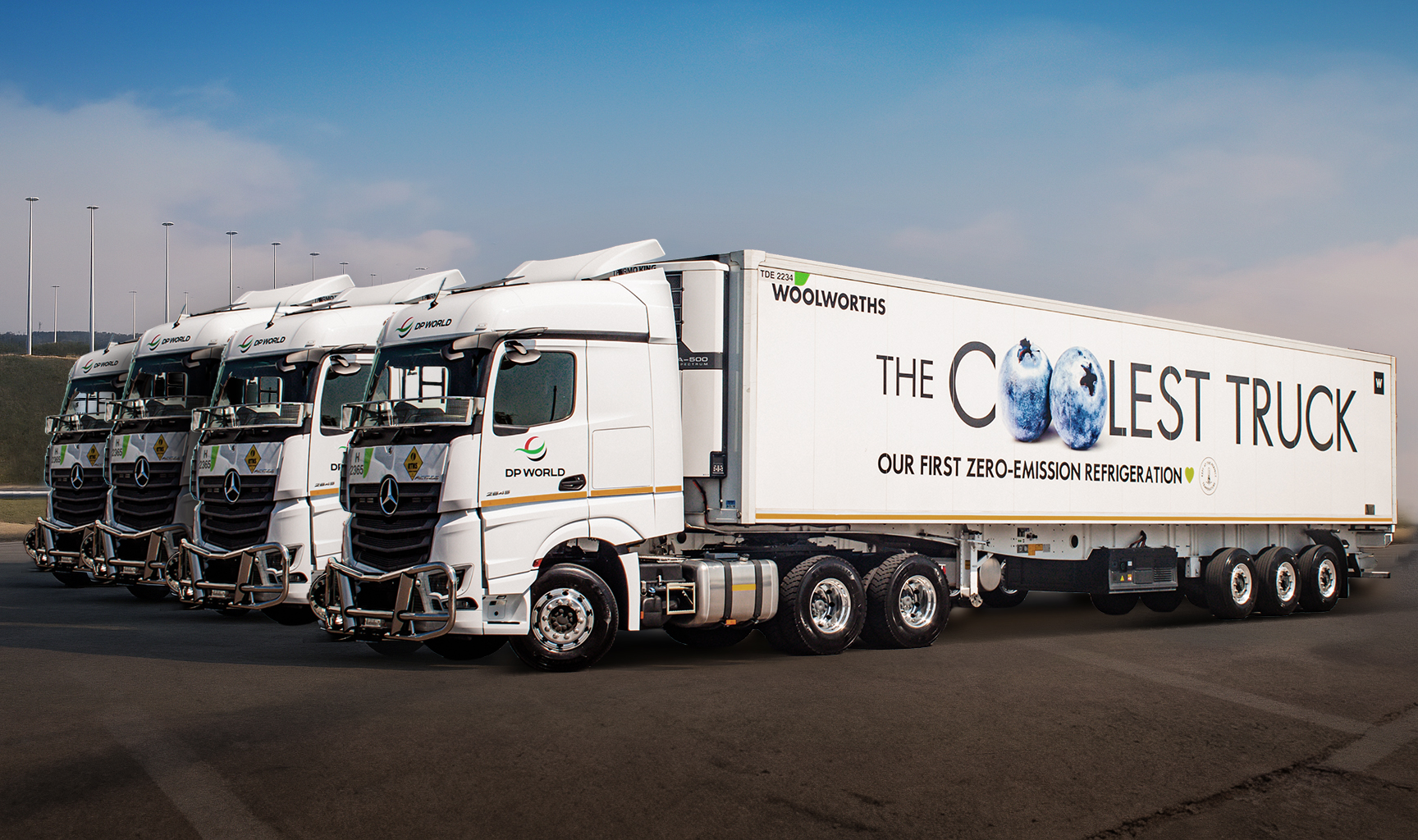
She points to retailers such as Woolworths using solar-powered electric delivery vehicles, setting new benchmarks for urban logistics.
Ports and freight operators are exploring green corridors supported by renewable energy at ports, depots and along major routes, setting the tone for Africa’s next logistics era.
Regional integration gathers pace
The rollout of the AfCFTA remains one of the continent’s most powerful catalysts, with the potential to lift intra-African trade by more than 50 percent once fully operational. Mey says targeted upgrades are creating “pockets of real efficiency even as broader infrastructure challenges persist.”
Major development banks and governments are modernising ports, rail and road systems as well as border posts, improving high-traffic corridors such as Maputo and Walvis Bay. Yet Africa still faces an annual infrastructure financing gap estimated at USD-68 to USD108-billion.
“The picture is mixed,” Mey acknowledges. “But where investment lands, we are seeing meaningful improvements in reliability and transit times.”
E-commerce reshapes last-mile delivery
Sub-Saharan Africa’s booming e-commerce sector is rewriting logistics models. With internet users expected to surpass 500 million by the end of 2025, Mey says the demand for digitally enabled fulfilment is skyrocketing.
Companies are investing in urban micro-warehouses, automation and AI-driven inventory systems to enable same-day delivery. Electric bikes, crowdsourced delivery networks, pickup lockers and drone pilots are beginning to ease last-mile constraints in congested cities and rural regions alike.
“Mobile money and digital payments have created the foundation for inclusive e-commerce logistics,” Mey notes. “We are seeing real innovation here.”
Resilience and localisation reshape supply chains
Global disruptions have pushed African supply chains toward resilience and regionalisation. “We are entering a just-in-case era,” says Mey, “where local production, diversified suppliers and strategic inventories become essential.”
Agro-processing and manufacturing drives are keeping value-addition on the continent, while companies strengthen buffer stocks and invest in regional warehouses. Energy reliability has become a frontline factor in supply chain performance. South African logistics hubs are deploying solar and backup power to maintain uptime during outages.
“Resilience is no longer a contingency plan,” Mey concludes. “It is now a design principle.”
Editor’s comment: Unitrans has earned its reputation as one of Africa’s most credible logistics trends forecasters. Its century-long vantage point gives weight to these five shifts, which go well beyond trend-spotting. The message from Nicolé Mey is clear: technology, sustainability, integration, e-commerce and resilience are no longer future concepts but present-day imperatives. As 2026 approaches, fleets that adapt strategically will unlock new efficiencies and new markets, while those that delay could well risk falling behind in an industry undergoing systemic change.
Click on photographs to enlarge